

Matera · Basilicata · Italy
What to See in Matera, the Italian City Carved Into Rock
A cave city, a national disgrace and a European Capital of Culture - all within the lifetime of the city.
I lived in Matera during its year as European Capital of Culture. A guide to the Sassi, and to a city that went from national shame to UNESCO in a lifetime.
Quick facts
- Best time
- Spring and autumn. March was colder than I expected and summer is seriously hot.
- Trip length
- Two days with a night in between. One day is possible but you'd miss the evening, which is the best part.
- Where to stay
- Sasso Barisano for the cave hotels, the upper town for convenience. Sleeping in the Sassi means stairs and luggage.
- Good for
- Cave dwellings, rock churches, viewpoints, walking, history, and one of the strangest cityscapes in Europe.
Before I went to Matera, I had barely heard of it. That is worth saying, because I had been to Italy many times by then and thought I knew it reasonably well.
I ended up living there for six months in 2019, on a European Voluntary Service placement, helping to organise activities for short-term volunteers, running language tandems and teaching language classes. I had applied because I wanted to live abroad, learn something, and be in Italy. What I got was one of the most fulfilling stretches of my life, in a town I hadn't known existed.
And 2019 was not an ordinary year to be there. Matera was European Capital of Culture.
Although it has been a while since I went to Matera, I wanted to share it on my blog because it is a special place. For readers, I verified that the places I mention are still open.
The story you need before you go
Matera is in Basilicata, at the arch of the Italian boot, and until recently it was one of the least known corners of the country. Basilicata has long had a reputation as one of Italy's poorest regions, and Matera was the place that made that reputation national.
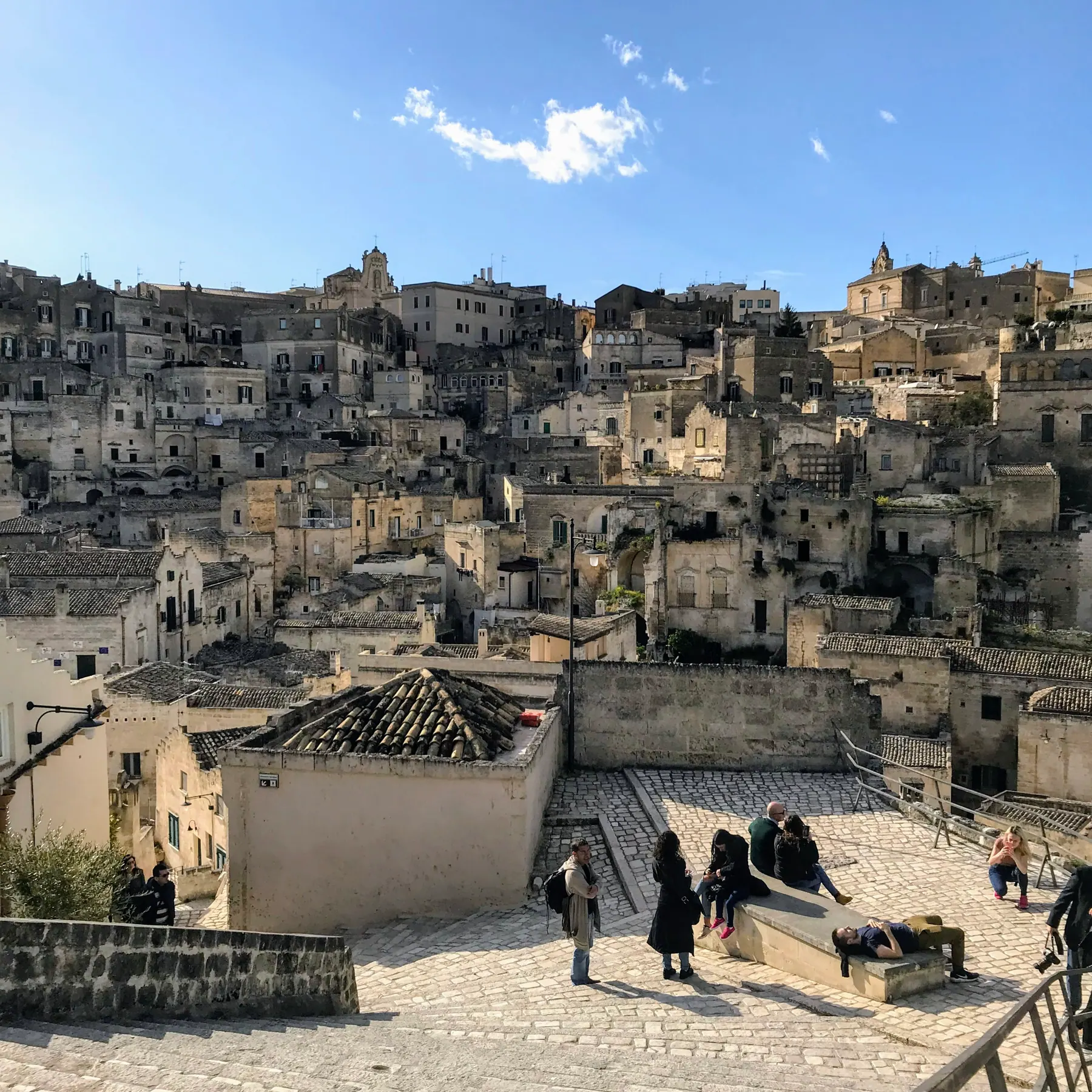
The Sassi - the two cave districts that make up the old town - were lived in continuously for thousands of years. Even not long ago, by the 20th century, around fifteen thousand people were living in them, families sharing windowless caves with their animals, in conditions bad enough that infant mortality was close to fifty per cent.
In 1945 the writer Carlo Levi, who had been exiled to Basilicata for opposing the fascists, published Christ Stopped at Eboli. The title says everything: Christ - meaning civilisation, dignity, the modern world - stopped at Eboli, north of here, and never came any further south. The book made Matera famous for the wrong reasons.
In 1950 the prime minister, Alcide De Gasperi, came to see for himself and called the Sassi la vergogna nazionale - the national shame of Italy. Two years later a special law emptied them completely. Everyone was moved out to new housing on the plateau above, and the caves were left to stand empty. That process took most of two decades, and for thirty years afterwards the Sassi were a ghost town.
Then it turned. A law in 1986 allowed people to restore the caves. UNESCO listed them in 1993. And in 2019 the city was European Capital of Culture.
So within a single lifetime, Matera went from being the place Italy was most ashamed of to the place it was showing off. That is the thing to hold in your head while you walk around.
What 2019 was actually like
That year was Matera's turn in the spotlight, and the city took it seriously. The whole place was preparing to show the best of itself, and the number of events, exhibitions and projects was outstanding. I was involved in some of it, which meant I got to watch it from the inside.
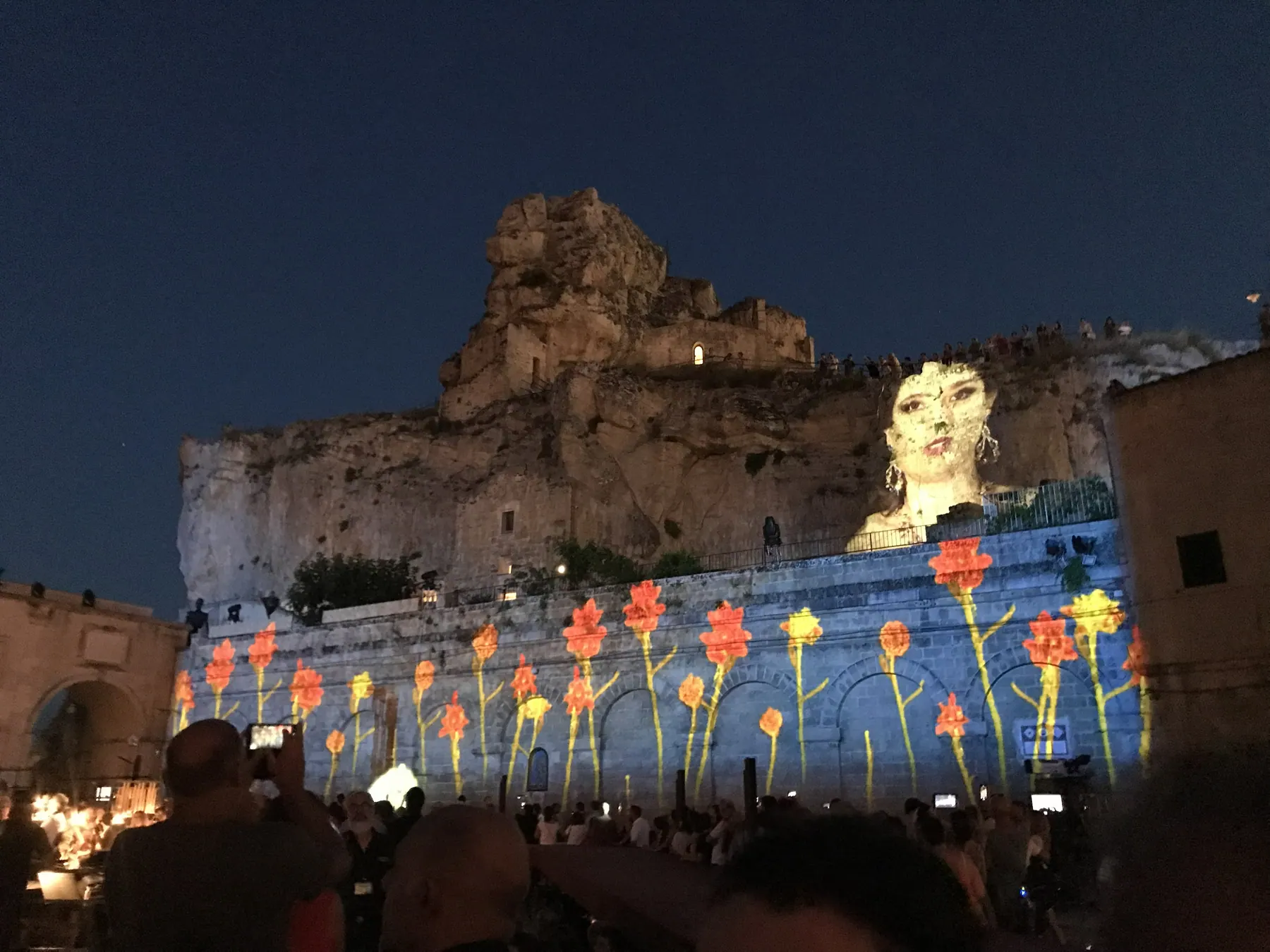
What I noticed most was the pride. The Lucani - the people of Basilicata - were proud of their city and of what it had become. Given the history above, that is not a small thing.
The other thing worth knowing is how they went about it, because it wasn't the usual model. Matera 2019 deliberately turned away from mass tourism and built the year around the idea of temporary citizens. You bought a passport for €19, and it made you a participant rather than a spectator. Around 75,000 people took it up.
In practice that meant workshops, and being drawn into the story of Matera rather than being shown it from outside. I took part in some of that myself, and it works. It's the difference between visiting a town and briefly belonging to one, and I've thought about it a lot since, because very few destinations attempt anything like it.
But the year changed Matera too. With the new status, tourism arrived properly. Most of the visitors were still Italians at that point, which surprises people who assume it was always full of foreigners. And locals were already saying that prices had gone up - bars, restaurants, the ordinary things.
That is the price a place pays for being recognised. I'd say it was worth it here, and I don't think many people in Matera would disagree. But it's an honest thing to acknowledge rather than skip past.
The first view: Belvedere Luigi Guerricchio
I still remember the first walk. Matera is small, so it doesn't take long to reach the point where the ground simply opens.
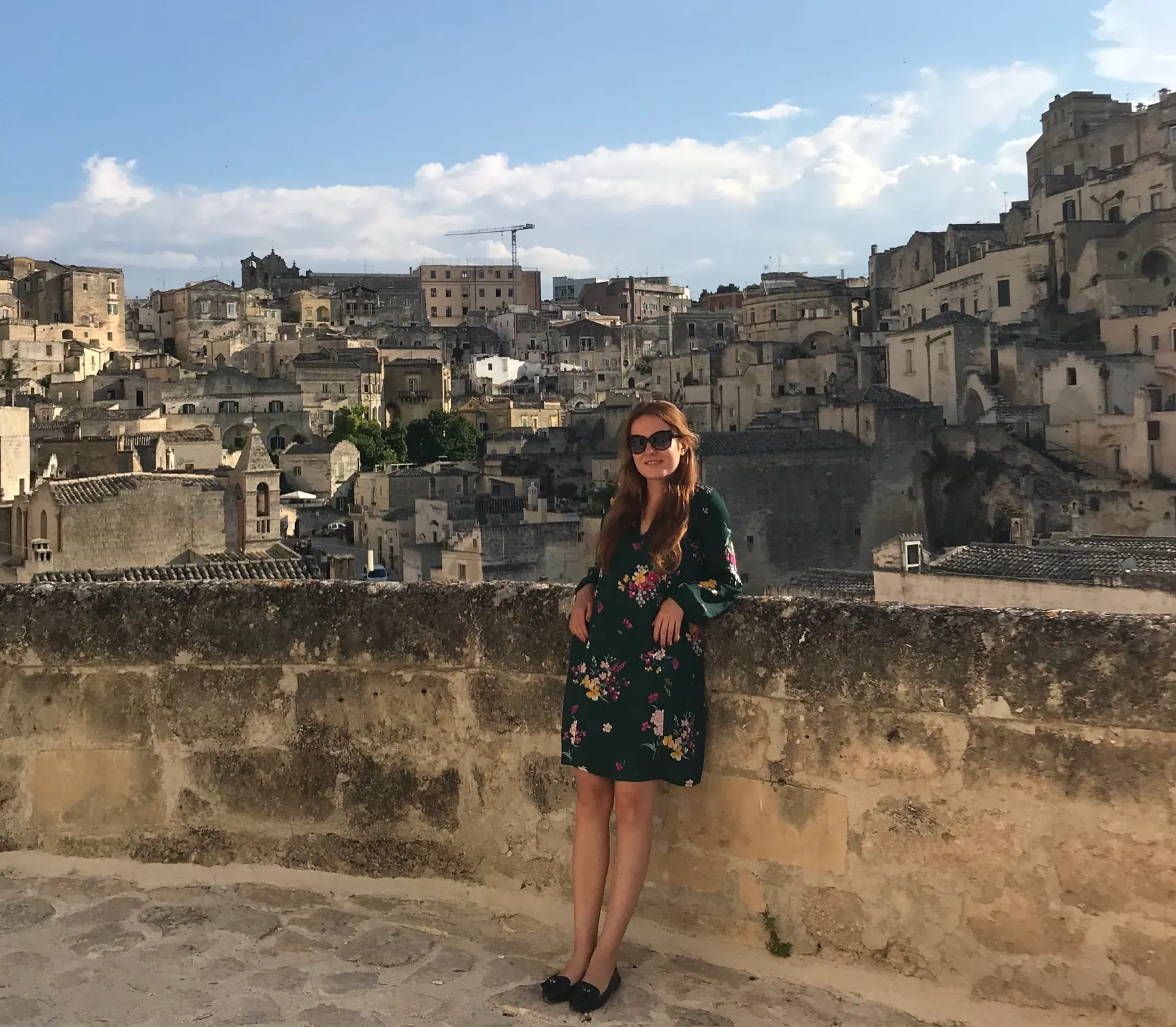
That point is the Belvedere Luigi Guerricchio, off Piazza Vittorio Veneto. You come out of an ordinary Italian square and there, below you, is a whole city carved into a ravine. I hadn't seen anything like it.
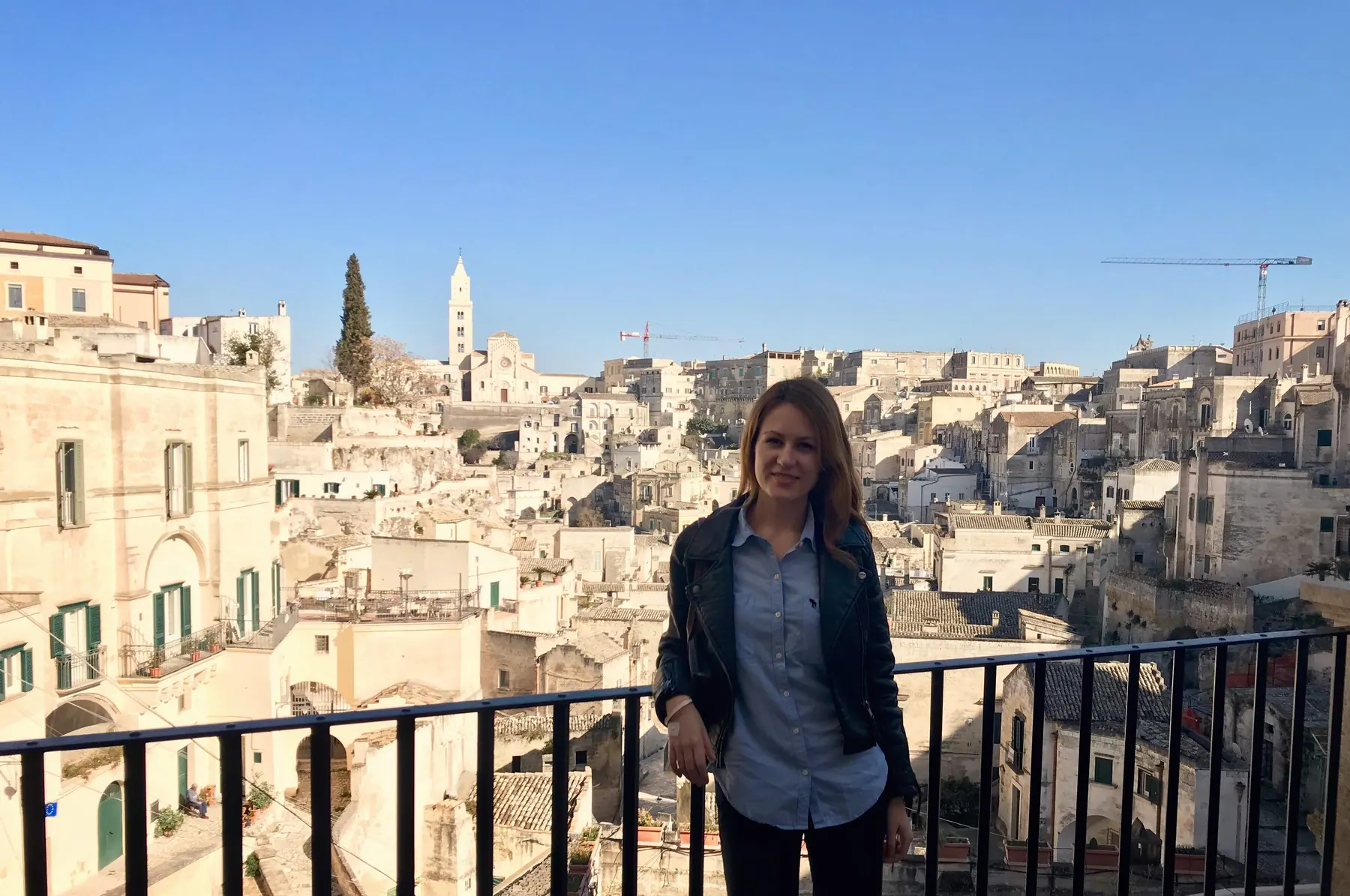
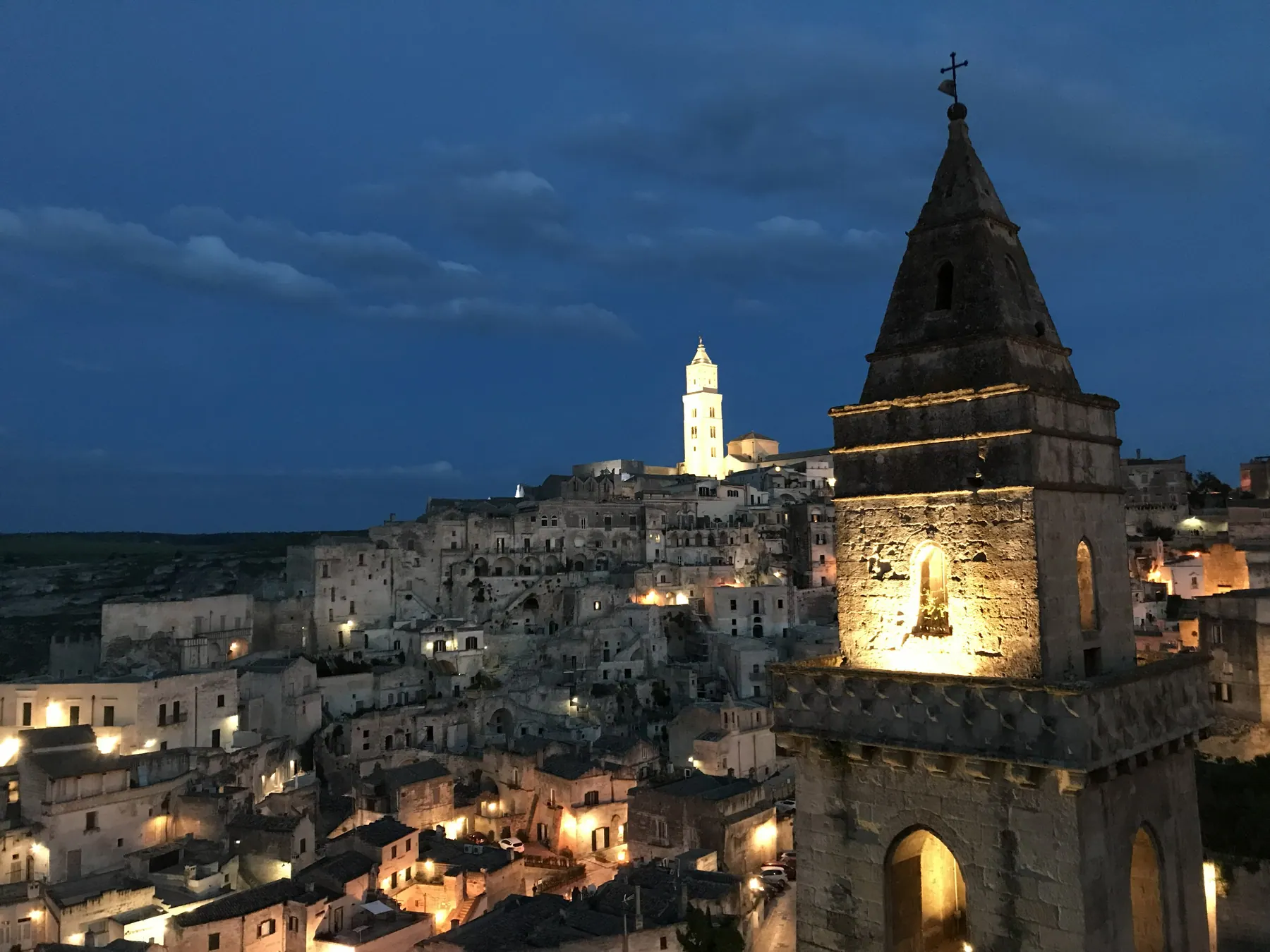
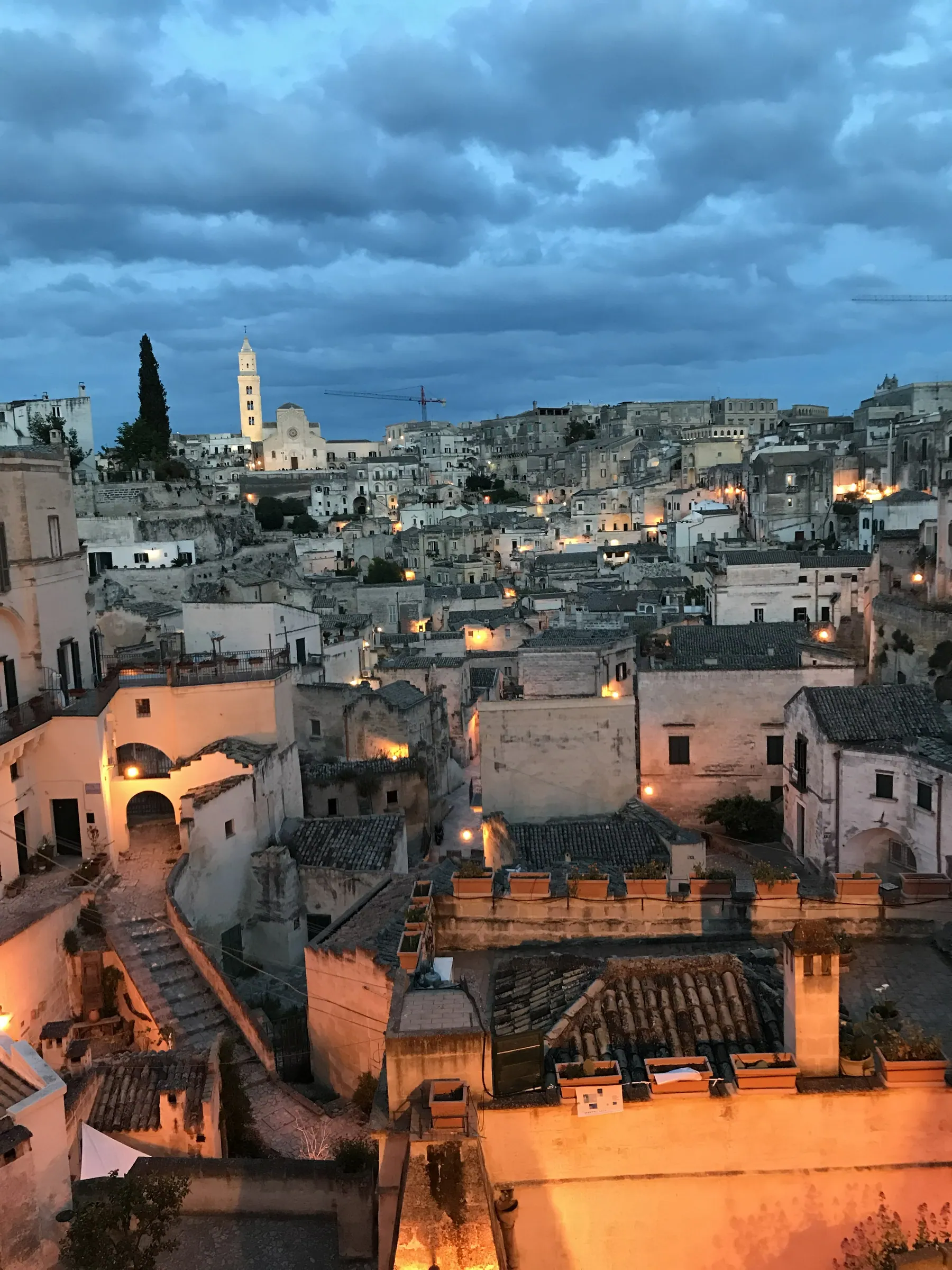
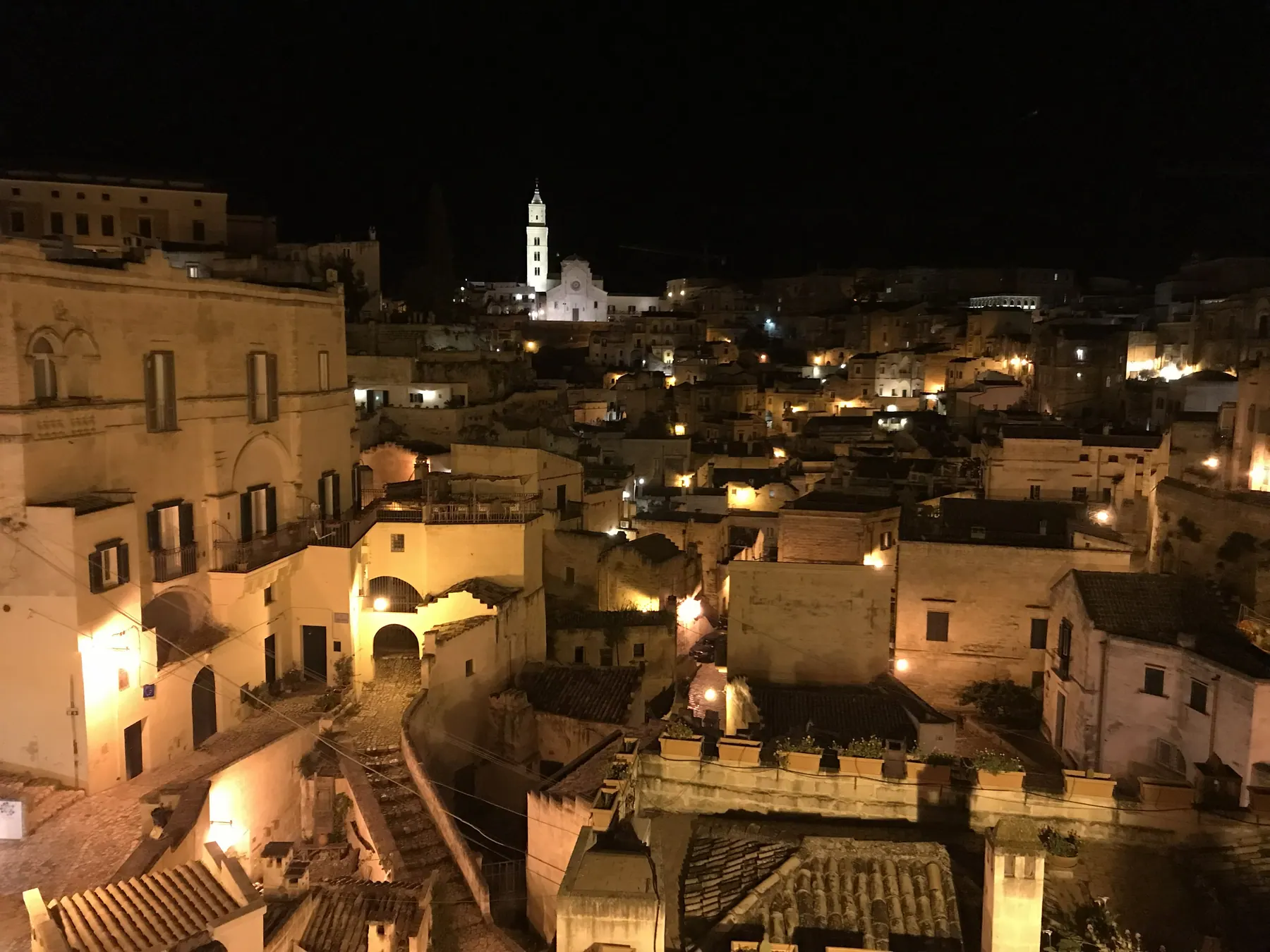
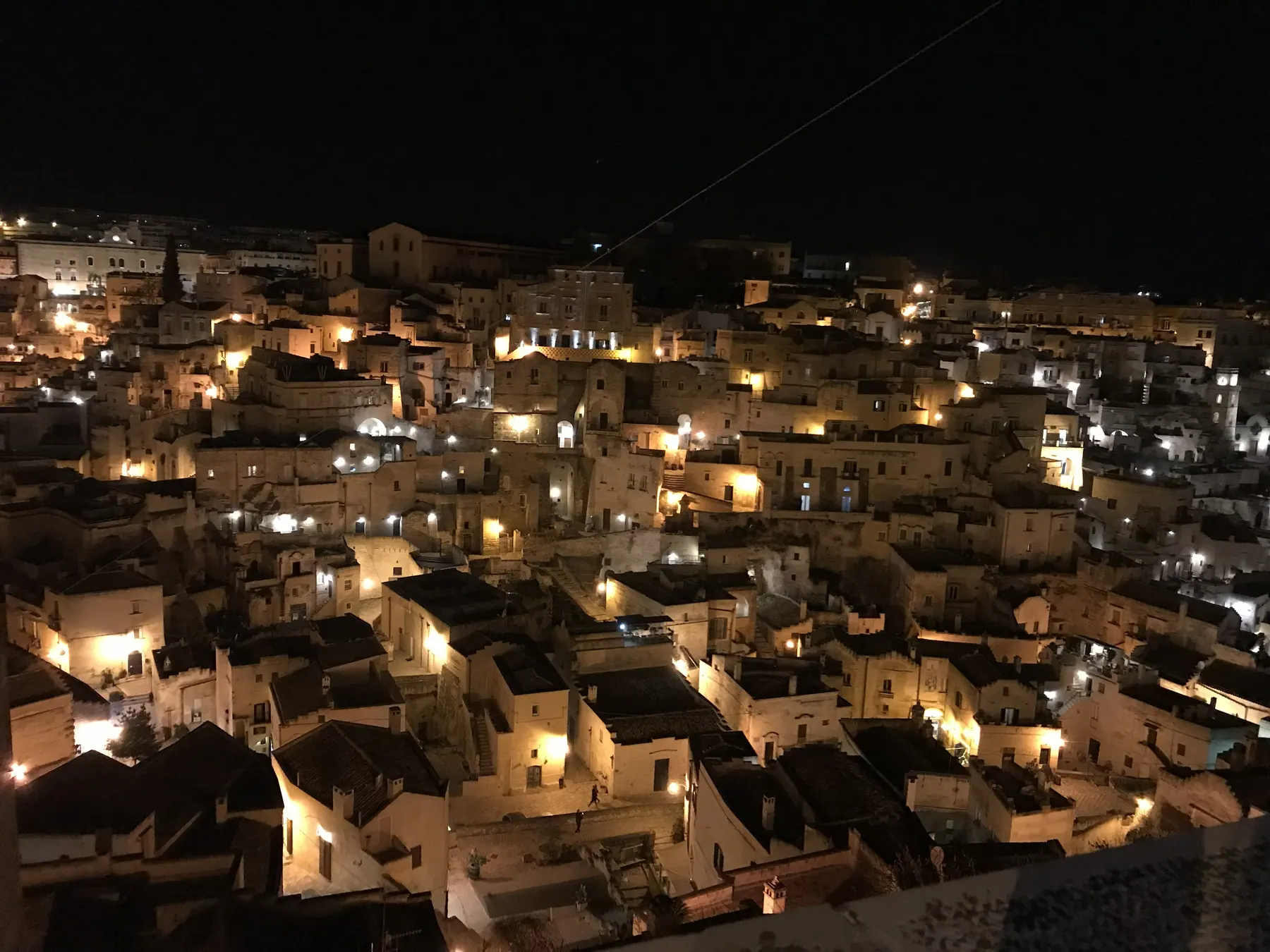
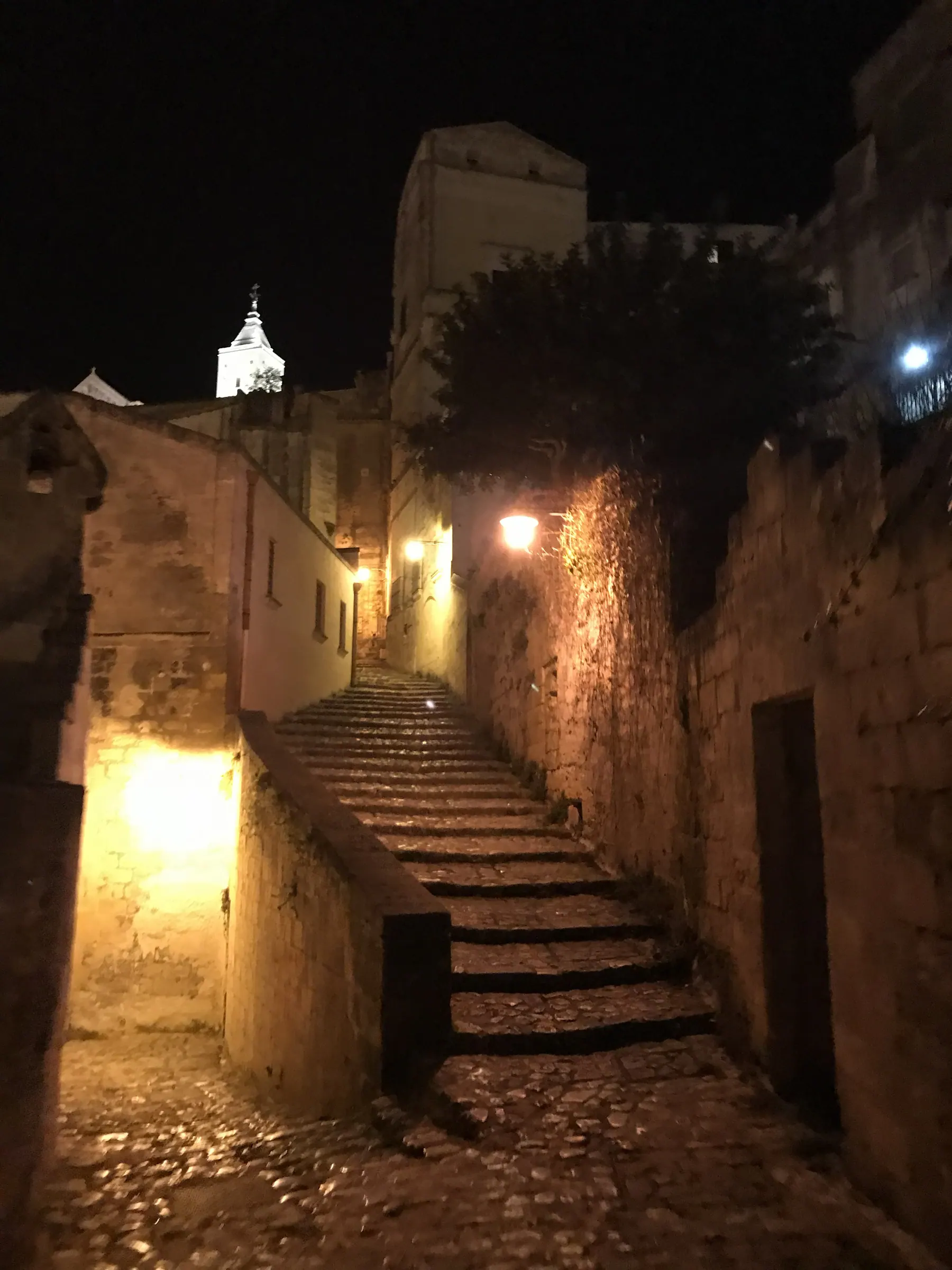
Go back in the evening, and again at night. The lights come on across the whole thing and it becomes something else entirely. I did that walk numerous times over six months, up and down the stairs of the Sassi after dark, and it never became ordinary.
Which brings me to the one piece of advice I'd give above any other.
Can you do Matera in a day? Yes, easily. The town is small, the Sassi are walkable, and you can see the main things between morning and late afternoon. Most people do exactly that, arriving from Bari or Puglia and leaving the same day.
But you'd be leaving before the best part. Matera at night is striking - honestly it might be my favourite way to see the place - and the daytime version is the one shared with every coach party. If you can, stay. And if you get the chance to sleep in one of the panoramic cave rooms in the Sassi, take it. This is a town that deserves an evening.
The upper town: Piazza Vittorio Veneto, Via Ridola and Piazza Duomo
First, a word about how the place is laid out, because it isn't obvious and it makes everything else easier to follow.
Matera is not only the caves. The Sassi sit below an ordinary upper town of squares, palaces and baroque churches, and beyond that is the modern city - including the neighbourhoods built in the 1950s and 60s to rehouse the families moved out of the caves. That's where most people in Matera actually live, and there's a university out there too.
So the walk is downwards. You arrive in the upper town and descend into the cave city underneath it.
You will get lost, and that's fine. For my first weeks the Sassi and the centre felt like a labyrinth - stairs that doubled back, streets that turned out to be roofs, dead ends that weren't. It took living there for a while before I could reliably find my way, and by the end I could.
The centre and the Sassi area aren't flat. They climb and drop and turn back on themselves, so walking is unpredictable - you turn a corner and a view opens where you didn't expect one.
It's also full of squares and churches, more than would be sensible to list here. What follows are the ones I'd point you to, but a good part of the upper town is simply what you come across between them.
Piazza Vittorio Veneto is where you'll probably arrive first, and it's the square the belvedere I mentioned sits on. It's also where everyone meets - if you're arranging to see someone in Matera, this is where you'd say.
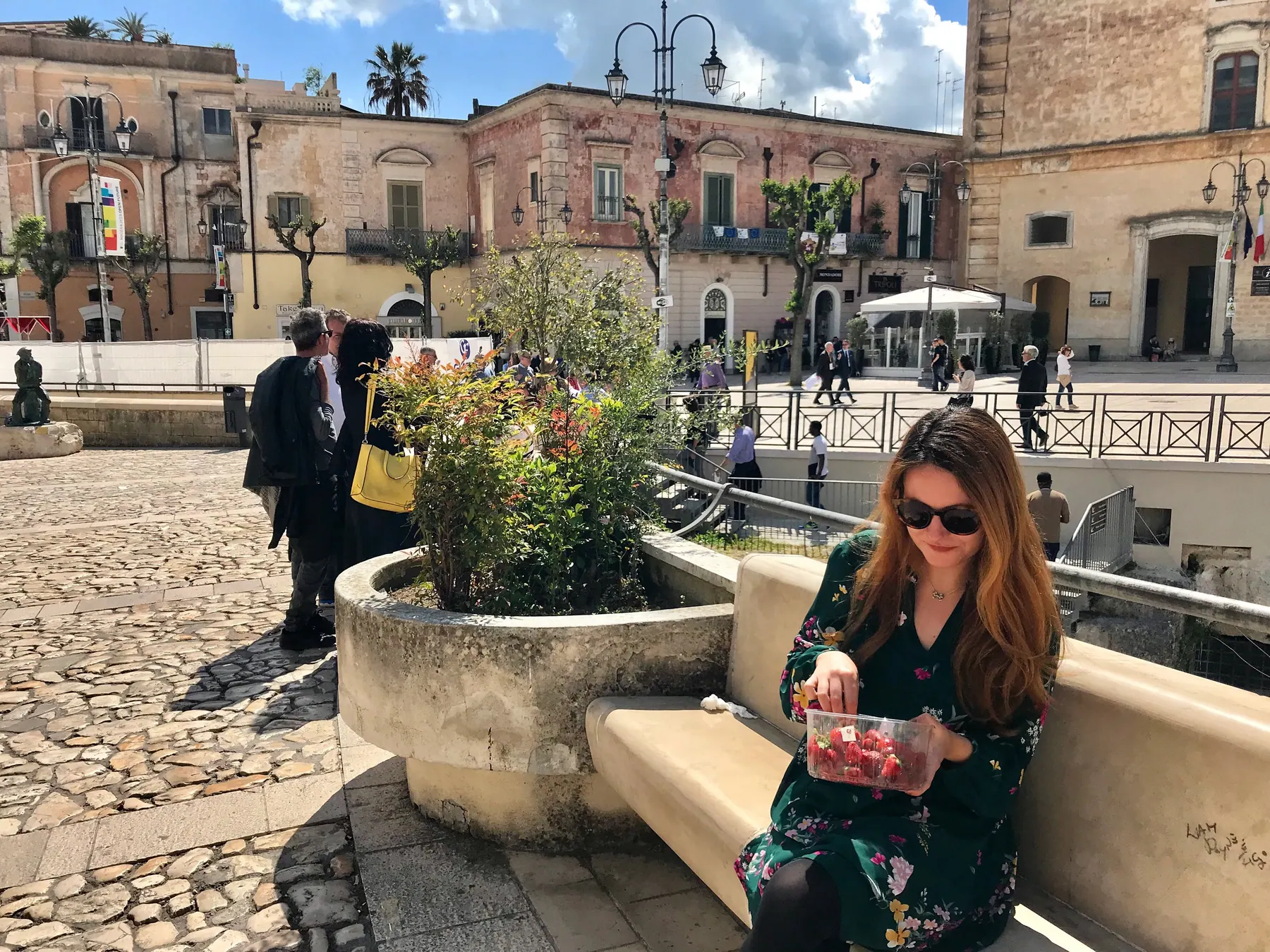
Underneath it is the Palombaro Lungo, an enormous cistern cut into the rock, capable of holding five million litres, which supplied the town until the aqueduct arrived in the 1920s. Then it was forgotten entirely, and only rediscovered in the early 1990s when the square was being resurfaced. I went down, and I'd tell anyone to do the same: it's a few euros, it takes half an hour, and standing at the bottom of it feels like being in an underground cathedral.
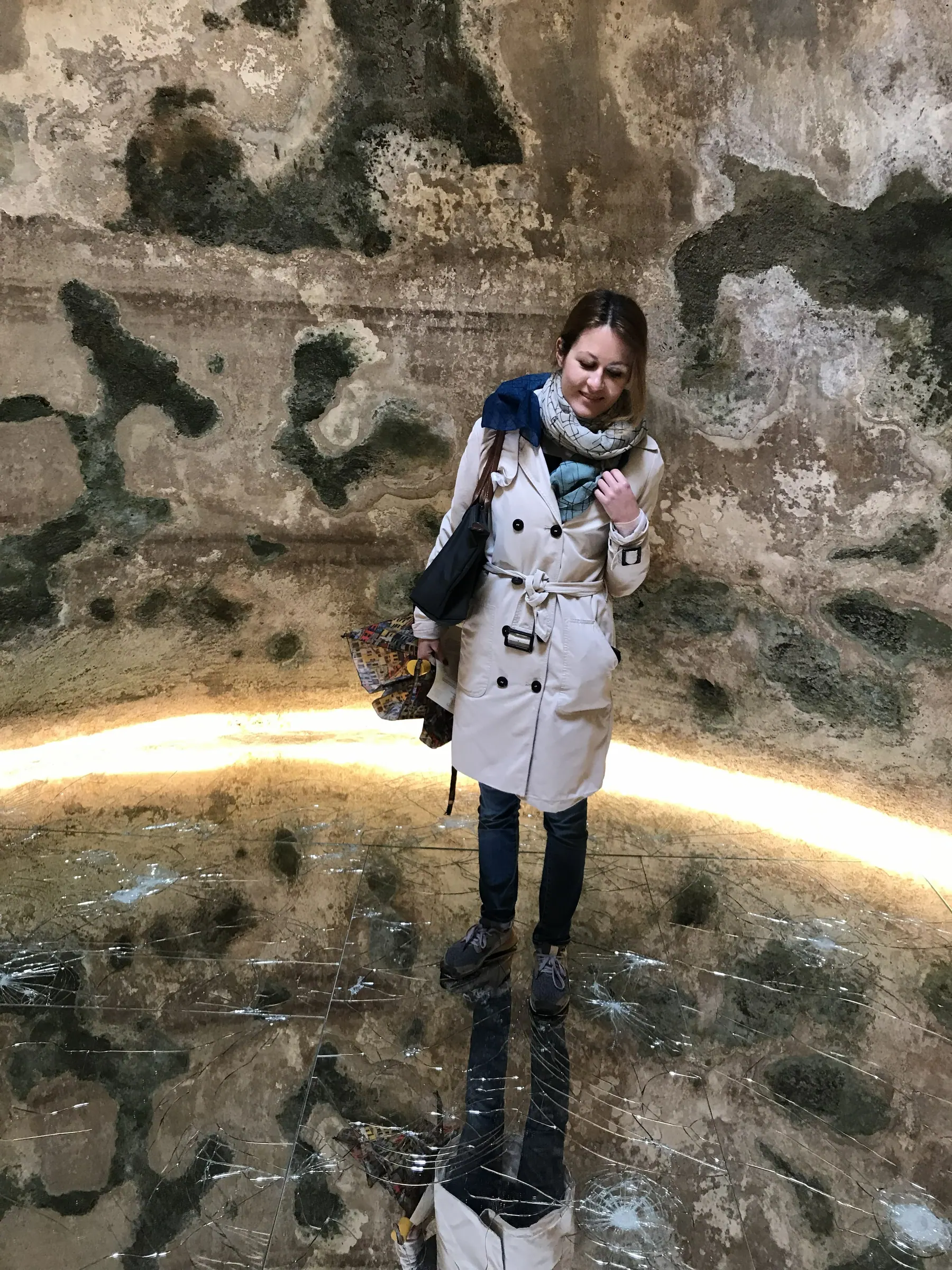
From the square, Via del Corso runs south and becomes Via Ridola - one continuous walk, with Piazza San Francesco opening off it on the way.
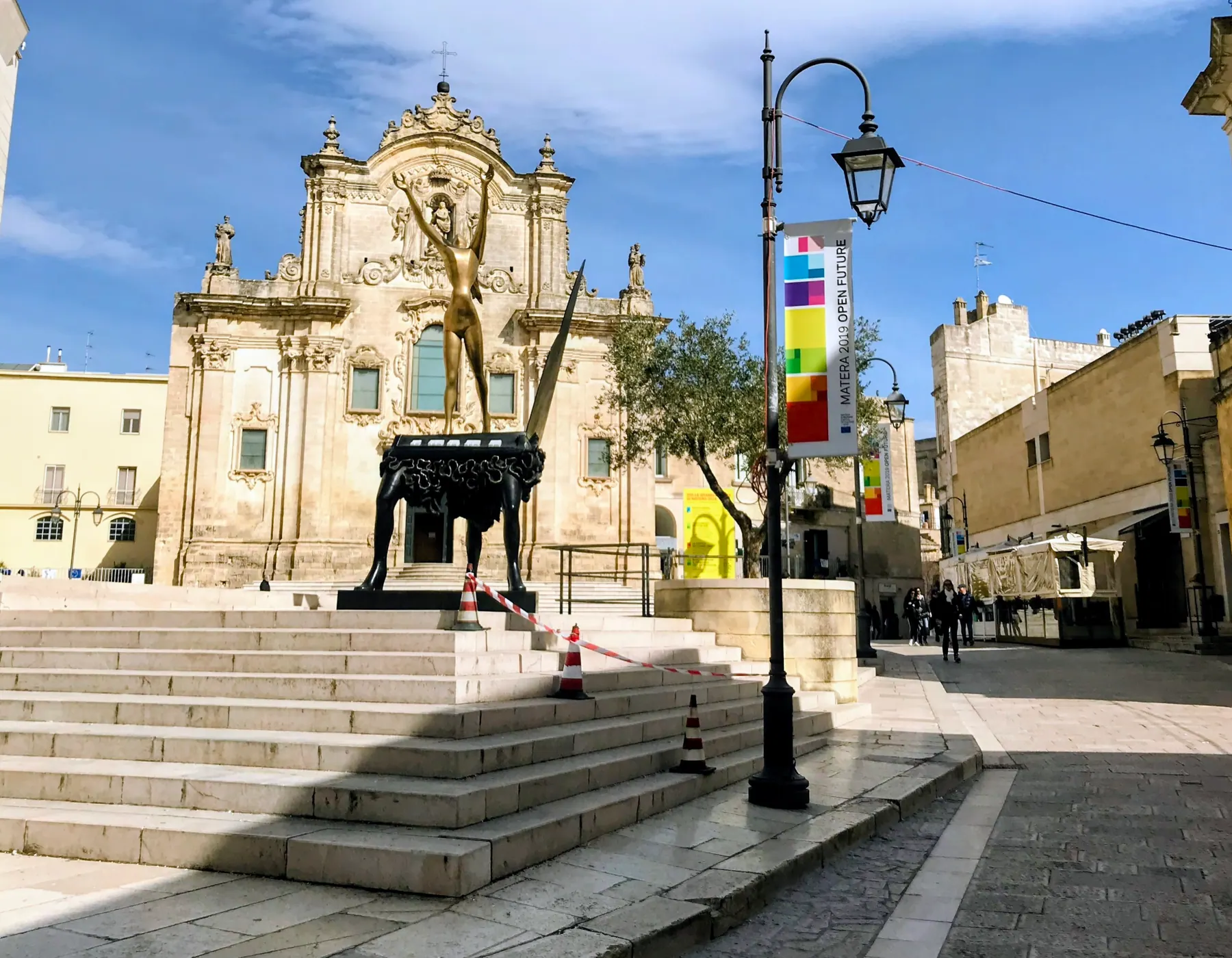
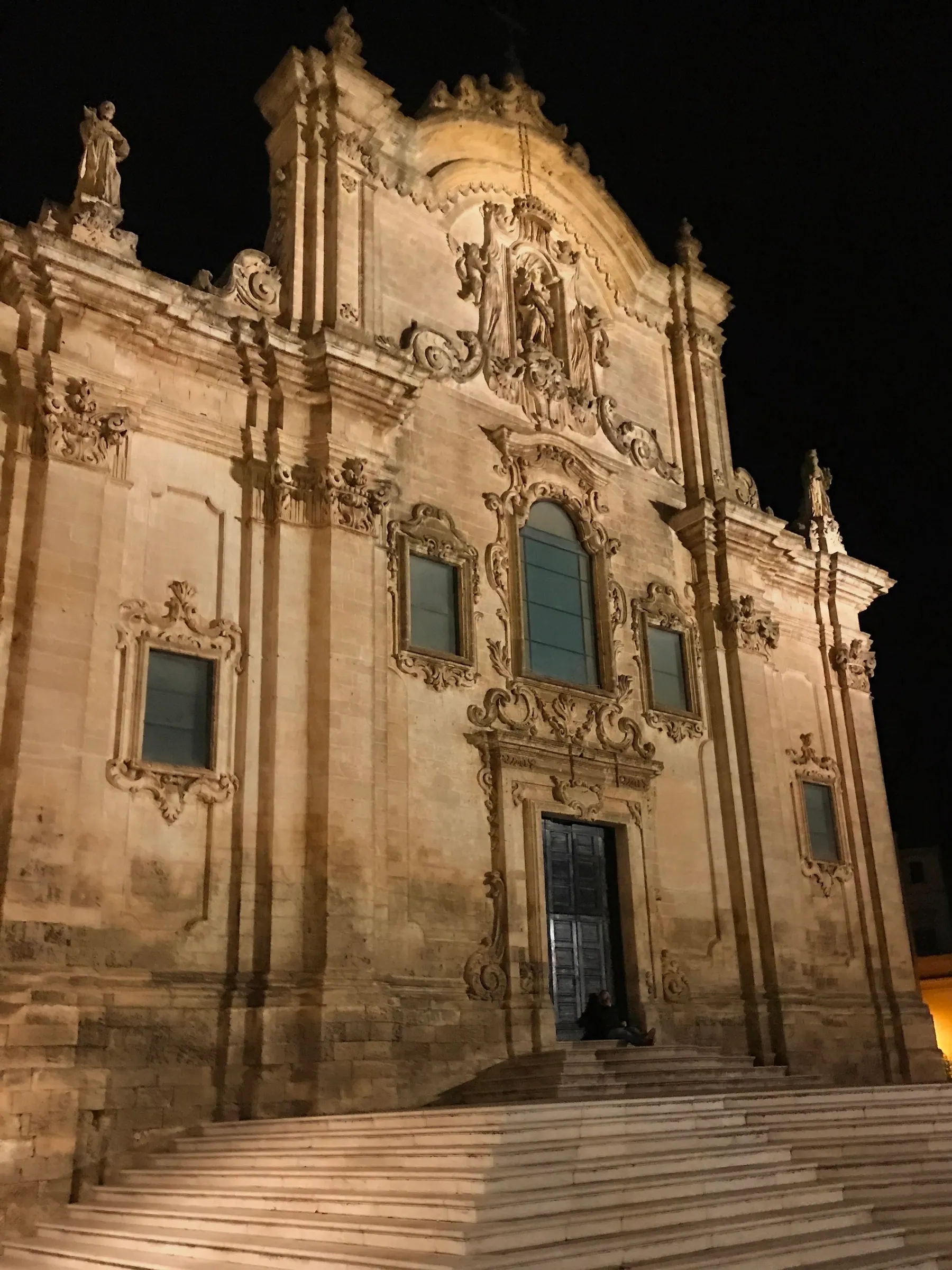
Via Ridola is a good street to walk, and about halfway along it is the Chiesa del Purgatorio, which is worth stopping in front of: the entire façade, door included, is carved with skulls and skeletons. It's the only church in Matera with a curved front.
The street ends at Palazzo Lanfranchi, which now houses the national museum. Go in for one thing above all: Carlo Levi's Lucania '61, a canvas eighteen metres long with around 150 figures in it, painted for the centenary of Italian unity. There's a neat circularity to it - the writer whose book branded Matera the shame of Italy has his masterpiece hanging in Matera's own museum.
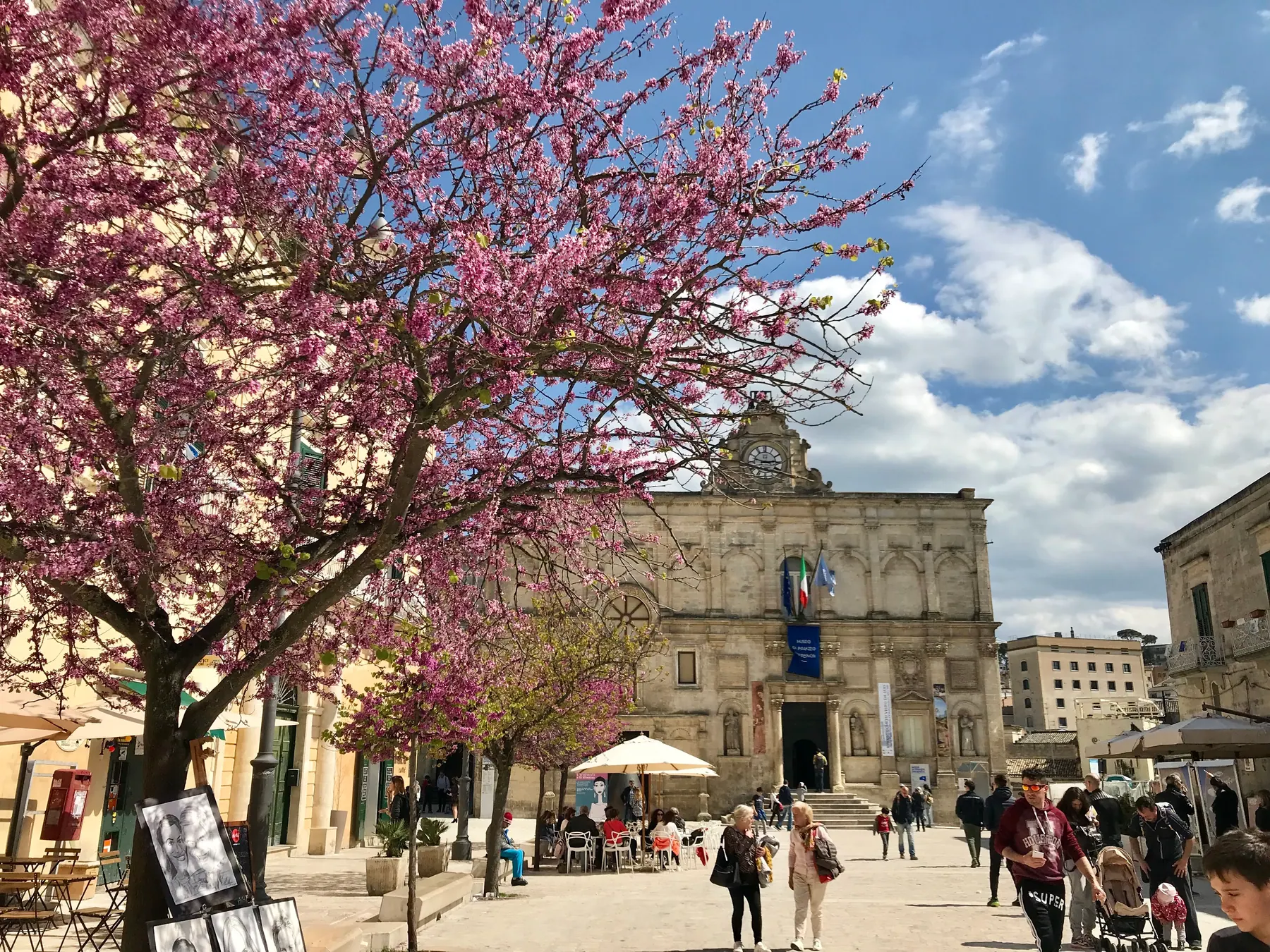
Just beside it is the Belvedere di Piazza Pascoli, the city's most famous viewpoint.
Don't go chasing only the famous viewpoints, though. The charm of Matera is walking around and discovering different angles from different streets.
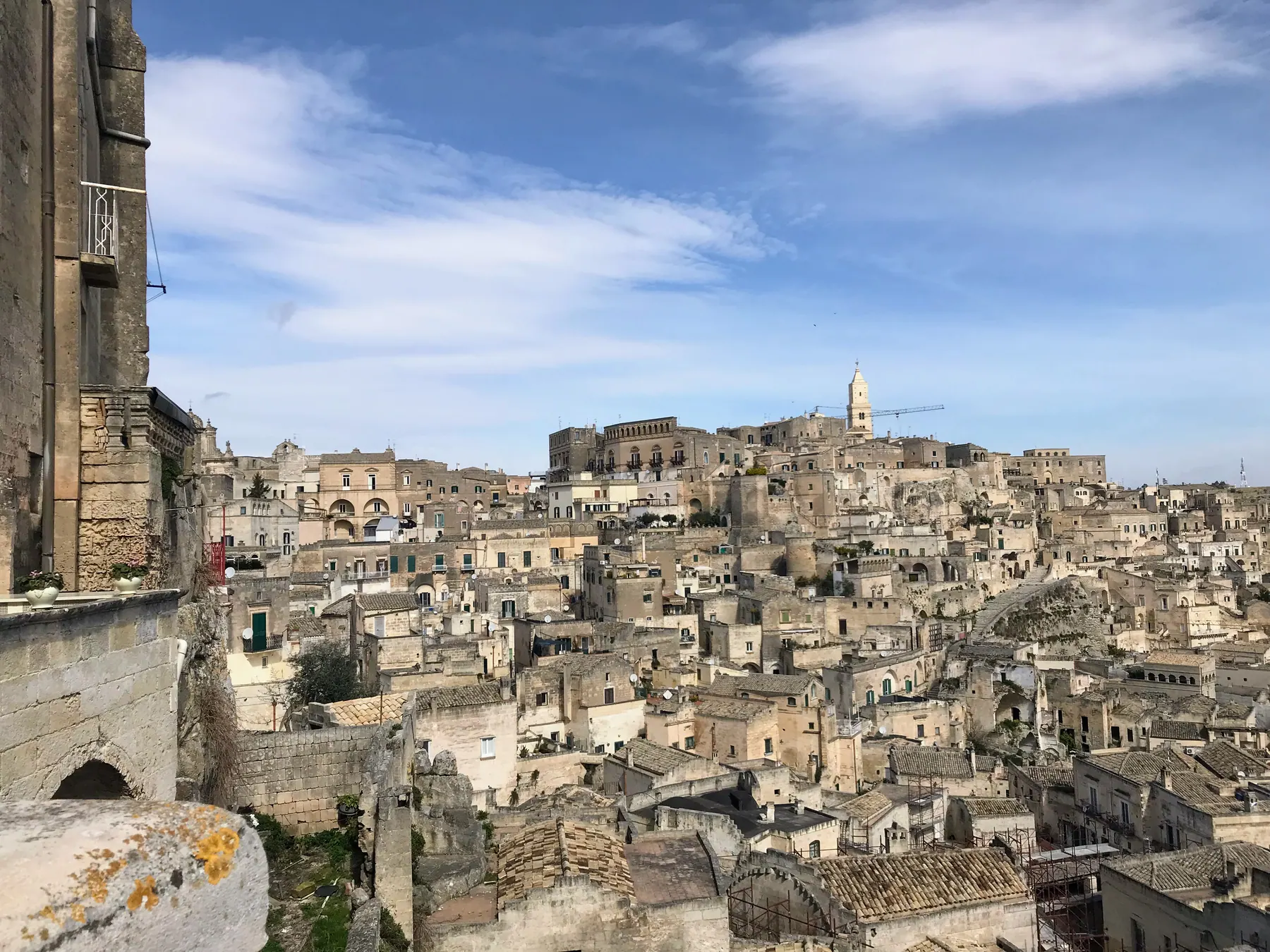
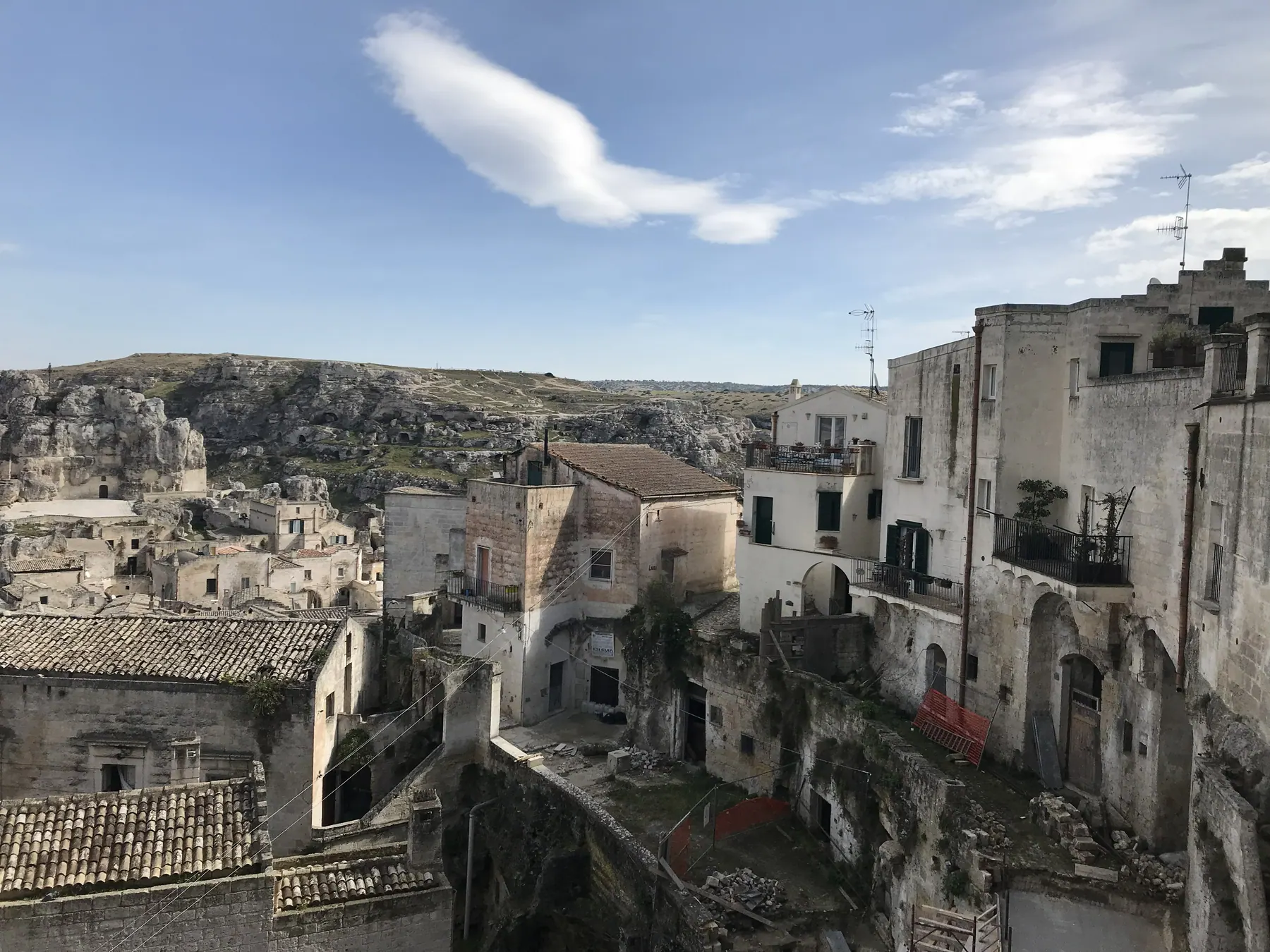
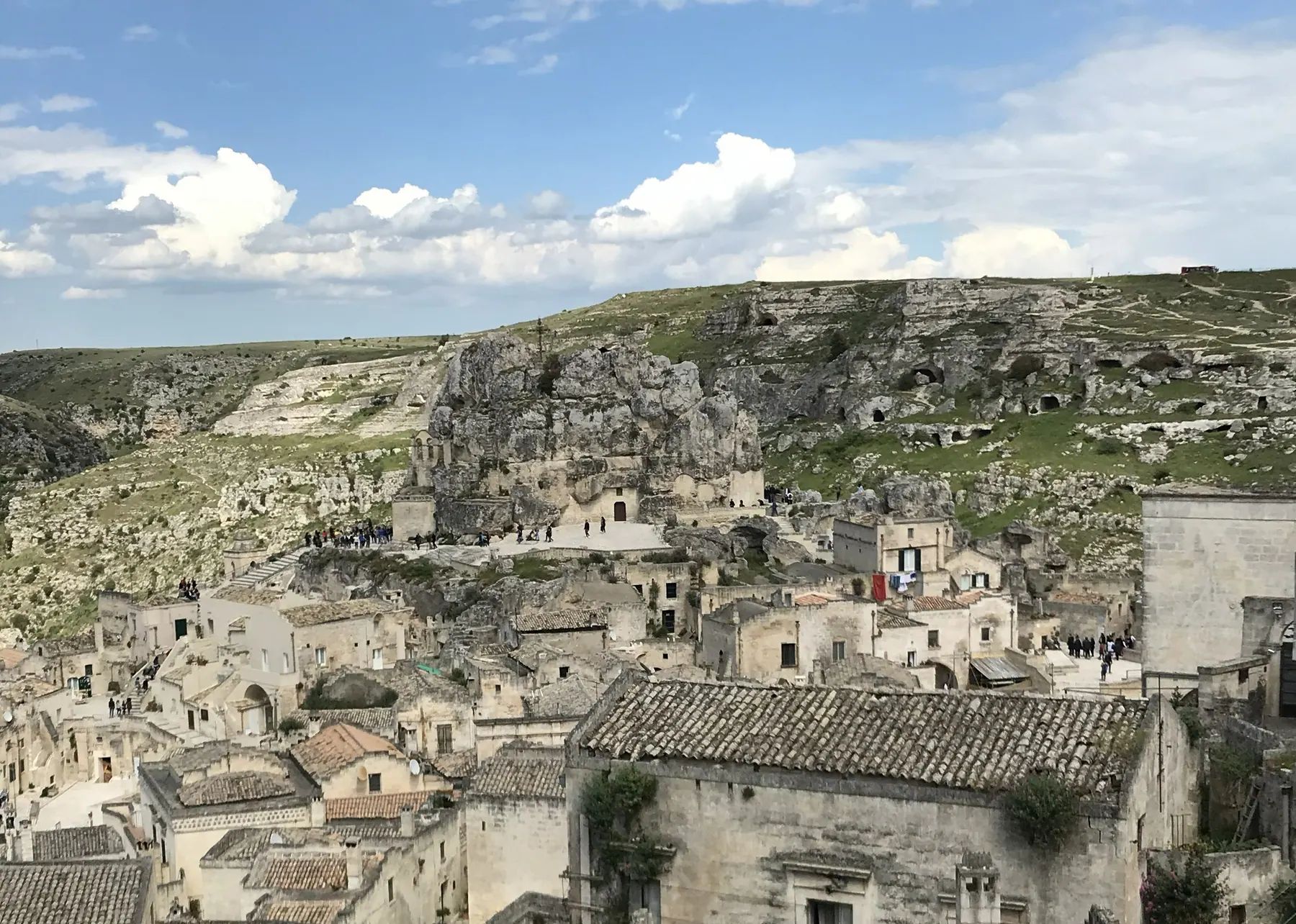
And on Via Ridola, I Vizi degli Angeli - where I used to get delicious ice cream, and where the number of flavours makes choosing properly difficult. Cremeria dell'Angelo is the other one worth knowing about (but it´s in different part of the town).
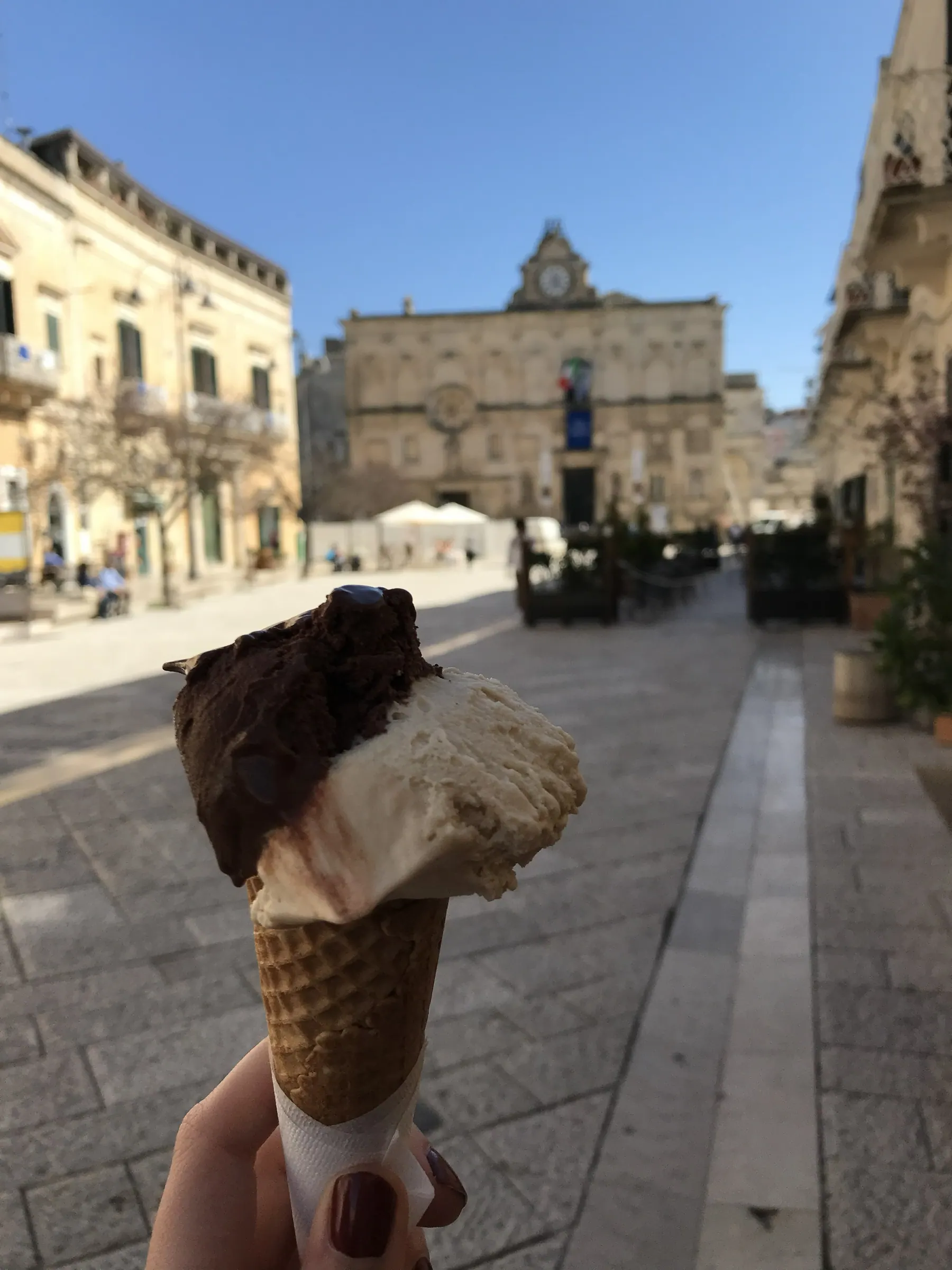
Turning off Via Ridola you reach Piazza del Sedile, which was one of my favourite squares in Matera - small, cosy, with trees planted in it, and where I used to sit for a coffee or a drink.
From there the way up is Via Duomo, through the Porta di Suso and out into Piazza Duomo. An Italian town wouldn't be an Italian town without its cathedral, and Matera's is the Cattedrale della Madonna della Bruna, standing on the ridge between the two Sassi. And - no surprise by this point - the views from there are beautiful too. It's a good walk to do in the evening.
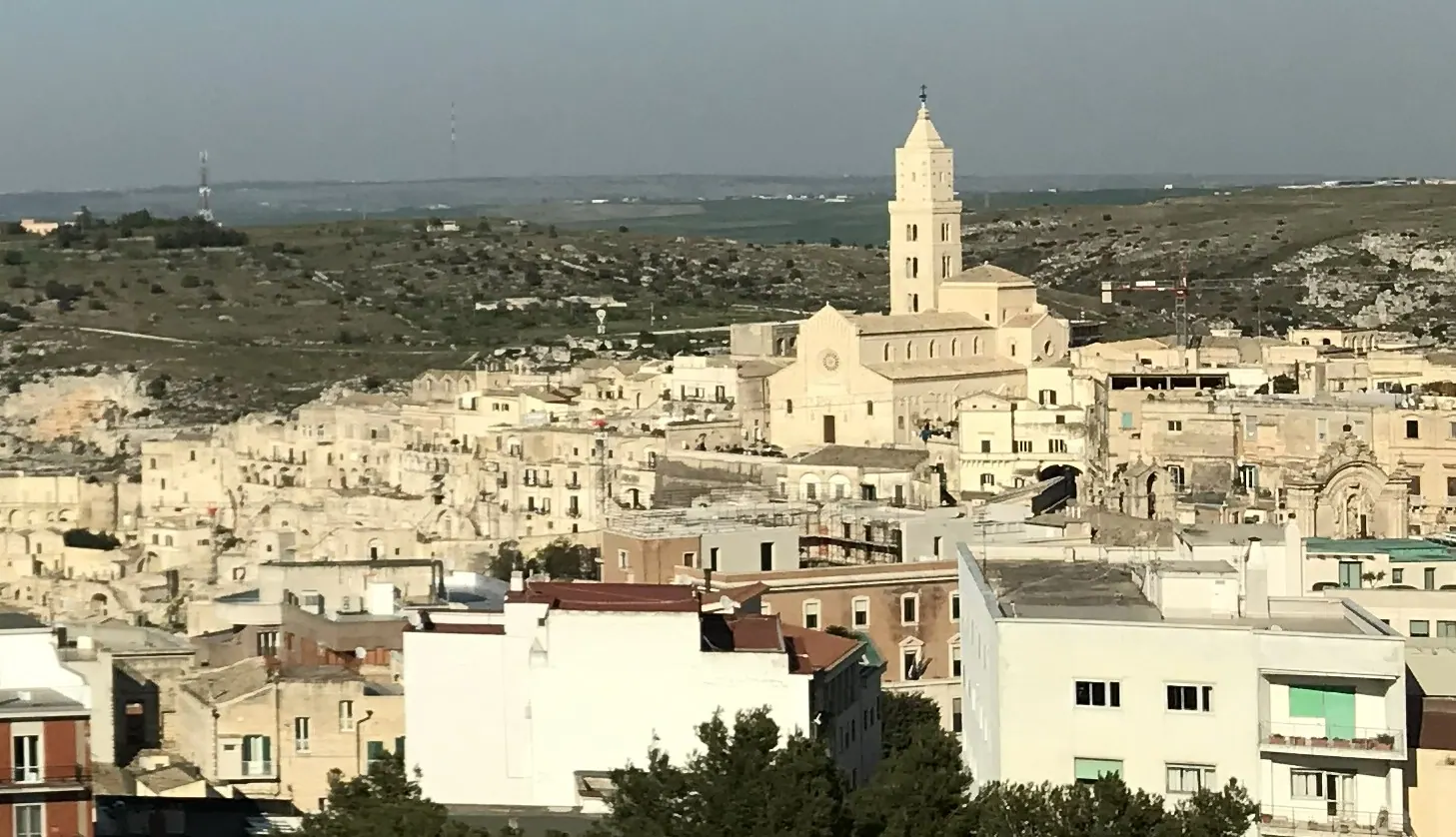
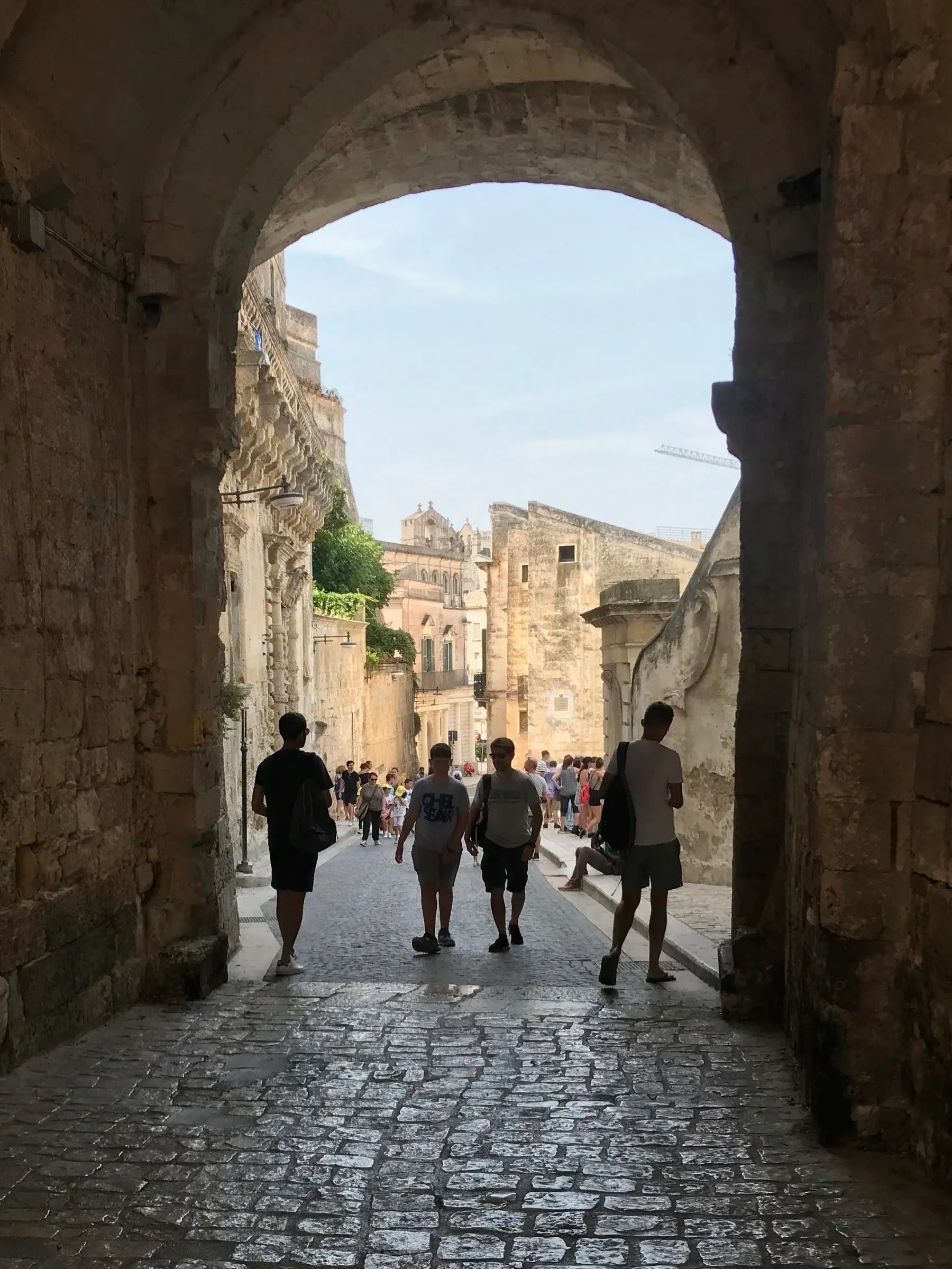
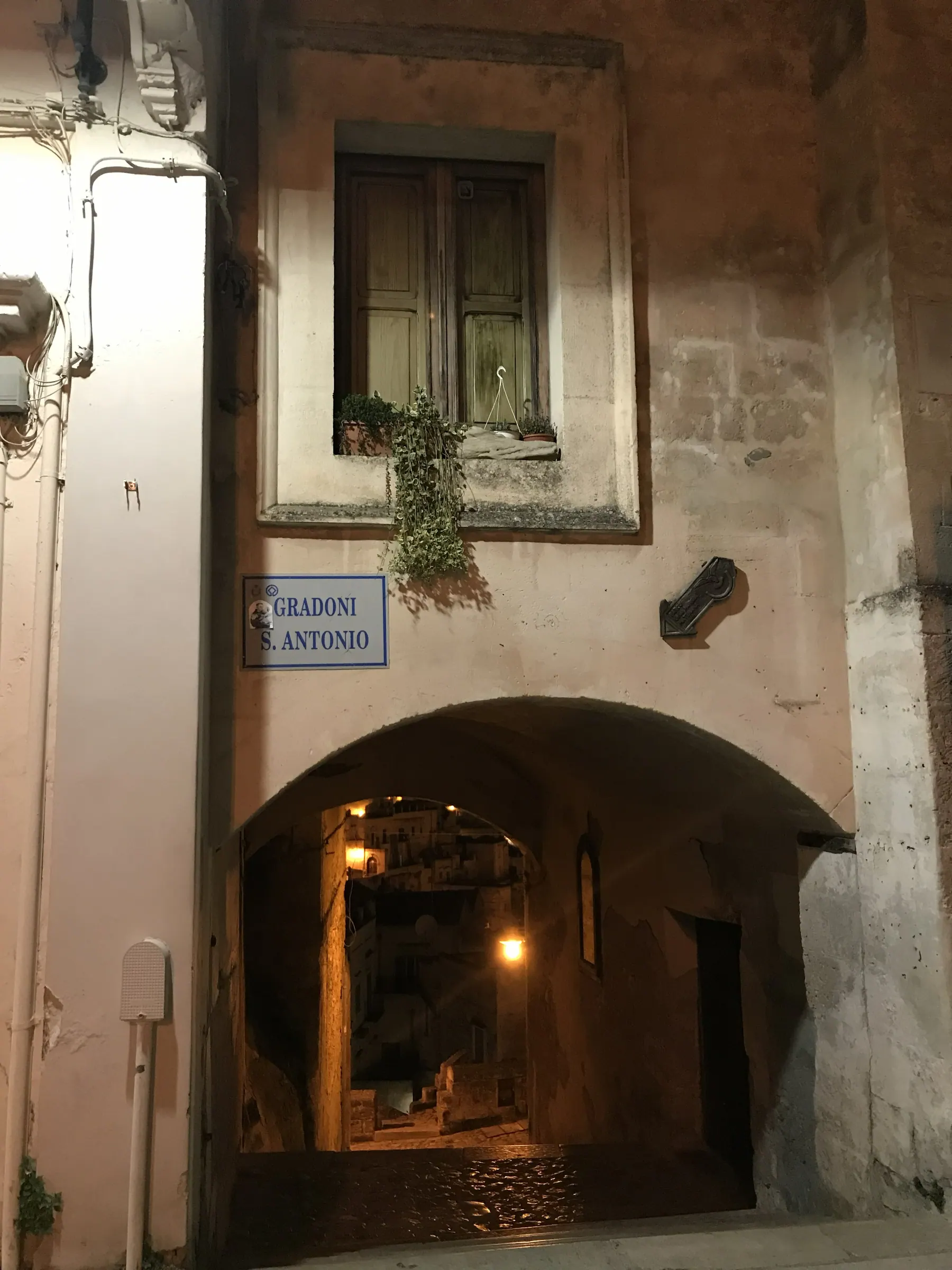
The streets behind the cathedral are worth getting into on their own account. Via Muro is the one I'd point to - narrow enough to feel like a labyrinth, running under arches and through what are effectively small tunnels.
A short walk from the Duomo, in that same quarter, is Casa Noha, which makes a good introduction to the city before you see the rest of it. It's a 16th-century house that belonged to one of the city's noble families, given to the Italian environmental trust in 2004 and restored. What they've done inside is unusual: rather than fill it with objects, they project a film called I Sassi invisibili - "the invisible Sassi" - onto the bare stone walls, ceilings and floors of the rooms, telling the whole story of the city from its beginnings to the present. It runs about half an hour and repeats through the day.
It's the place I took everyone who came to visit me while I was living there, because it explains everything you're about to walk through. It's around €6.50.
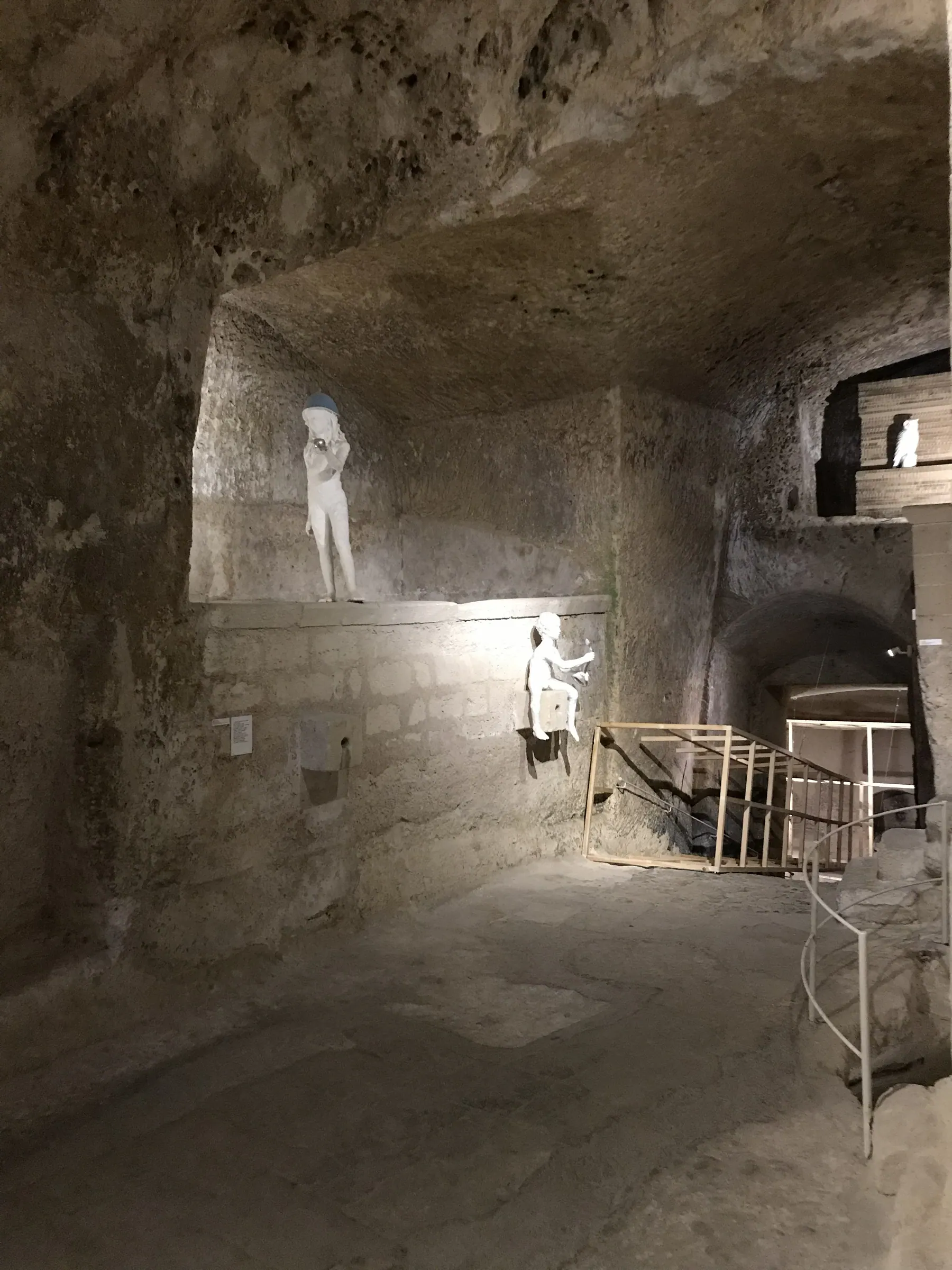
MUSMA, the museum of contemporary sculpture, is in the same area, in a palace on Via San Giacomo whose lower rooms are caves. The collection is interesting in itself, but it's the concept that makes it - sculpture displayed in hollowed-out rock, which is a combination you won't find anywhere else. Worth a visit.
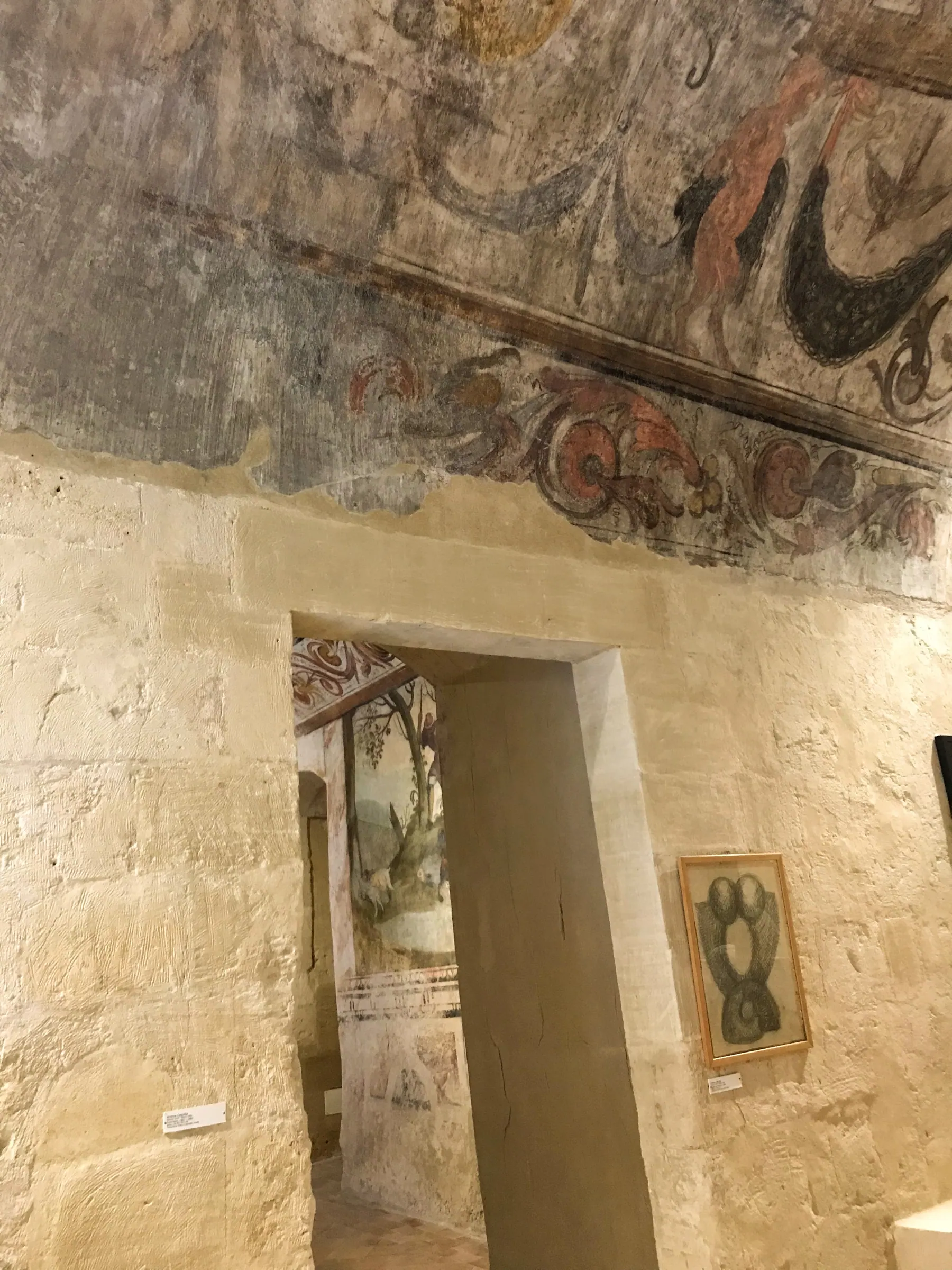
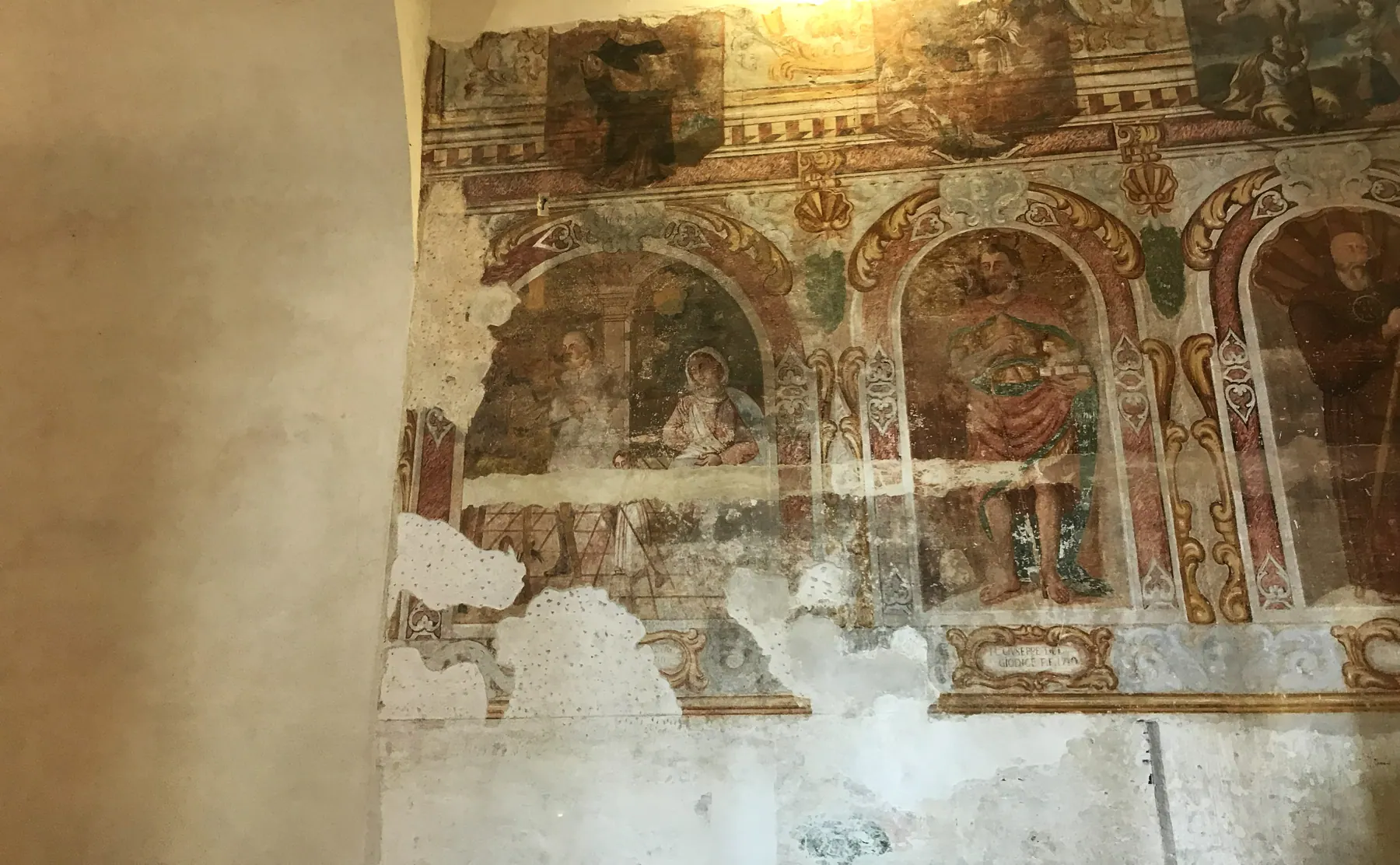
The Ex Ospedale di San Rocco, on Piazza San Giovanni, is worth going into for the frescoes. The building went up in 1348, after a plague, and inside it is a small church known locally as the artists' church. The frescoes were recovered in a restoration in the 1990s. Entry is around €3.
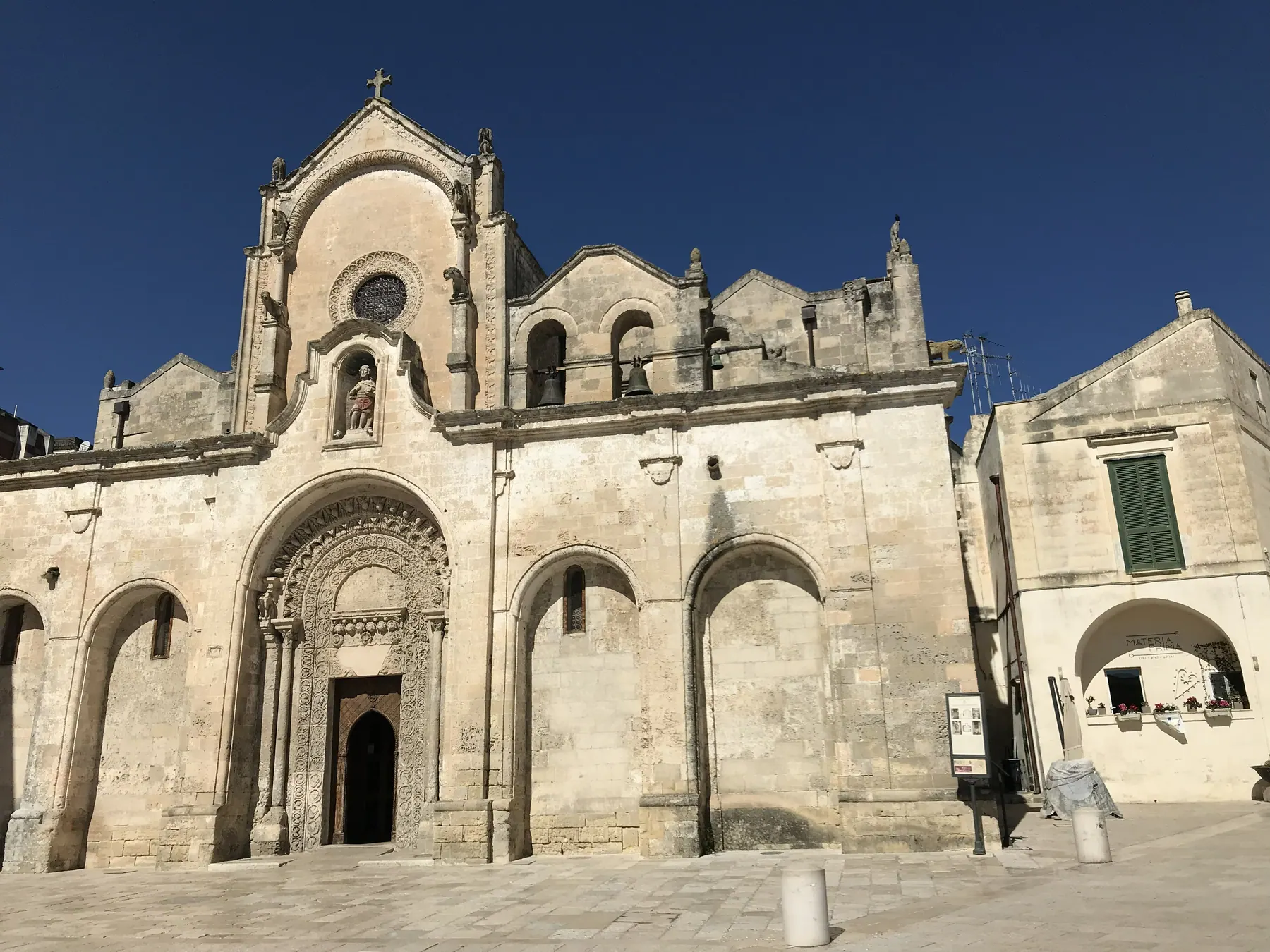
Attached to it is the Chiesa di San Giovanni Battista, finished in 1233 and one of the best Romanesque buildings in the city. It's free, it's quiet, and it sits just off the main tourist route.
And Matera has a castle, the Castello Tramontano, standing above the town. I walked up to it, and I'd be honest: after the old town it isn't especially impressive, and it was never actually finished. Put it in the itinerary only if you have spare time.
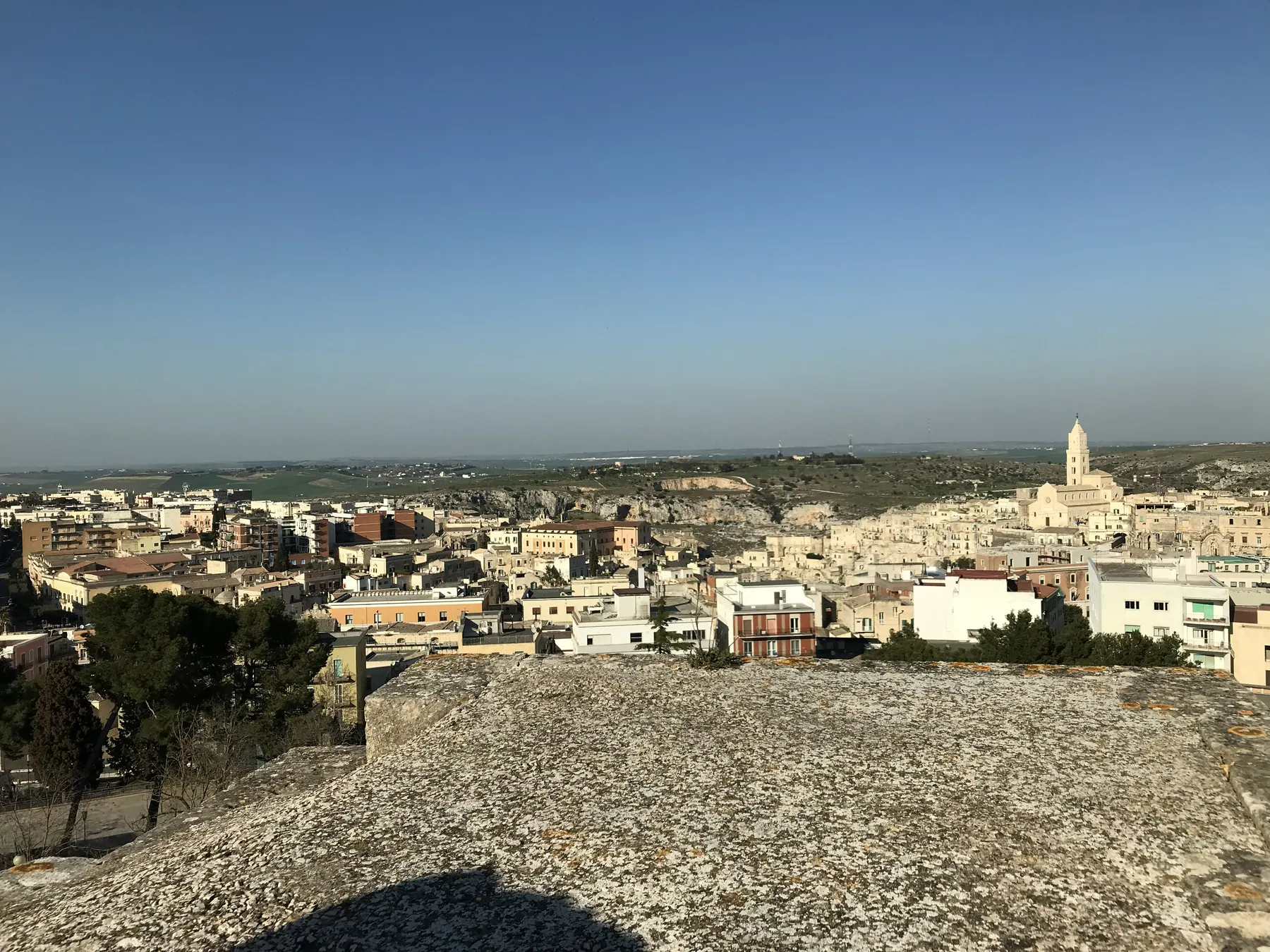
Next to it, though, is the Parco Papa Giovanni Paolo II, a green space that's popular with people who live here. If you want somewhere to sit, or a picnic away from the stone, that's where to go.
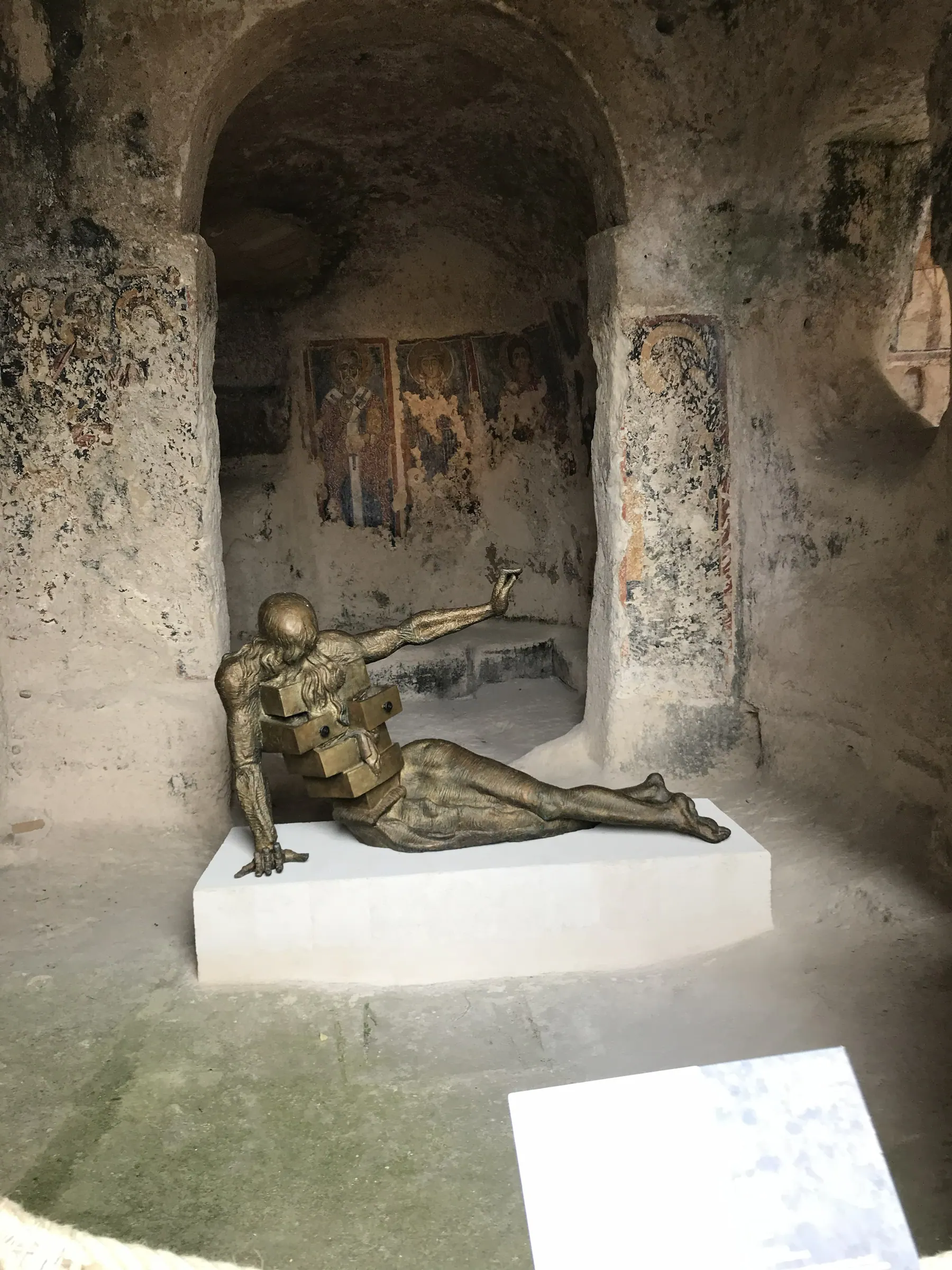
One thing you won't expect to find here is Dalí. A few of his monumental sculptures were installed in the streets for the Capital of Culture year, and there's been an exhibition of his work in Matera ever since - currently at the Fondazione Sassi on Via San Giovanni Vecchio, an old house in Barisano with rock-cut rooms underneath. Surrealist sculpture in a cave is a fair use of an hour, and a good one to keep in reserve if you have longer or the weather turns.
Down into the Sassi: Sasso Caveoso and Sasso Barisano
Getting down there is the easy part. The upper town is signposted for the Sassi in every direction, with stairways dropping off the edge of it wherever you look. From Piazza Vittorio Veneto you take the steps down and you're on Via Fiorentini, with everything else opening off it.
Worth knowing before you go: the Sassi are not one place. The old town divides into Sasso Barisano on one side and Sasso Caveoso on the other, with the cathedral on the ridge between them. In practice you won't be tracking which is which as you walk, but the difference is real.
I remember the hot summer nights, when the centre was more alive in the evenings because of the heat, with the sound of cicadas around you: walking around with friends, stopping at different viewpoints and taking in the views. Going down into the Sassi or walking around the upper town never got boring.
And frescoes turn up everywhere in Matera - in the churches, in the cave houses, in places that were later used as stables. You'll also keep coming across rock churches, most of them frescoed, and around 155 have been recorded across Matera and the gorge. For me the paintings are one of the most fascinating things about the place, and there's a good reason they're here: in the 8th and 9th centuries the Byzantine Empire banned religious images, and the monks who made them fled west. They found rock soft enough to dig into and nobody stopping them, and they covered the walls with the images they'd been persecuted for.
Sasso Caveoso
Caveoso is the rawer and more ancient of the two, and it's where my favourite thing in Matera stands: the Church of Santa Maria de Idris, cut directly into the rock of the Monterrone, a great block of stone rising out of the middle of the district. A church that is itself part of the rock is unusual, and it really stands out from Matera's other churches.
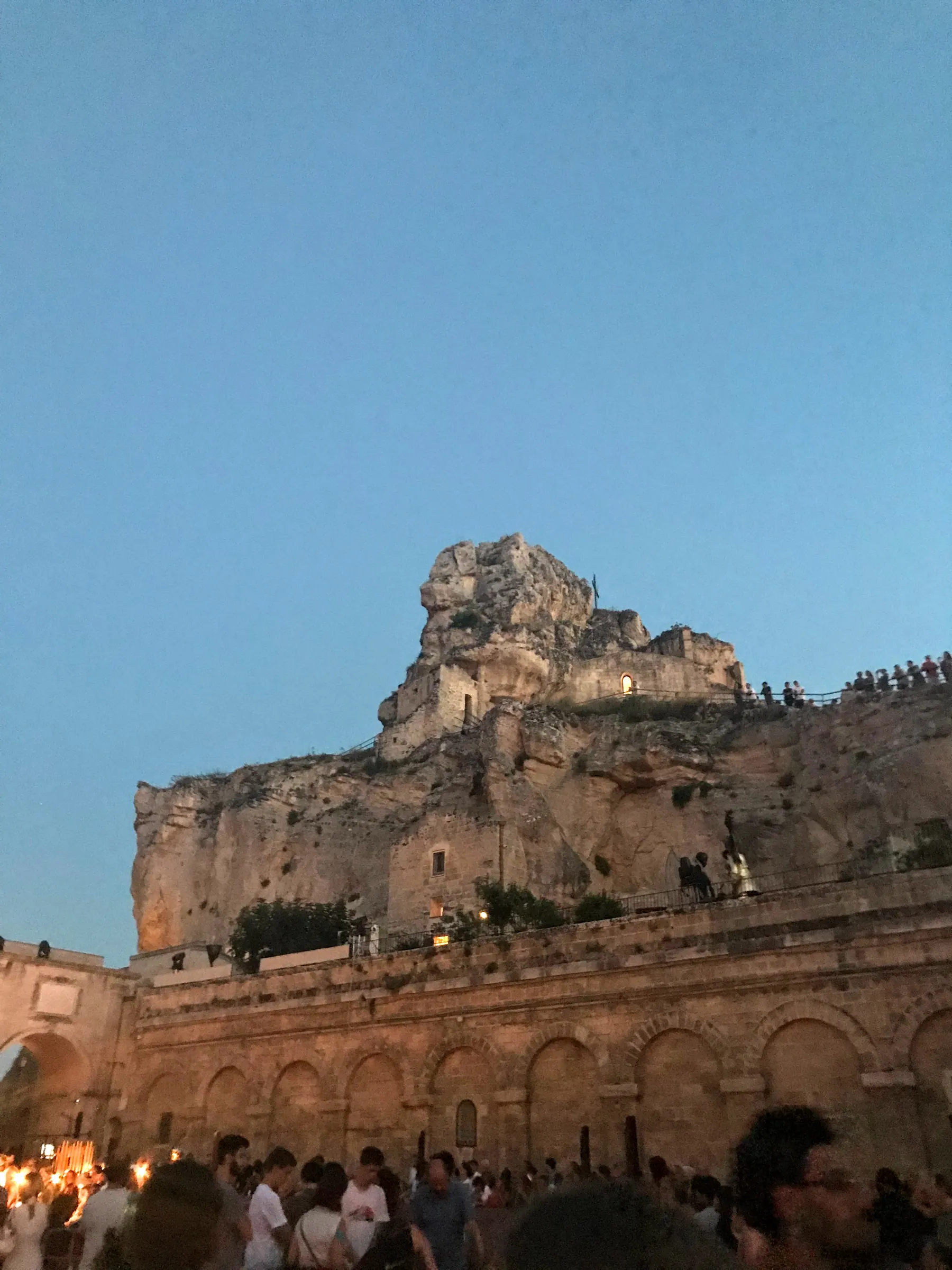
Inside, a tunnel connects it to the crypt of San Giovanni in Monterrone, where there are frescoes from the 12th to the 17th centuries. The views from up there are wonderful, and at night, lit up, the church itself is breathtaking - that's when I liked it best, with the square in front of it.
It sits above Piazza San Pietro Caveoso, the open square at the heart of this side, with the church of San Pietro on it and the gorge dropping away just beyond.
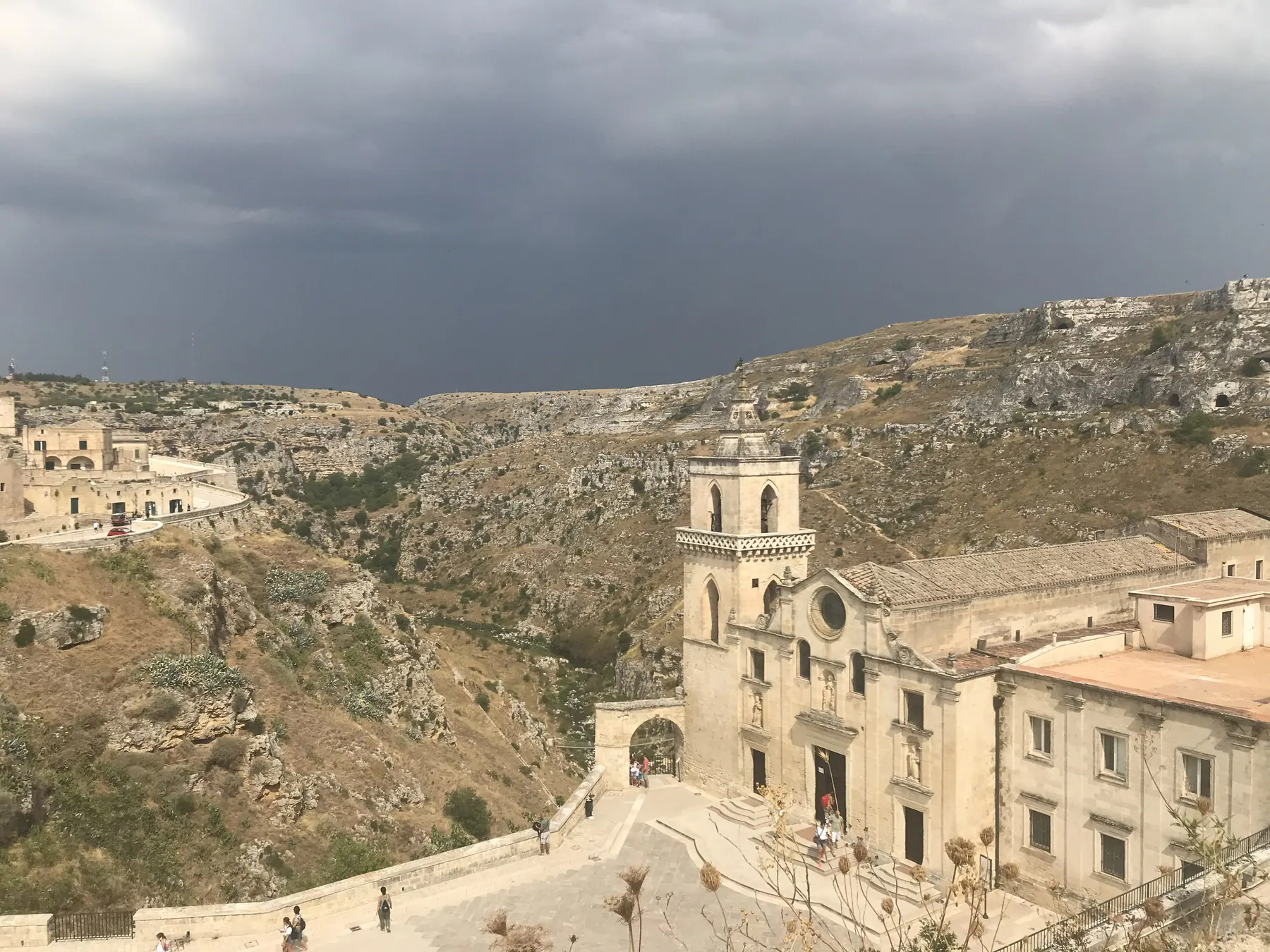
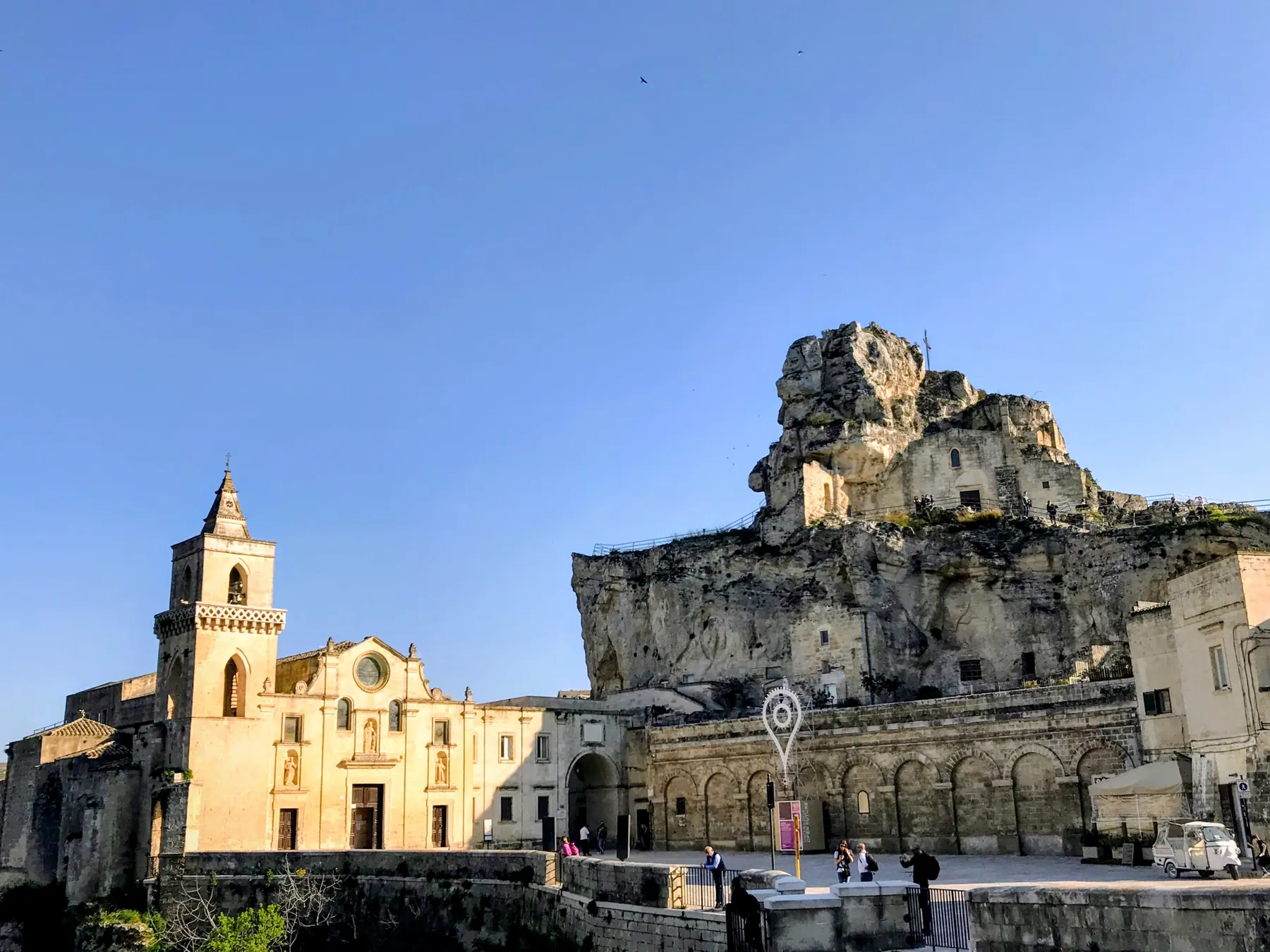
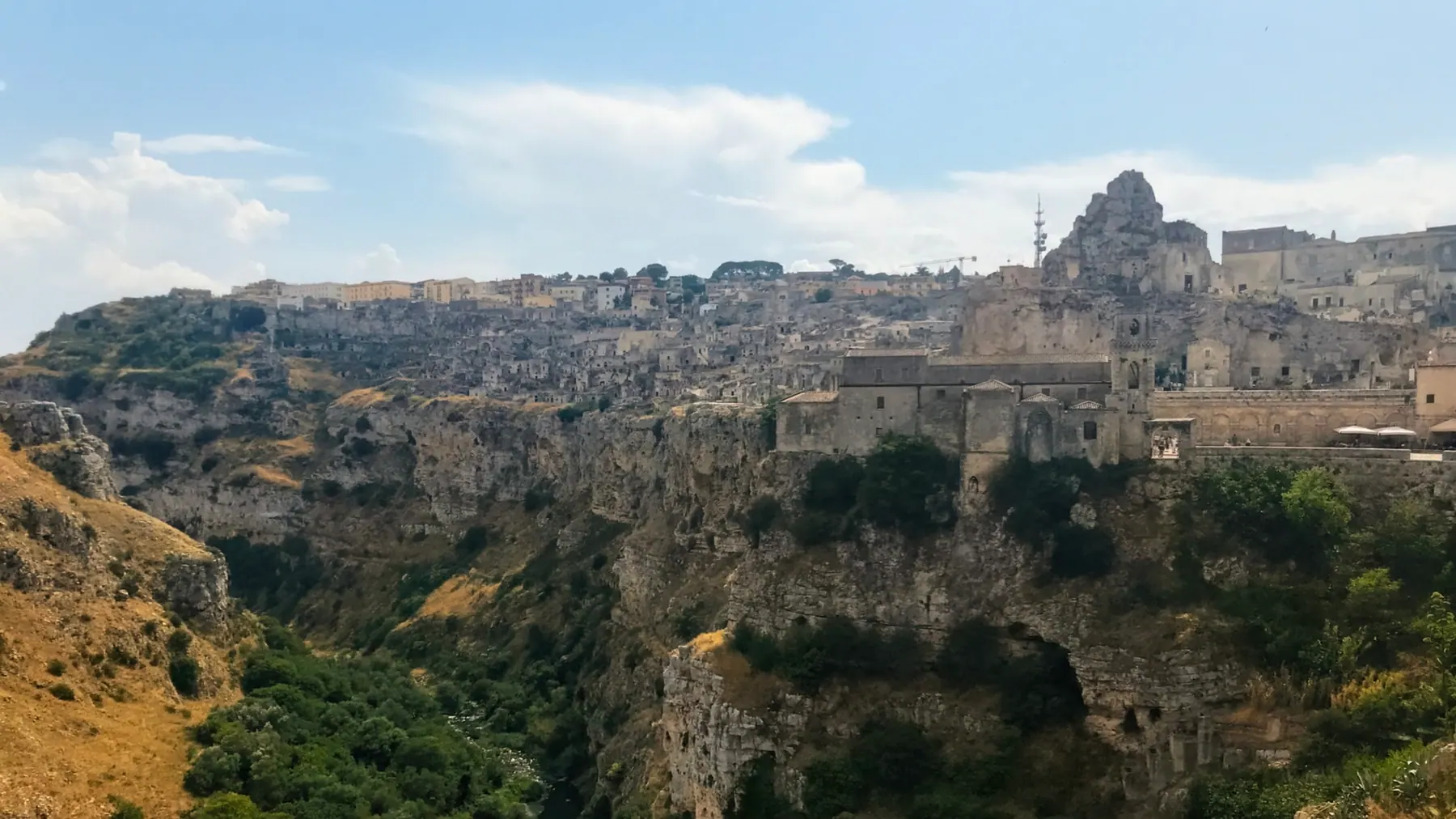
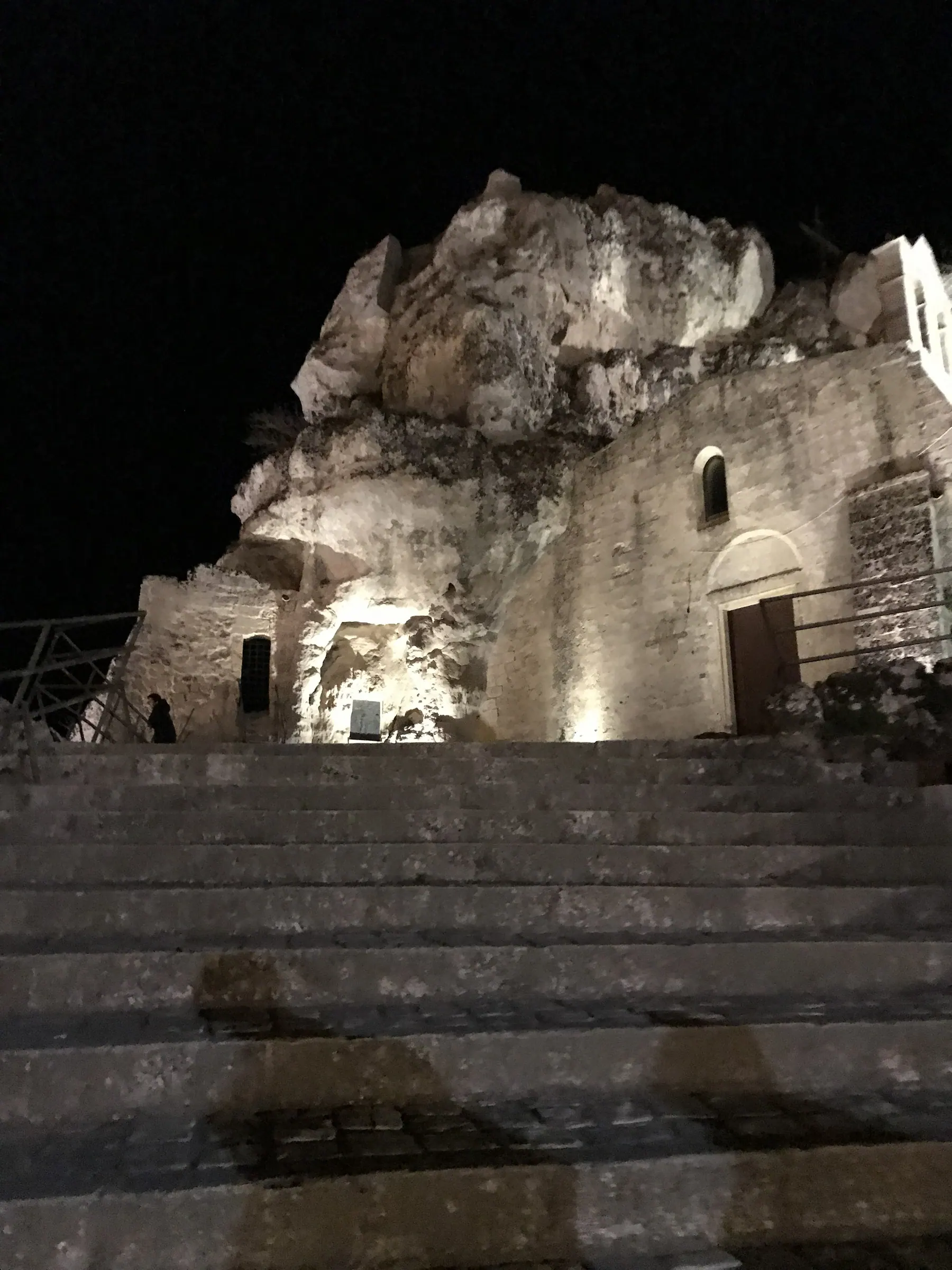
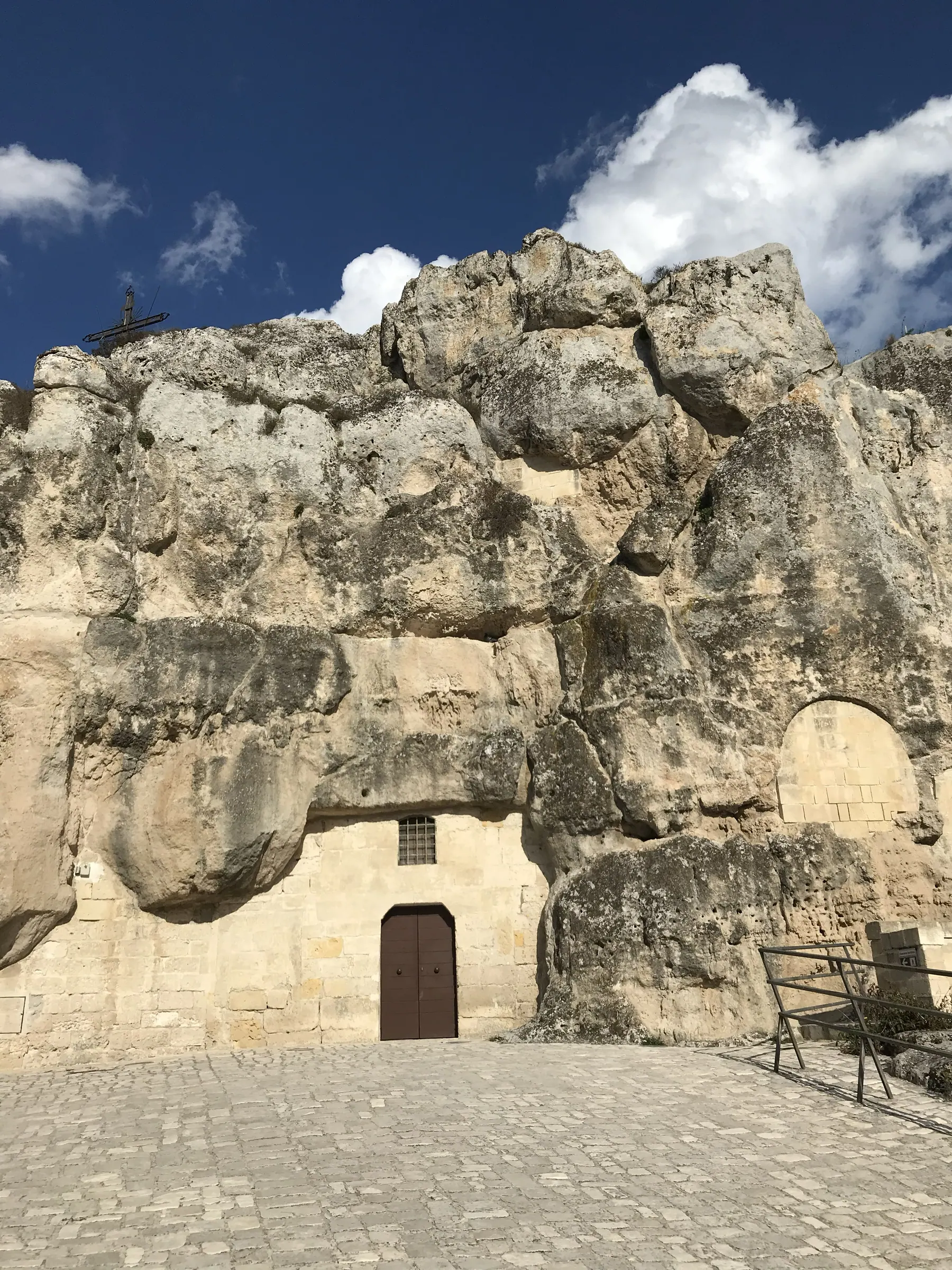
Also in Caveoso is Santa Lucia alle Malve, another rock church, and one of the oldest in the city - it belonged to a community of Benedictine nuns, and part of it was still being lived in as a cave dwelling until the Sassi were emptied. There are medieval frescoes inside.
Just off Via Bruno Buozzi is the Casa Grotta di Vico Solitario, the best known of the cave houses set out as they were lived in - the bed, the loom, the corner for the animals - with neighbouring caves showing a black-and-white film of the Sassi before the restoration. Entry is a few euros.
Walking around Caveoso you'll see cave systems everywhere. Plenty of it is simply there, in front of you, as you walk. The part I'd take the time for is Rione Malve, the quarter just behind Santa Maria de Idris. This is not a polished area - it's the oldest and rawest of the cave dwellings, with small squares between them where people have put plants out in pots.
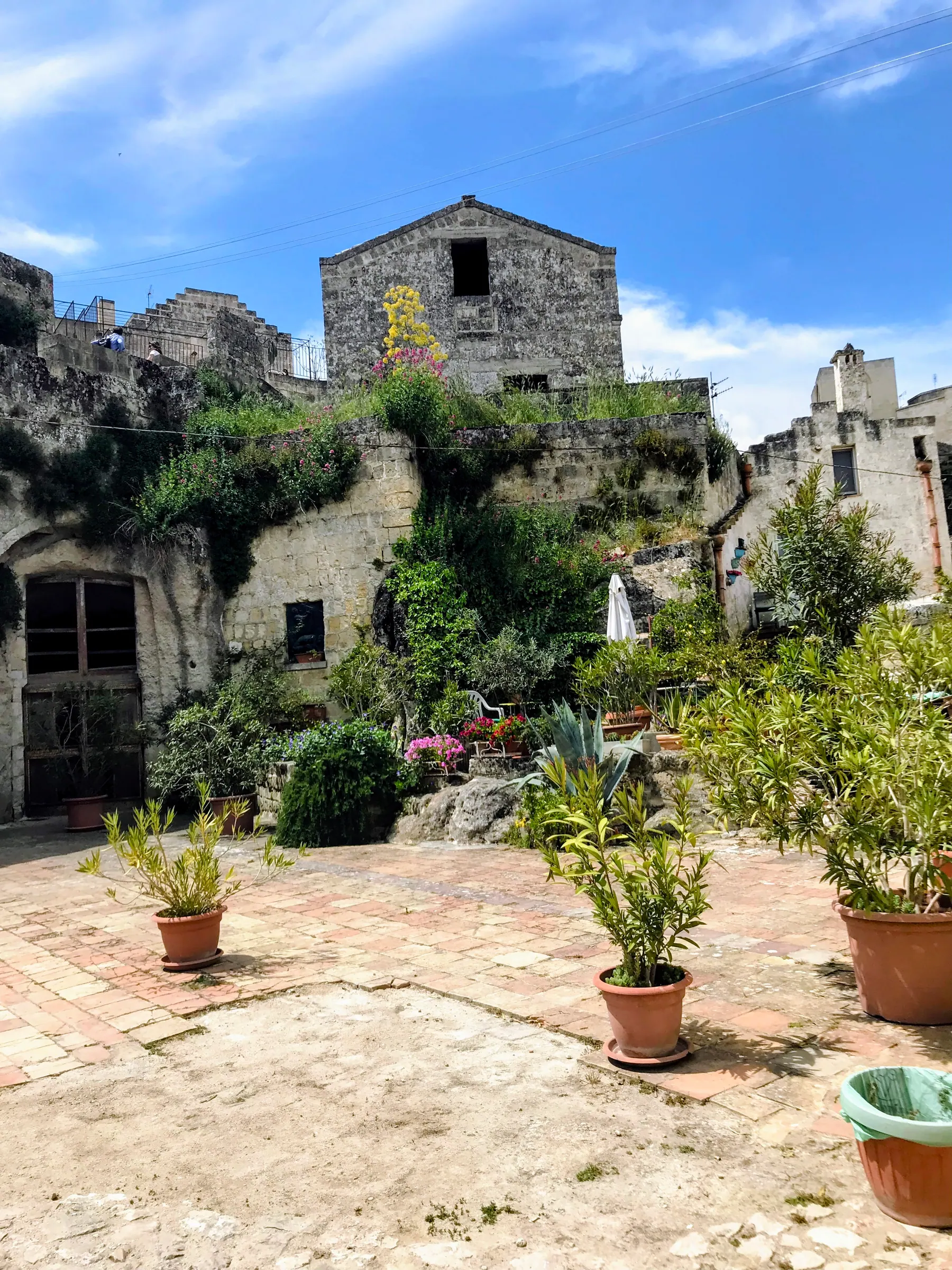
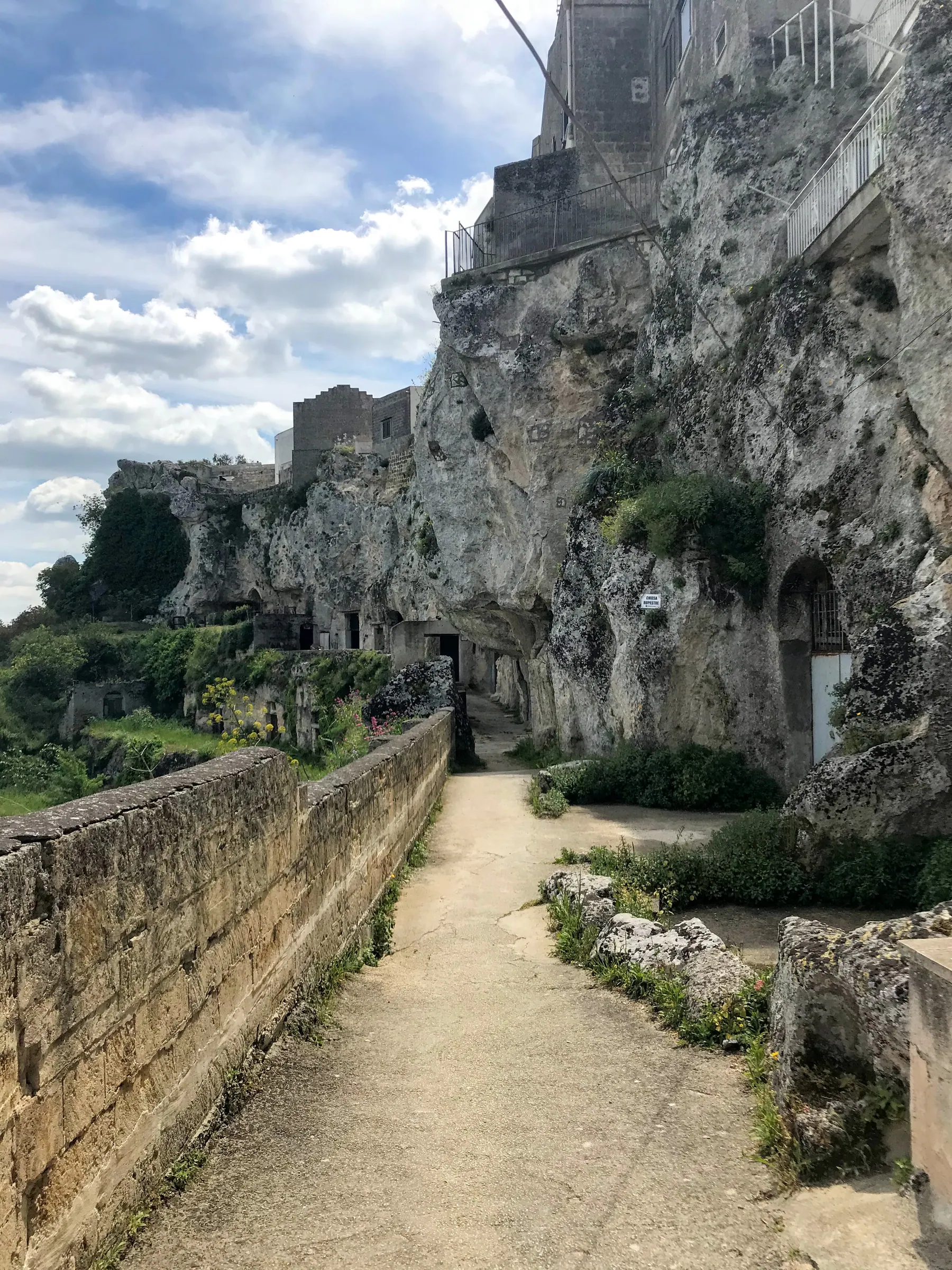
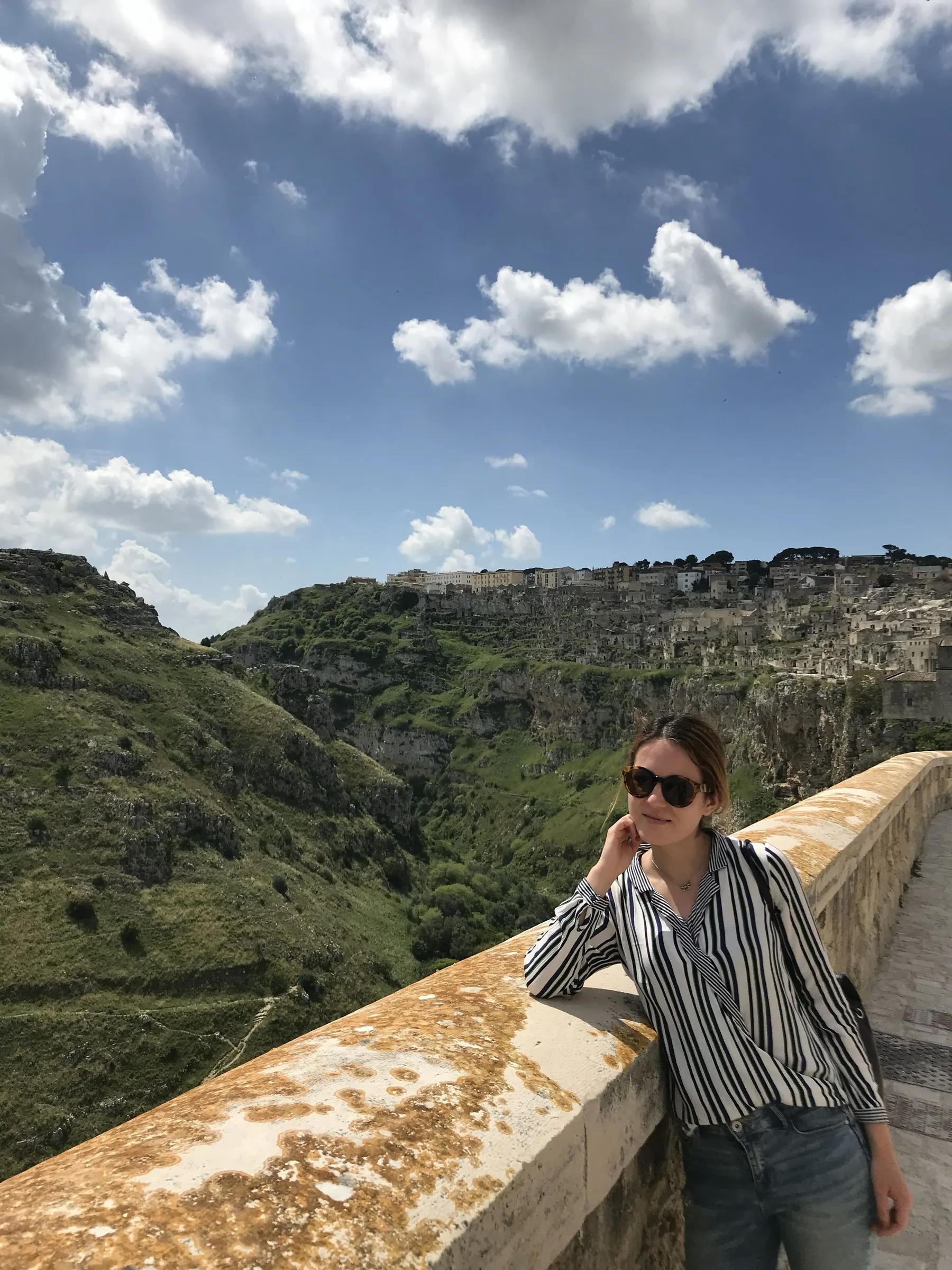
Keep going up along Rione Malve itself, or along Vico Solitario, and you come out on the edge of the drop, looking straight down into the Gravina - the ravine the whole city is built above - with the empty Murgia landscape on the far side.
Sasso Barisano
Barisano is the other half, and it has a different character: art galleries, more commercial places, and it sits closer to the modern town. Its main street is Via Fiorentini, which runs down into the district from Piazza Vittorio Veneto and is the only road in Barisano you can actually drive. It's lined with restaurants and workshops and worth walking for what you pass along it.
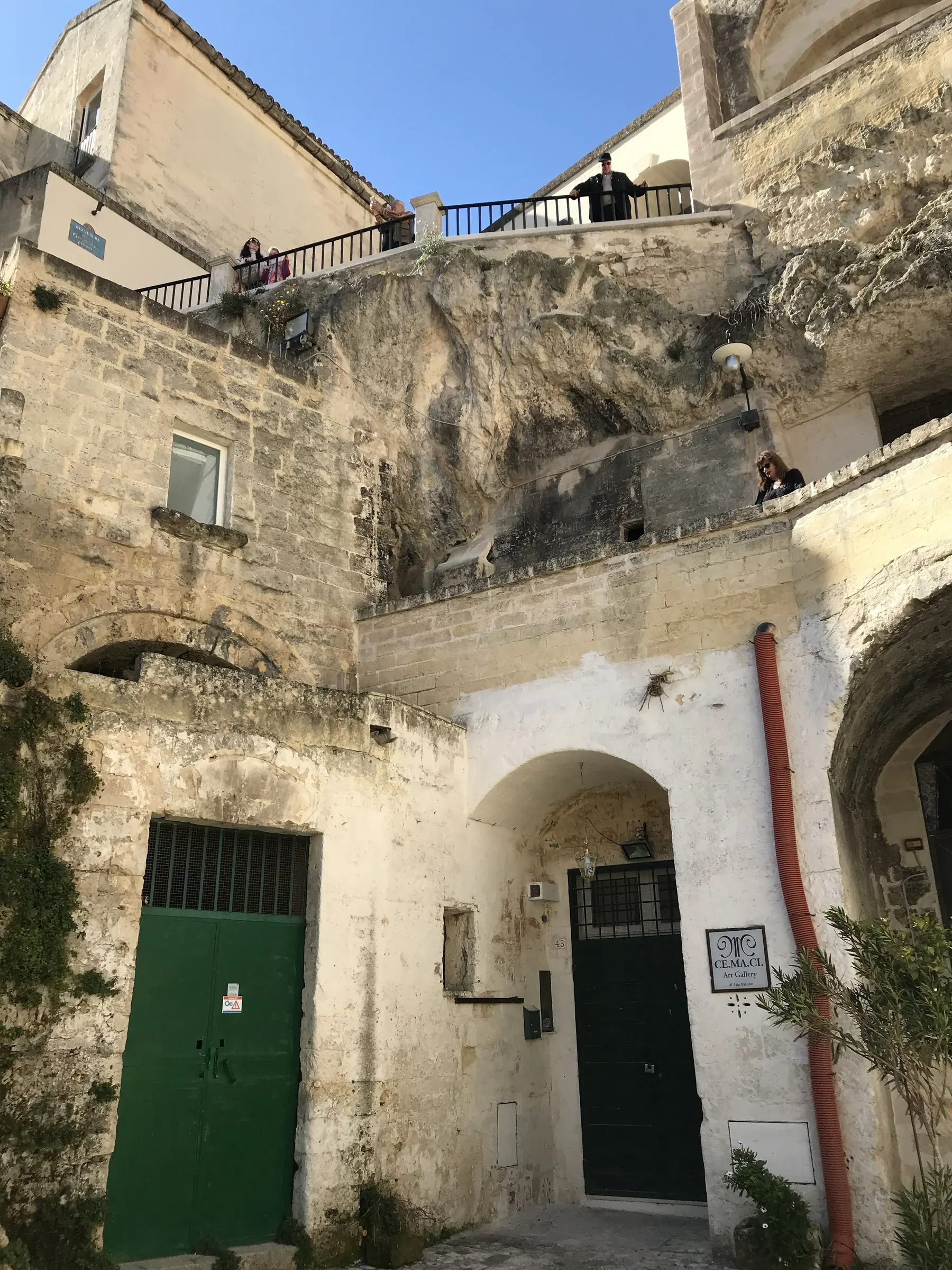
One of the things you pass is Casa Grotta C'era una volta, a cave house set out as it would have been lived in - the bed, the animals' corner, the loom, the whole arrangement of a family and their livestock in one room. It's worth going in. Reading that fifteen thousand people lived like this is one thing; standing in the room is another, and it makes the rest of the town's history land properly.
Barisano also has San Pietro Barisano, the largest rock church in Matera, cut almost entirely into the rock.
The next to it is also Convent of Saint Agostino with the church with beautiful views too.
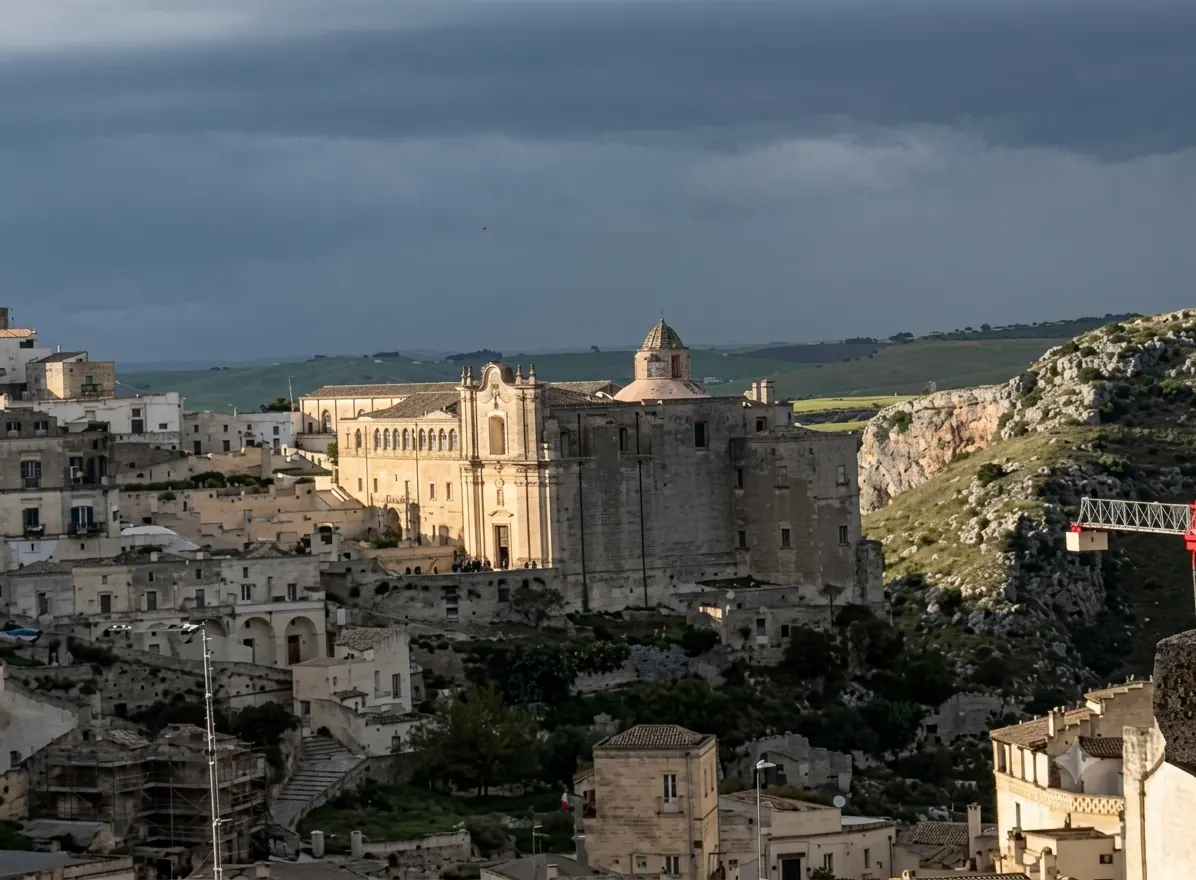
The square in front of it is one of the best viewpoints in the Sassi - the cathedral ridge on one side and the empty Murgia beyond the gorge on the other.
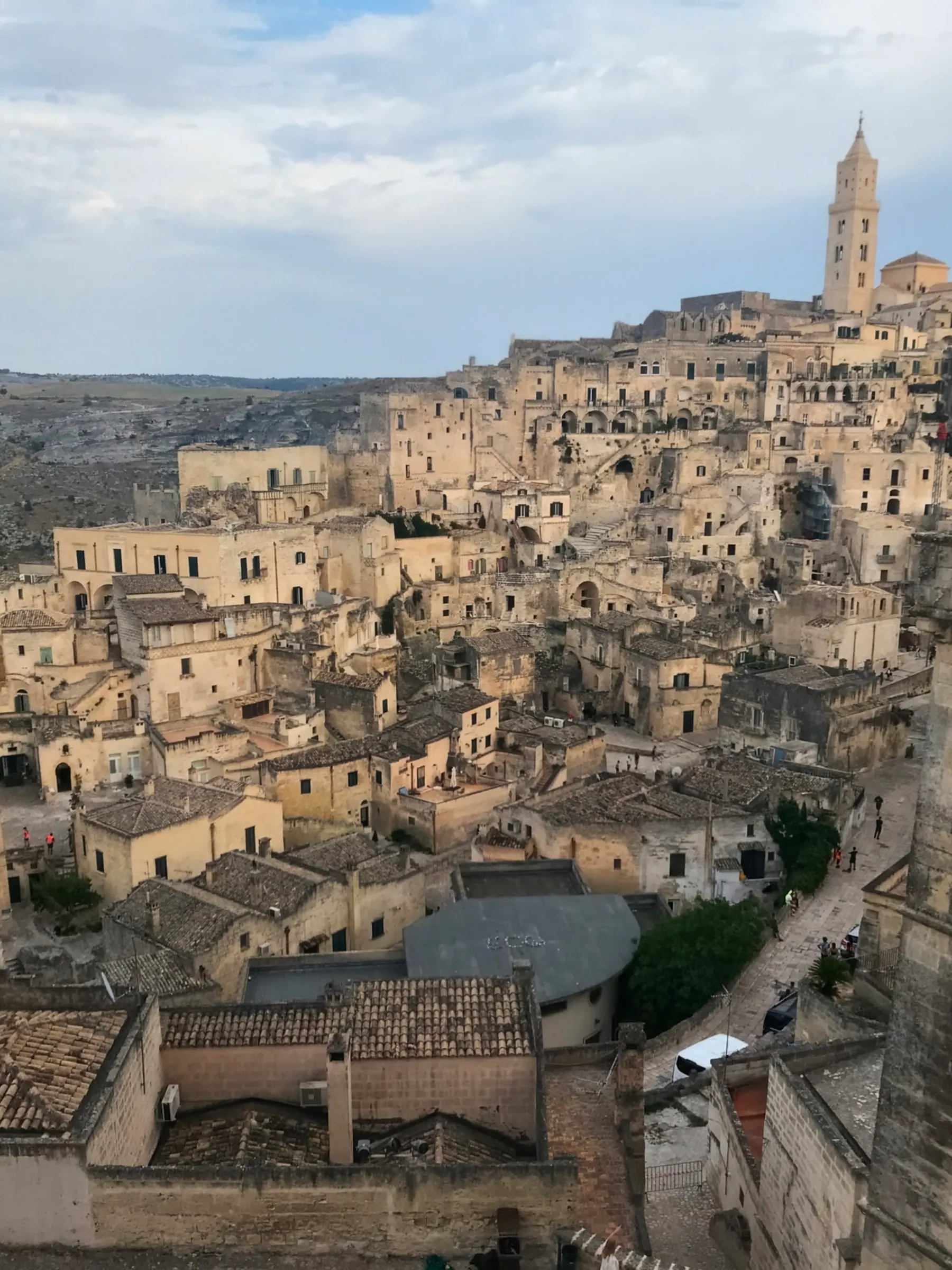
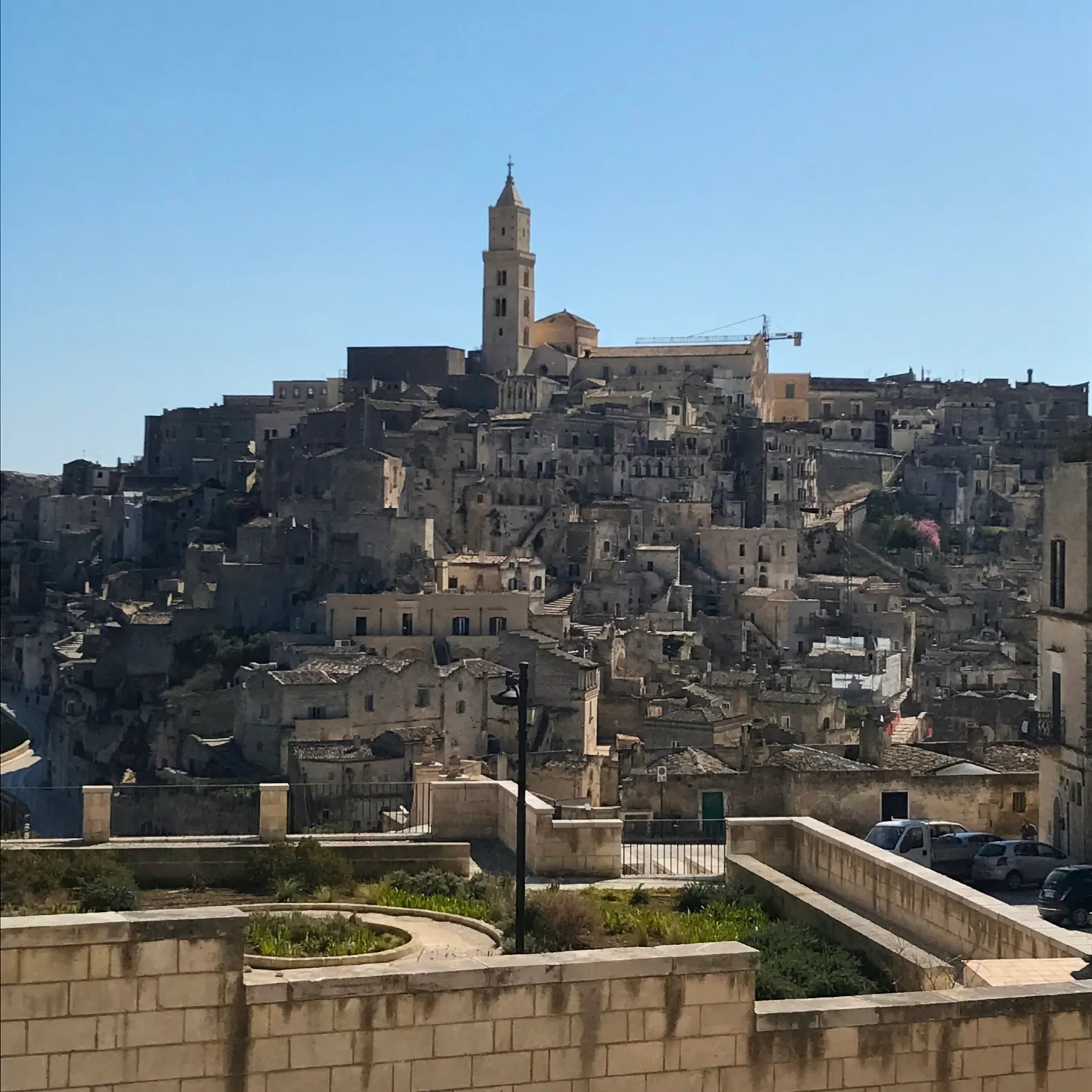
Further along the edge of Barisano is the Belvedere Emilio Colombo, another incredibly good place to stop, looking back at the old town with the cathedral above it and tower of San Pietro Barisano church.
Getting there, Via d'Addozio is one of my favourite streets on this side: the whole length of it is a viewpoint, with the gorge open beside you as you walk.
Both of these tend to be quieter than the belvederes at Piazza Vittorio Veneto and Piazzetta Pascoli, simply because they're further from the main squares and streets. Expect the central viewpoints to be crowded; if you want something more intimate, walk a little away from them. The view doesn't get worse.
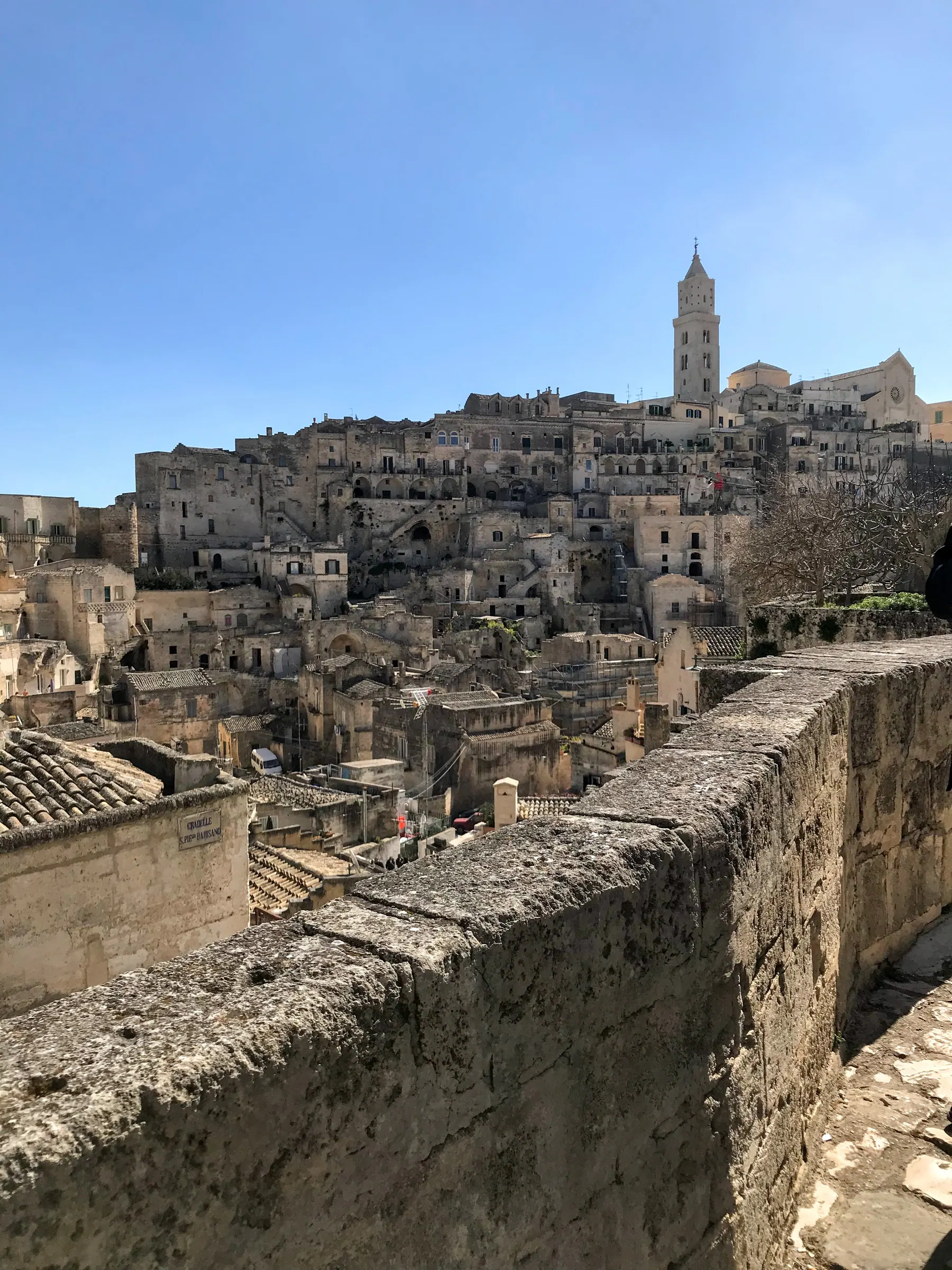
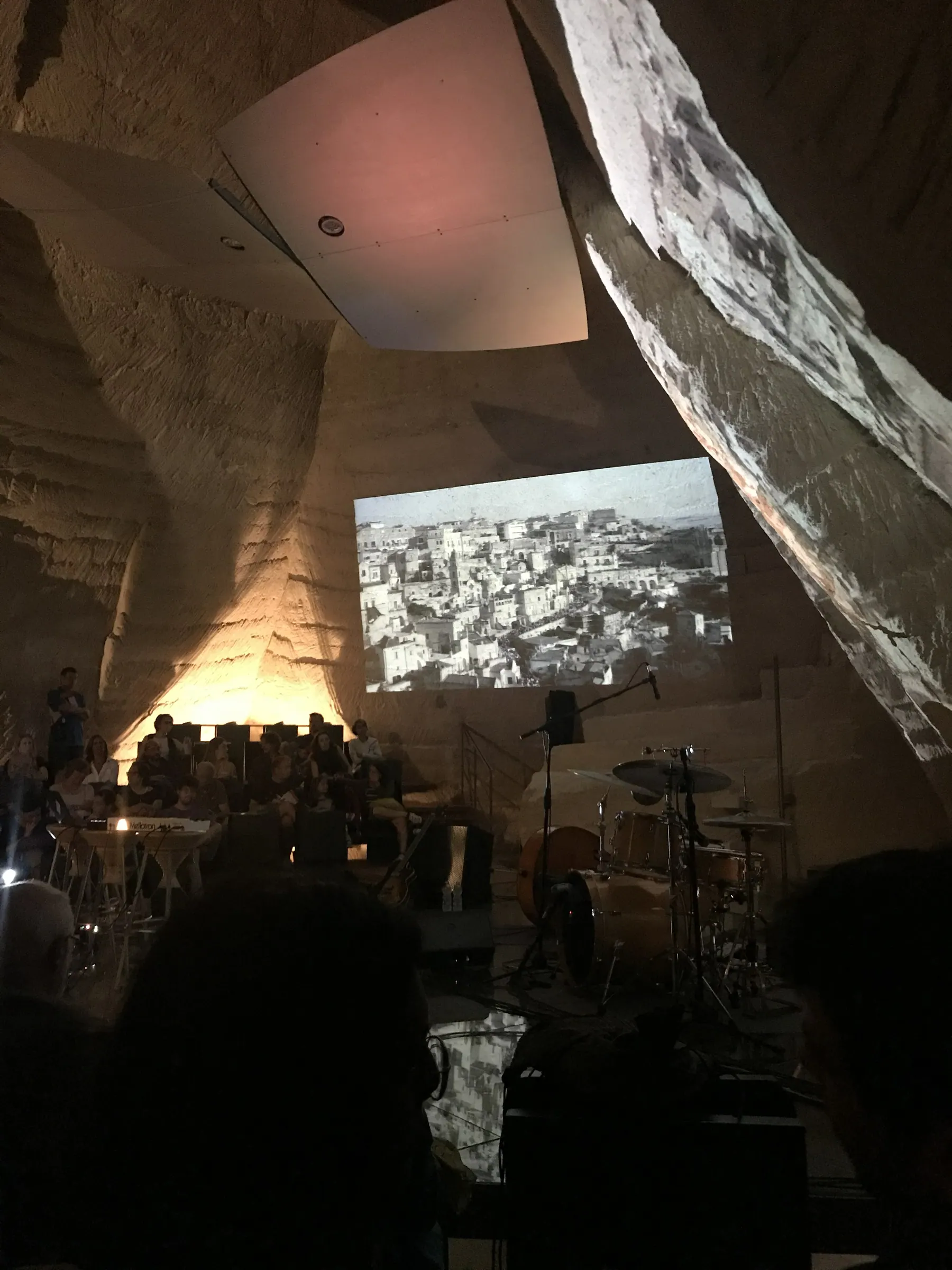
In the same corner as San Pietro is Casa Cava, a concert hall built inside a cave. I went to several events and concerts there while I was living in Matera, and it's a strange and very good place to hear music - the acoustics of a hollowed-out rock. You can also just visit it for a small entrance fee if nothing's on.
The walk along the edge
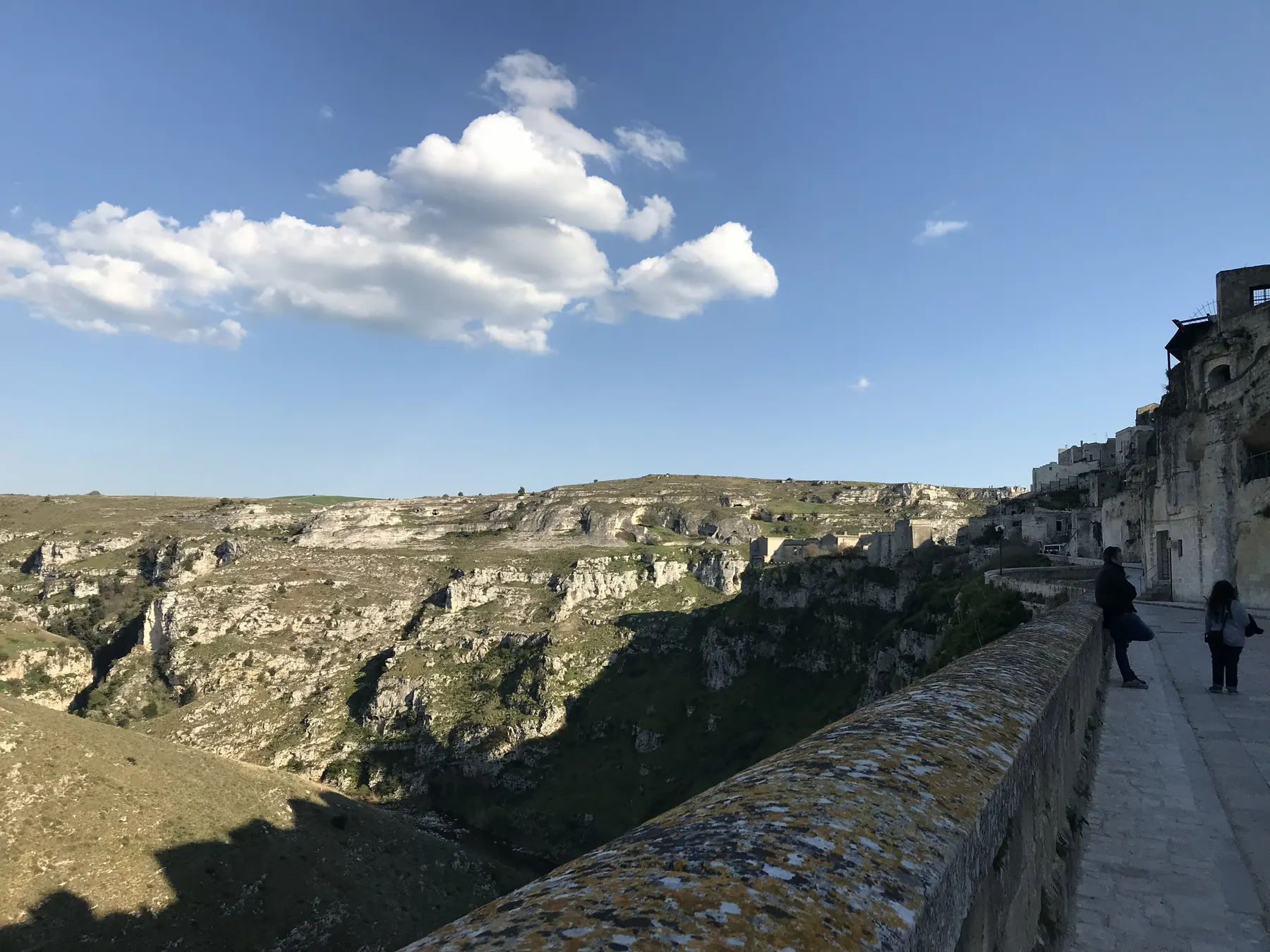
One of the best walks in Matera is along the outer edge. Via Madonna delle Virtù runs down the side of the Sassi facing the gorge, and it's effectively a promenade with the ravine open beneath you the whole way - canyon on one side, cave city on the other. It also brings you easily to Piazza San Pietro Caveoso, with Santa Maria de Idris standing above it - as does Via Bruno Buozzi, the main street running through Caveoso.
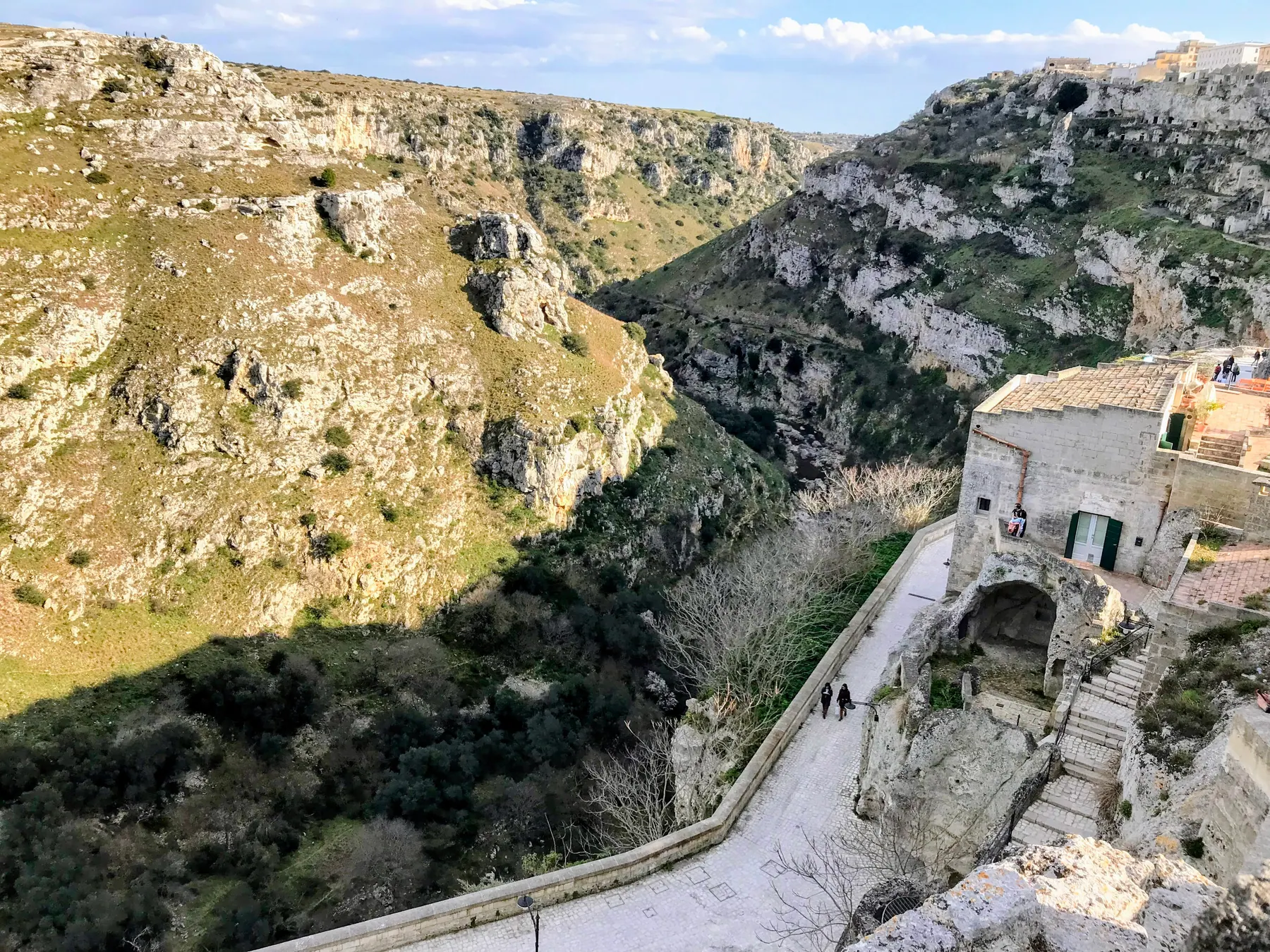
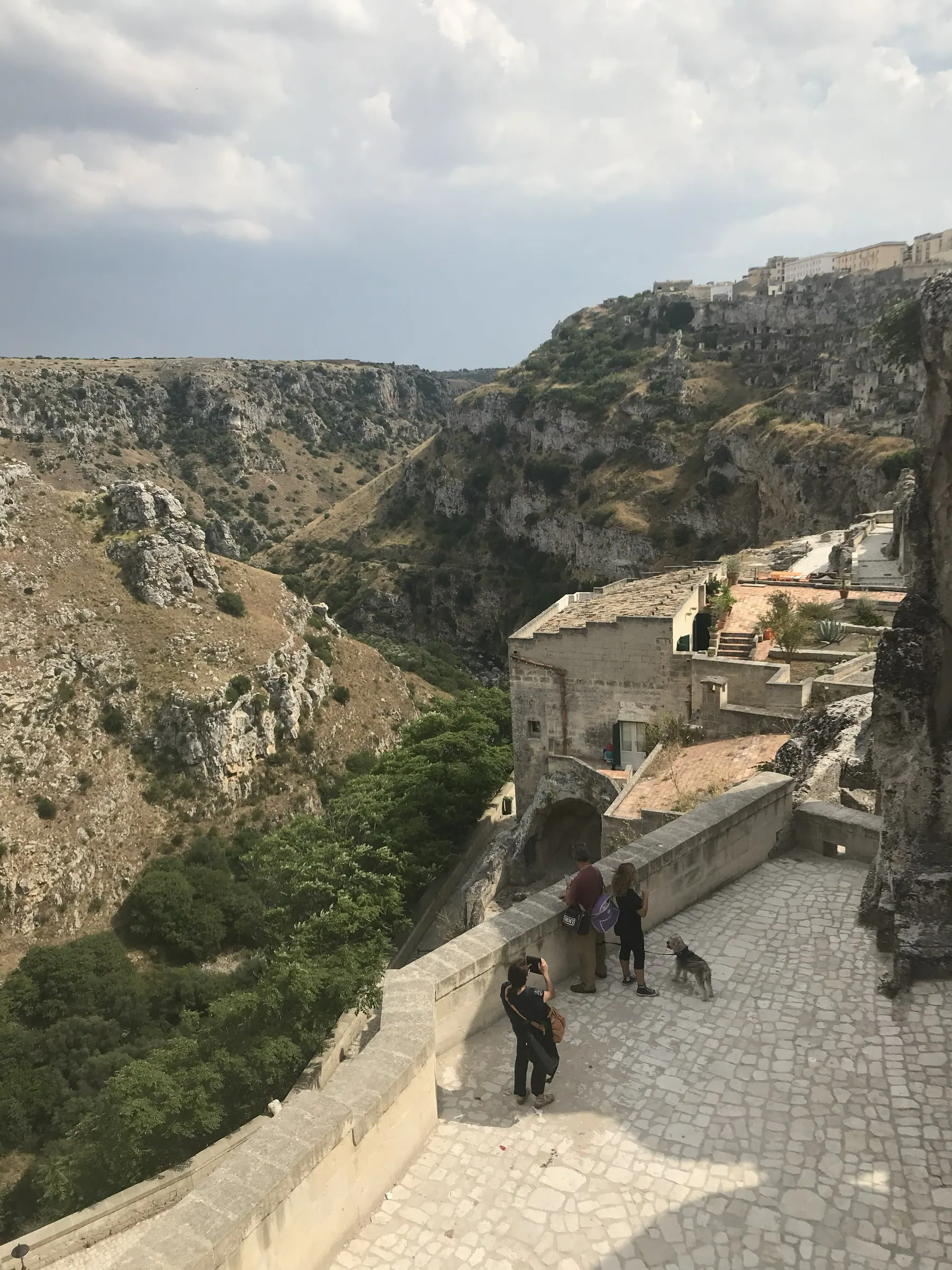
The walk along the edge is as rewarding as anything in the middle of the Sassi. It isn't only a cave city; it's a cave city inside a landscape, and the two hold each other up. It's a large part of why I loved living there. You are never more than a few minutes from being able to look at something wild.
Cross the ravine: the Murgia and Parco della Murgia Materana
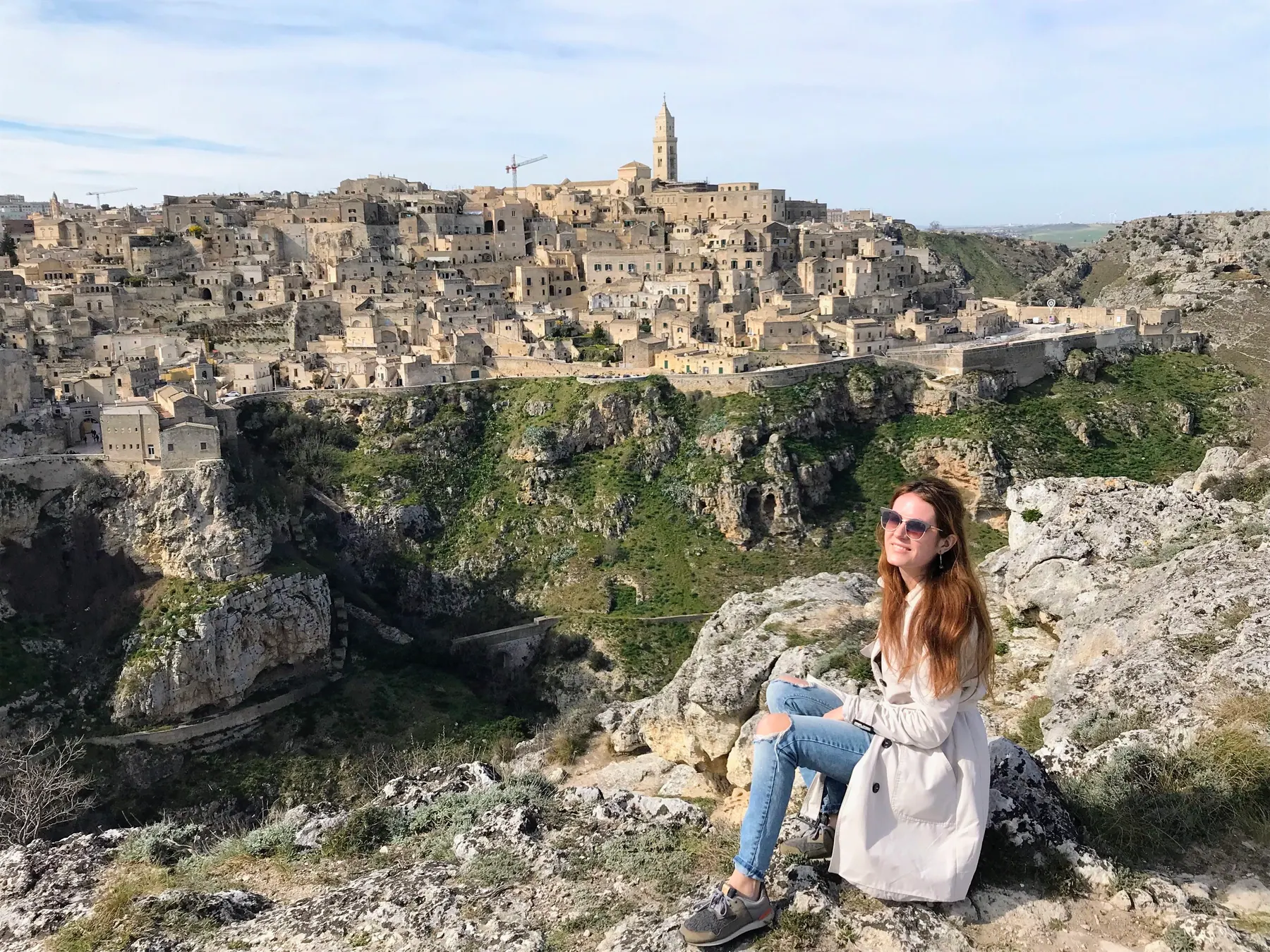
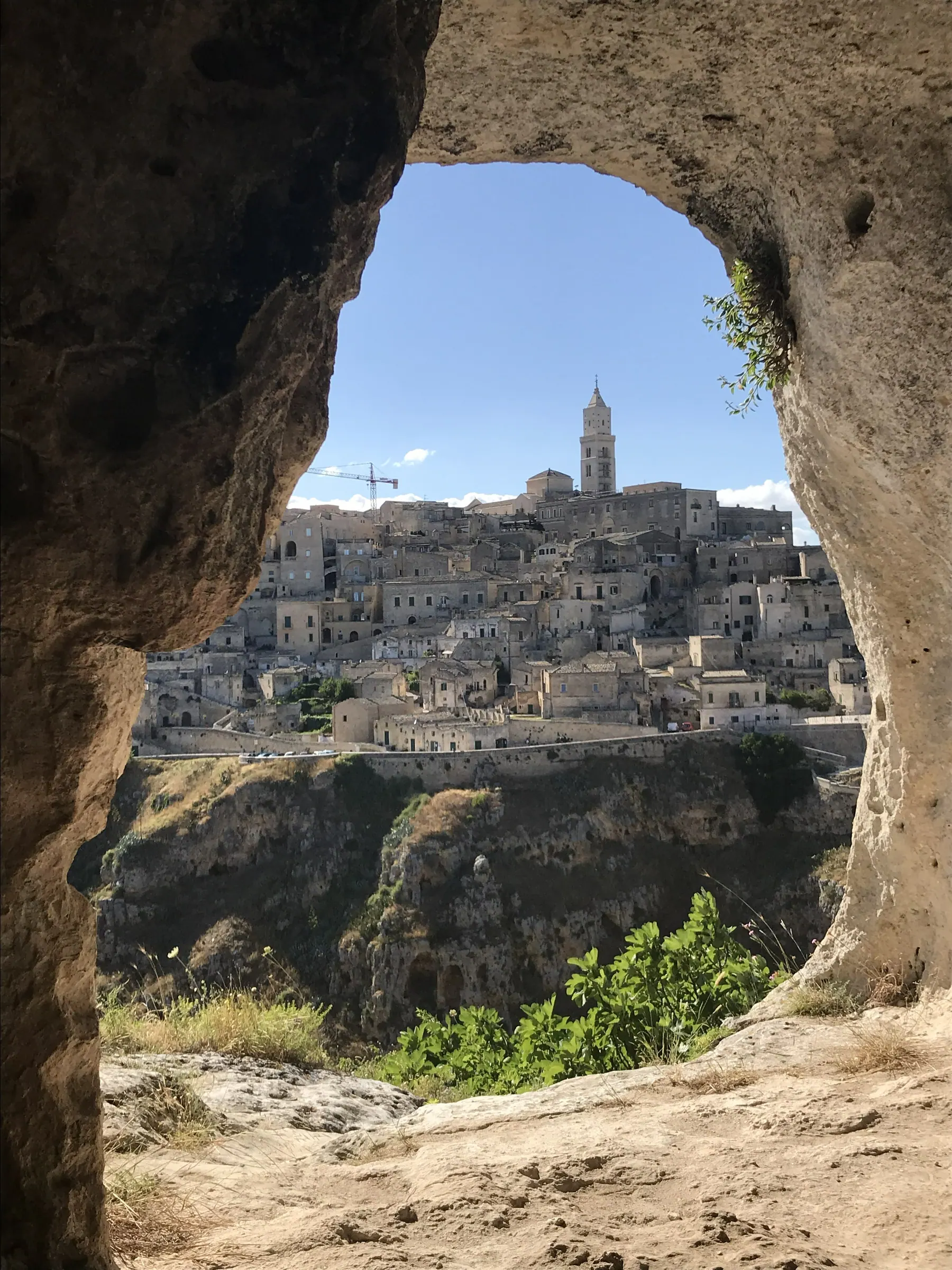
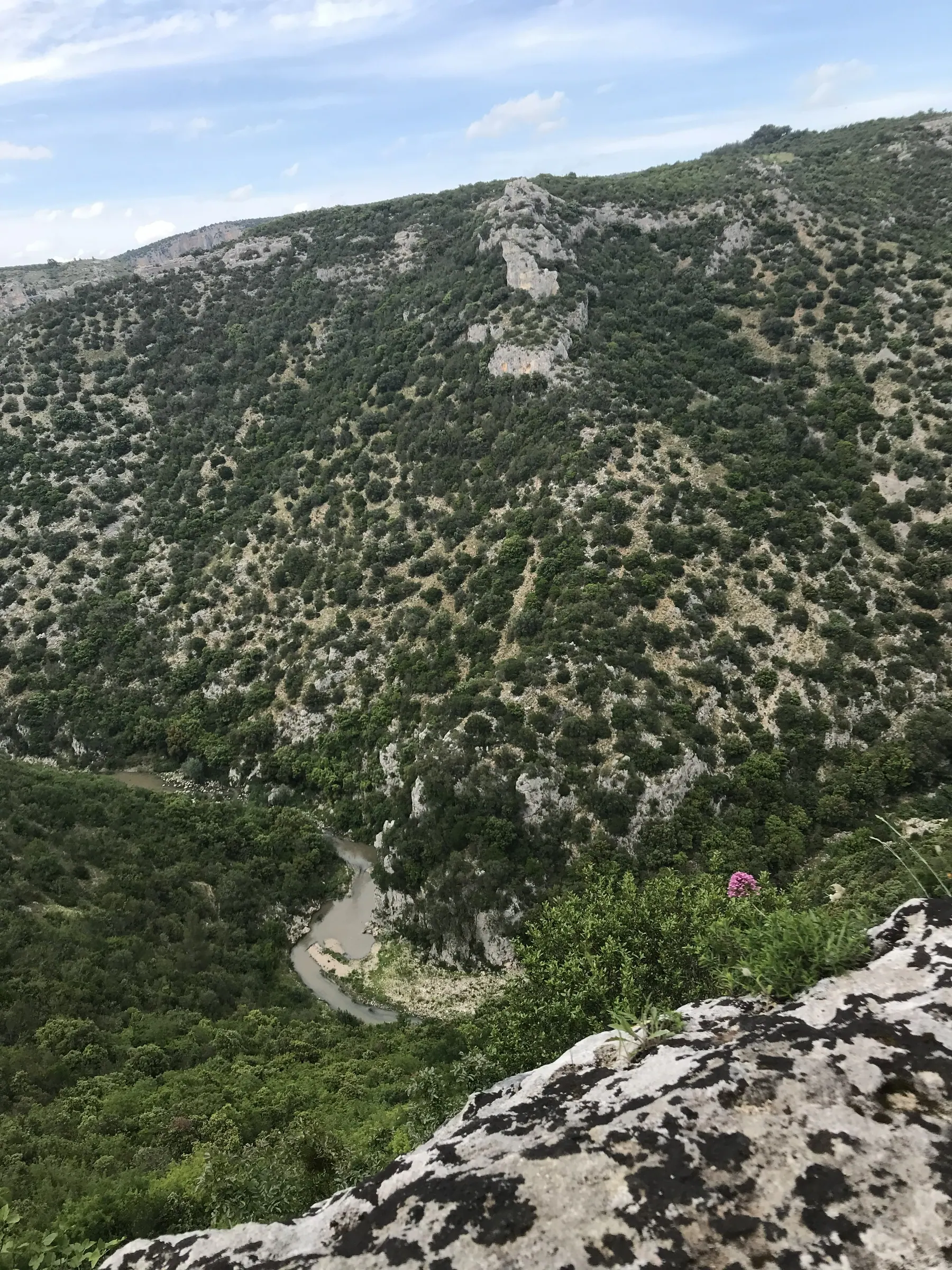
If you do one thing beyond the Sassi themselves, do this. The Murgia - the plateau across the gorge, in the Parco della Murgia Materana - is where you see Matera whole. Not from above it or inside it, but from opposite, with the Sassi stacked up in front of you and the ravine between.
It's also where I stood in 2019 watching them film James Bond. No Time to Die shot in Matera that September, and from the Murgia you could look straight across at the old town while the scenes were being filmed in it.
Matera has been used this way for decades. Pasolini shot The Gospel According to St Matthew here in the 1960s, Mel Gibson used it for The Passion of the Christ, and the 2016 Ben-Hur was filmed here too. The Sassi stand in for Jerusalem so often that it's become a minor local joke.
There are two ways over. The easy one is the local minibus, which runs from the centre near the train station, and that's how I usually went.
If you arrive by bus or other transport, the moment you reach the viewpoint is breathtaking: the whole city opens out in front of you, with the extraordinary nature around it. I went many times when I was seeking that view; honestly, it cannot be described in words.
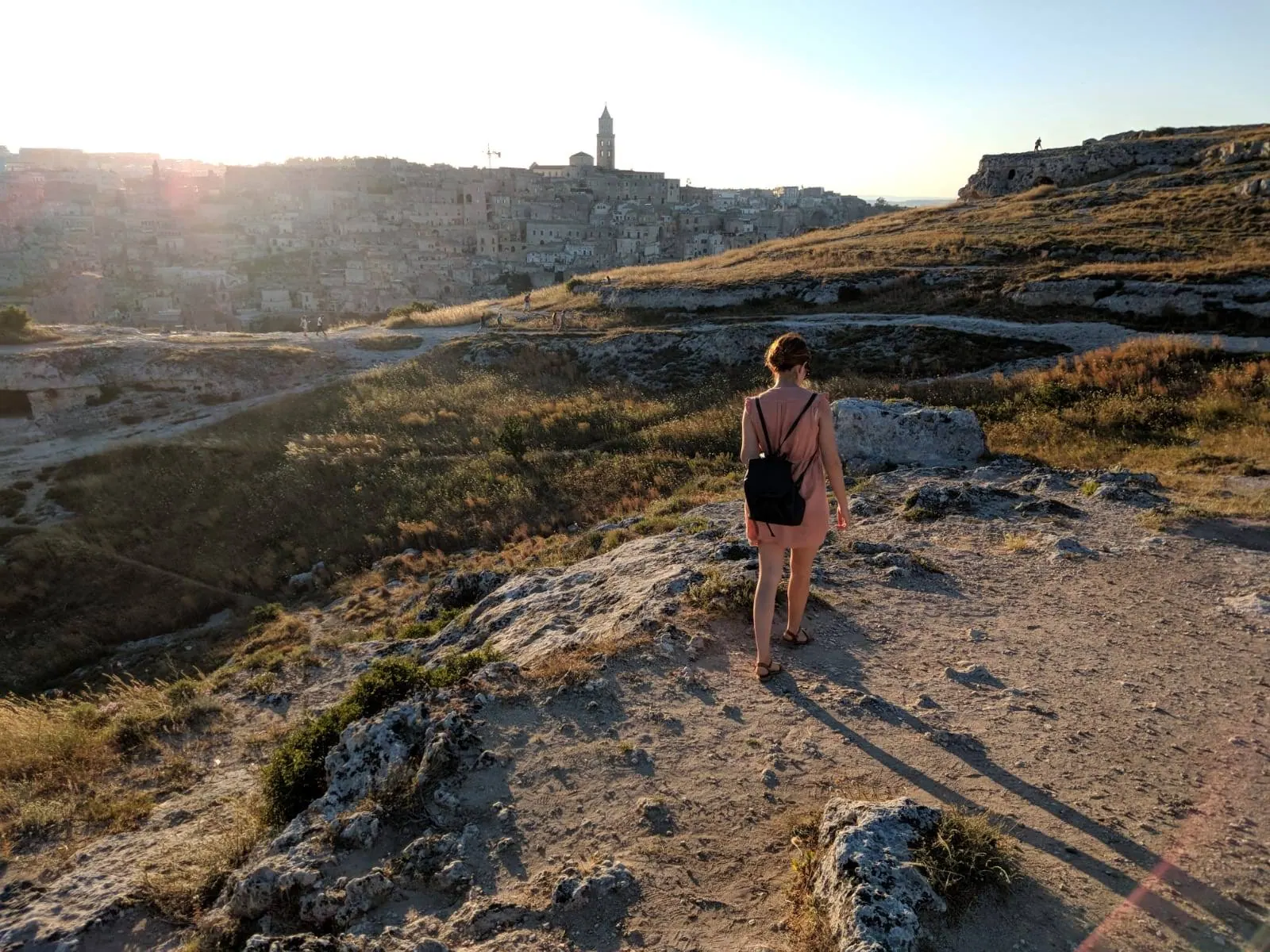
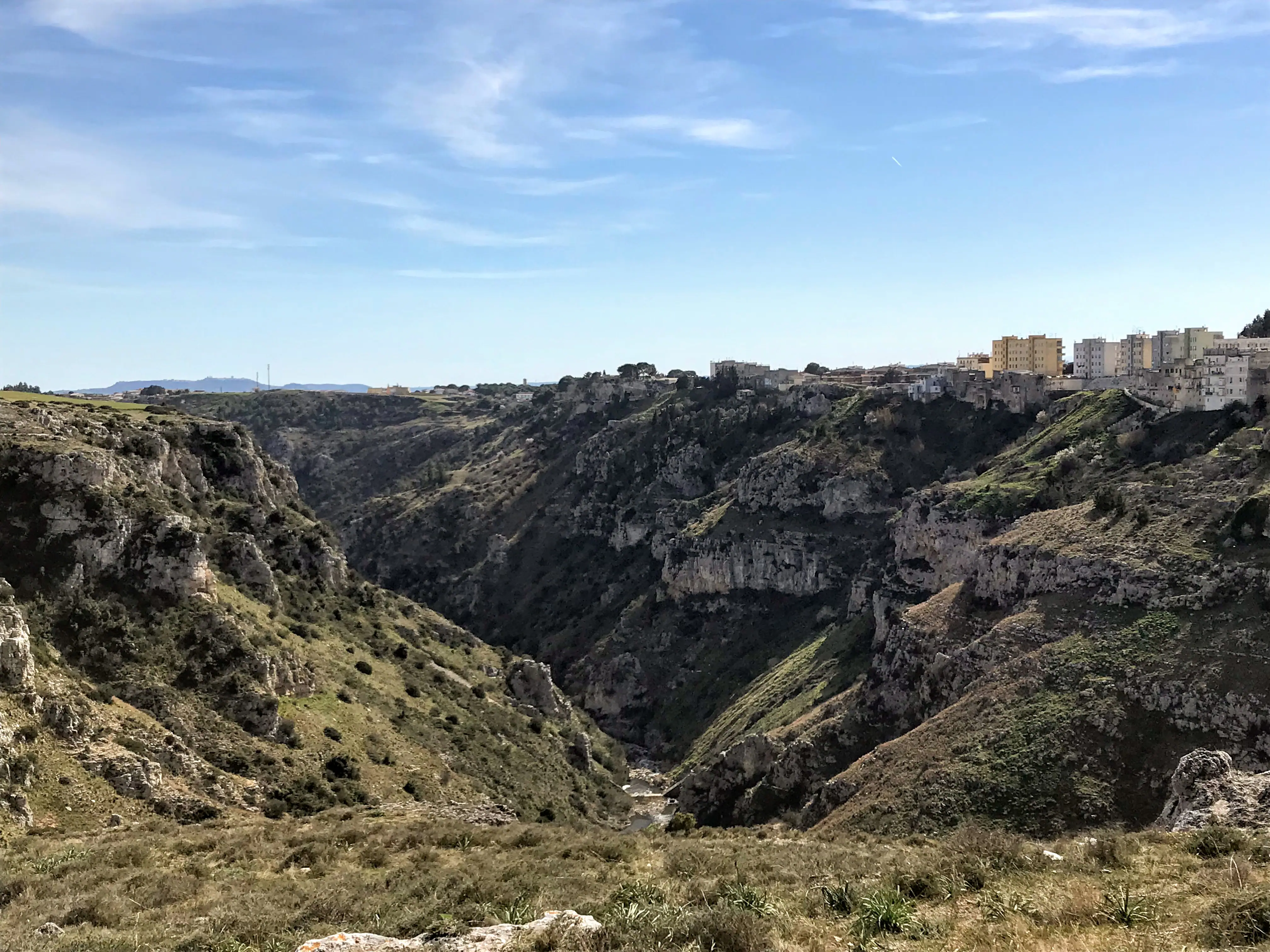
The other is to walk it, crossing the ravine on foot, and it's the better experience if you have the legs for it. The path starts around Porta Pistola, on the Sasso Caveoso side, and when I did it the signage wasn't clear at all - you have to know roughly where you're going. Partway across you cross a small bridge over the bottom of the gorge, and then climb the other side. It takes about an hour and it's a proper adventure rather than a stroll.
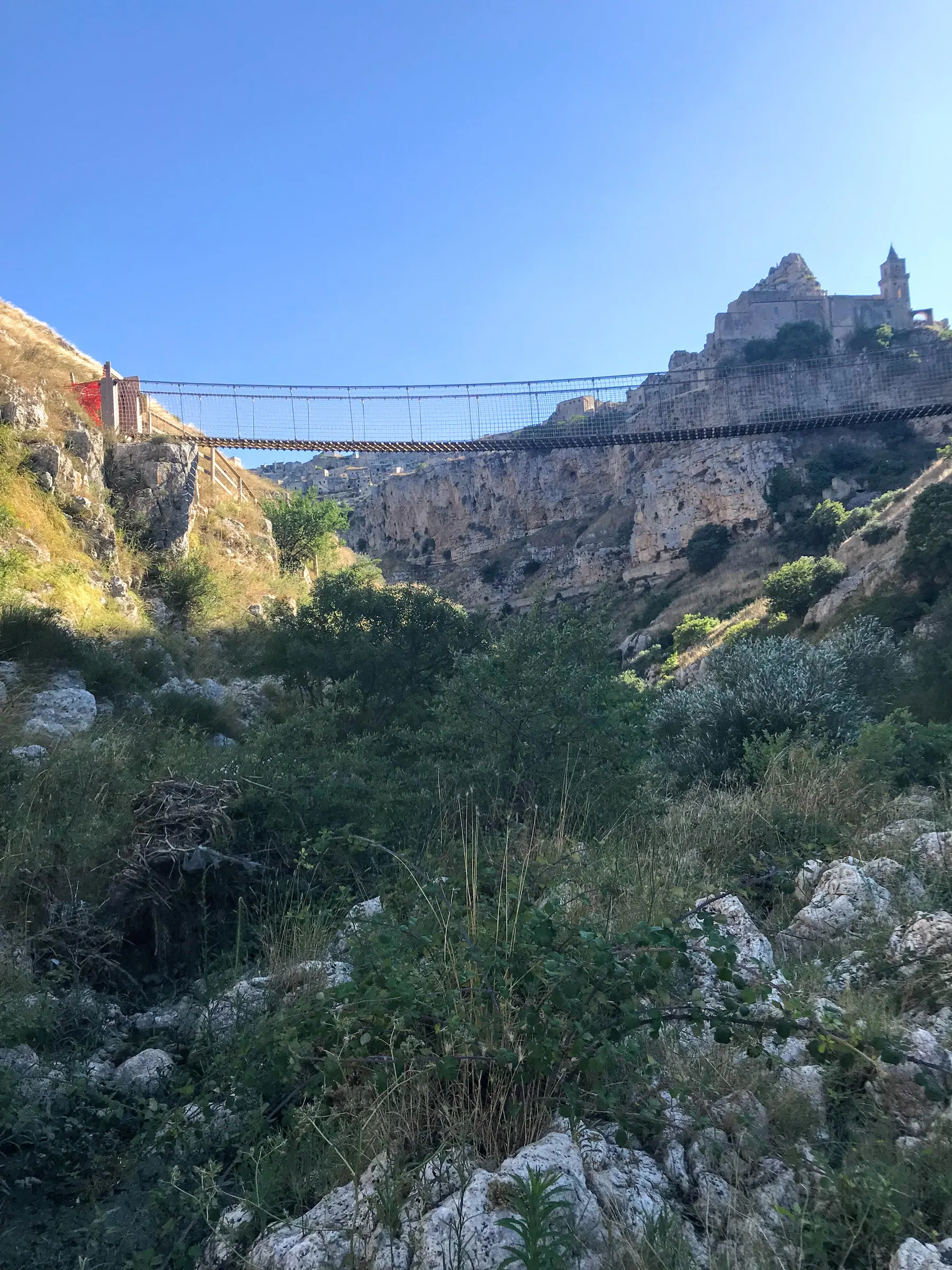
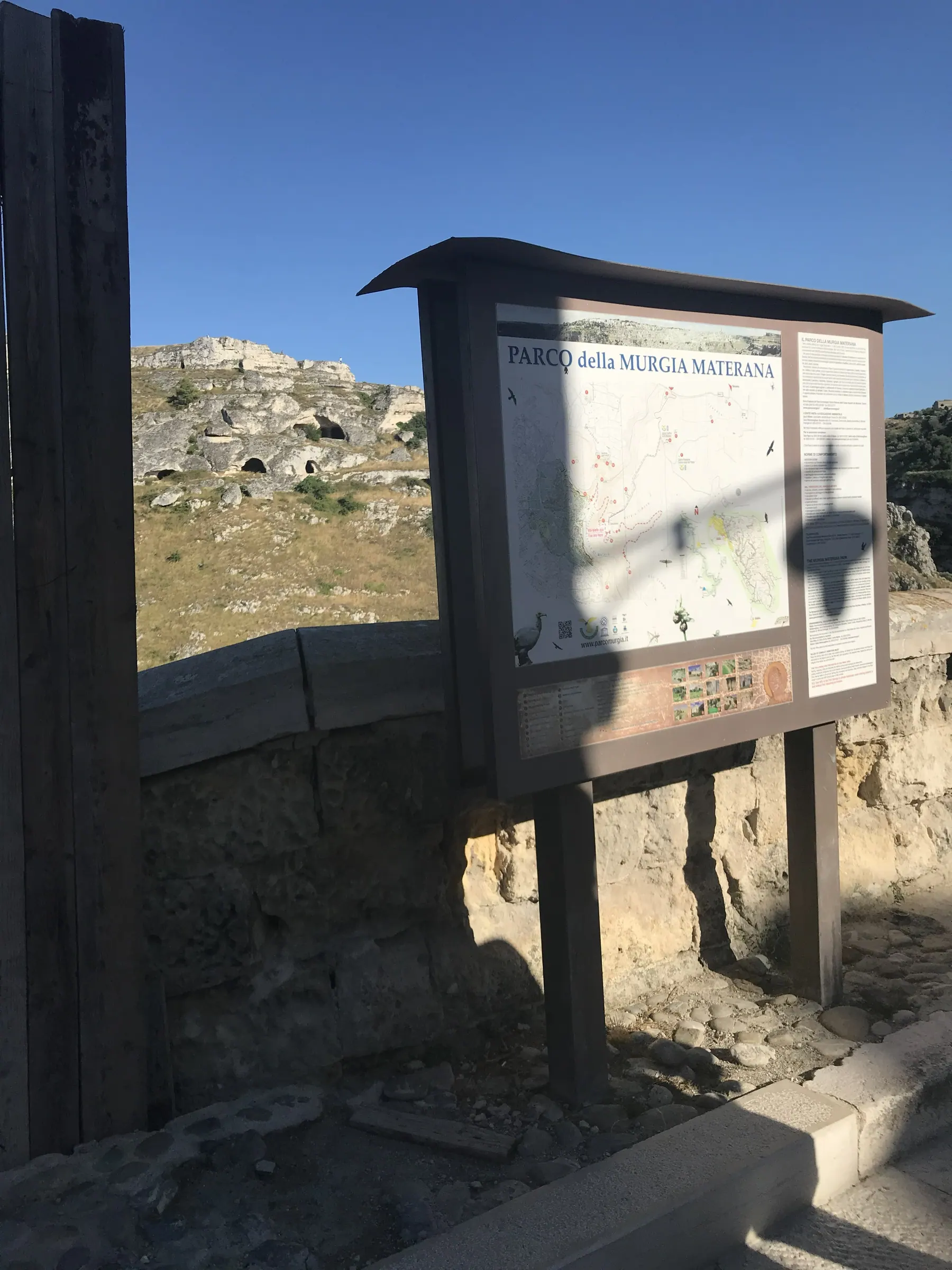
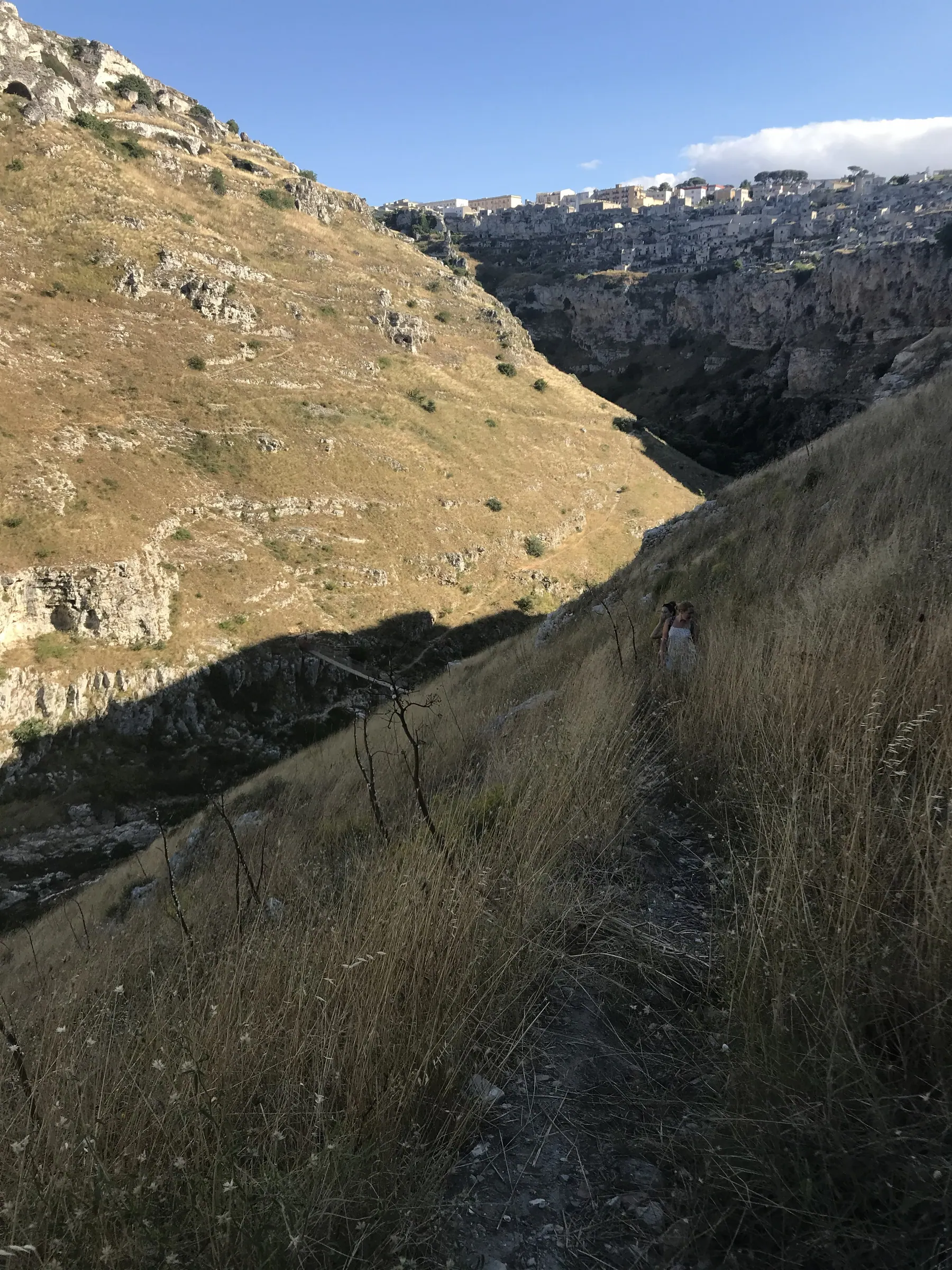
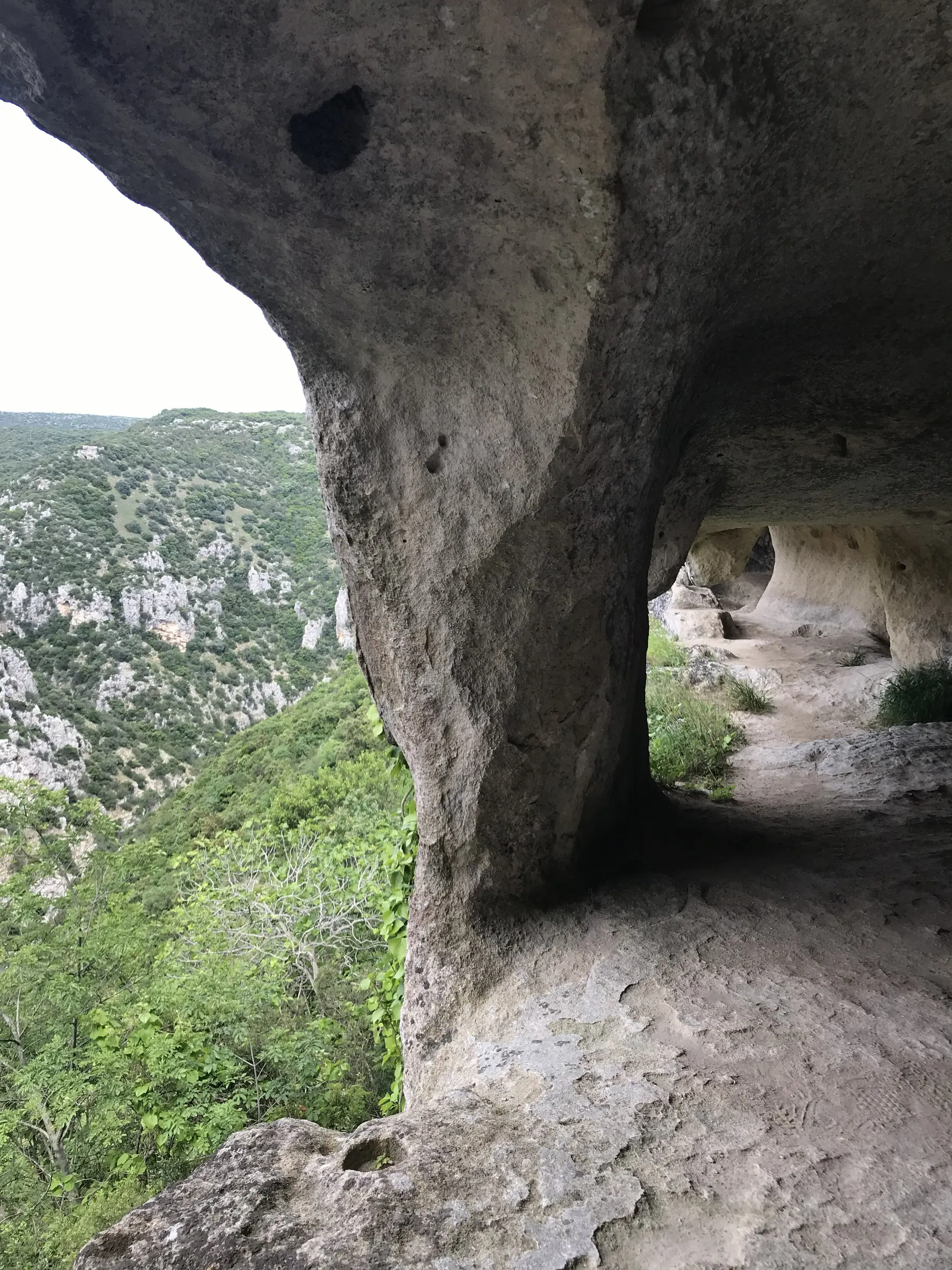
The climb is worth it for more than the view. Nearer the top you pass more caves, some with rock-church remains still in them - a reminder that people didn't only live on the Matera side of this ravine.
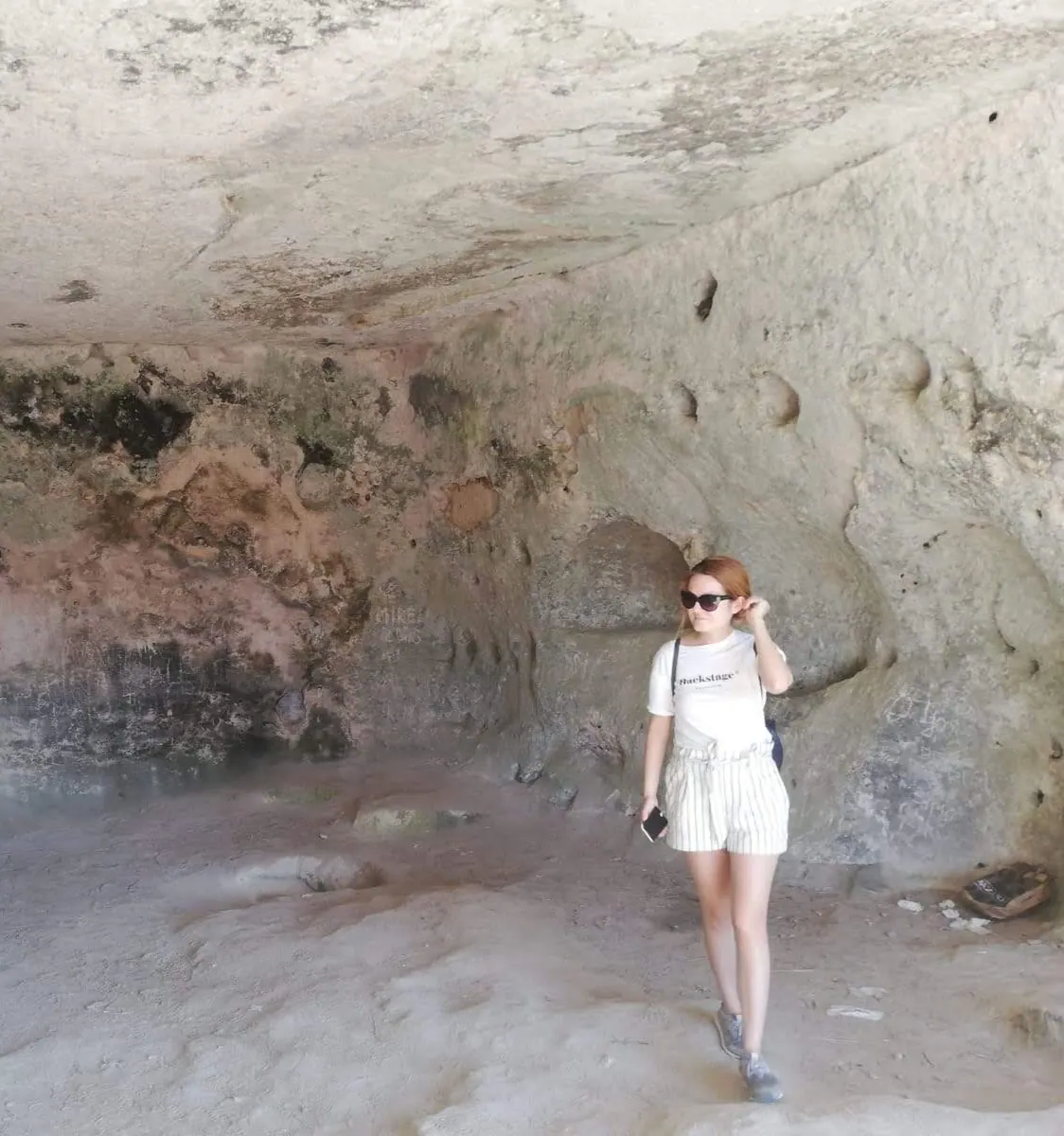
And this is the thing to understand about the Murgia: don't just stand at the viewpoint, take your photograph and get the bus back. Walk around. Go a little way down the slope. There are caves and rock churches scattered across this side too, some of them with frescoes and carved interiors still there, and the whole plateau is an archaeological park rather than a lookout. San Vito alla Murgia is one to look for, as much for the views from it as for the church itself. The Sassi are the half of the story everybody sees; this is the other half.
Either way, the Murgia is a must.
One more, outside the city: the Crypt of Original Sin
If you have time and a car, the Cripta del Peccato Originale - the Crypt of Original Sin - is about a quarter of an hour out of Matera. It's a rock church from the 8th or 9th century, covered inside with frescoes good enough that people call it the Sistine Chapel of rock art. Entry is around €10 and you need to book; it isn't somewhere you turn up. I didn't get there myself, and it's the main thing I'd go back for.
Where I lived, and what to eat: Via Roma and Matera’s food
I lived on Via Roma, outside the Sassi, in the more everyday part of town, with the other volunteers. It was about five minutes' walk to the old town, because everything in Matera is close to everything else.
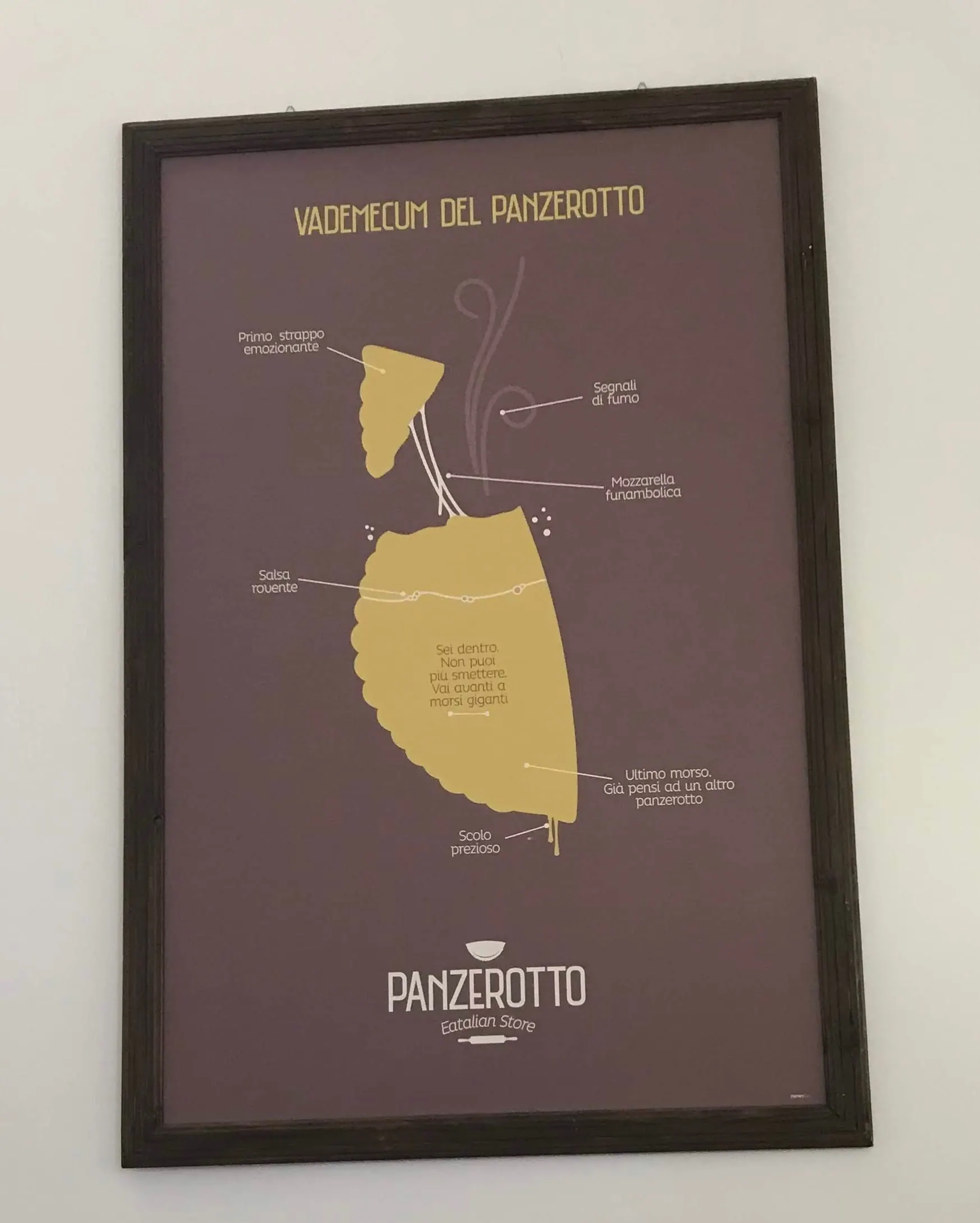
It was also, dangerously, next door to a panzerotto place - called simply Panzerotto - which was my favourite in town and is still open. A panzerotto is a half-moon of dough, filled classically with tomato and mozzarella, and fried. It's the food of this part of Italy, it costs very little, and the smell of it is one of the things I associate most strongly with living there.
That corner of town is worth finding for its own sake, because hardly any visitors go there. Nearby is a small garden, the Villa Giardini, and SottoZero, another panzerotto place, with Caffe Schiuma opposite - my regular for coffee and pastries. The filled croissants are excellent.
The first place I ate in Matera was Tornagusto, on Via Don Minzoni, a little outside the Sassi. They do speciality panini and they were very good indeed - a decent thing to know about if you want lunch away from the old town prices.
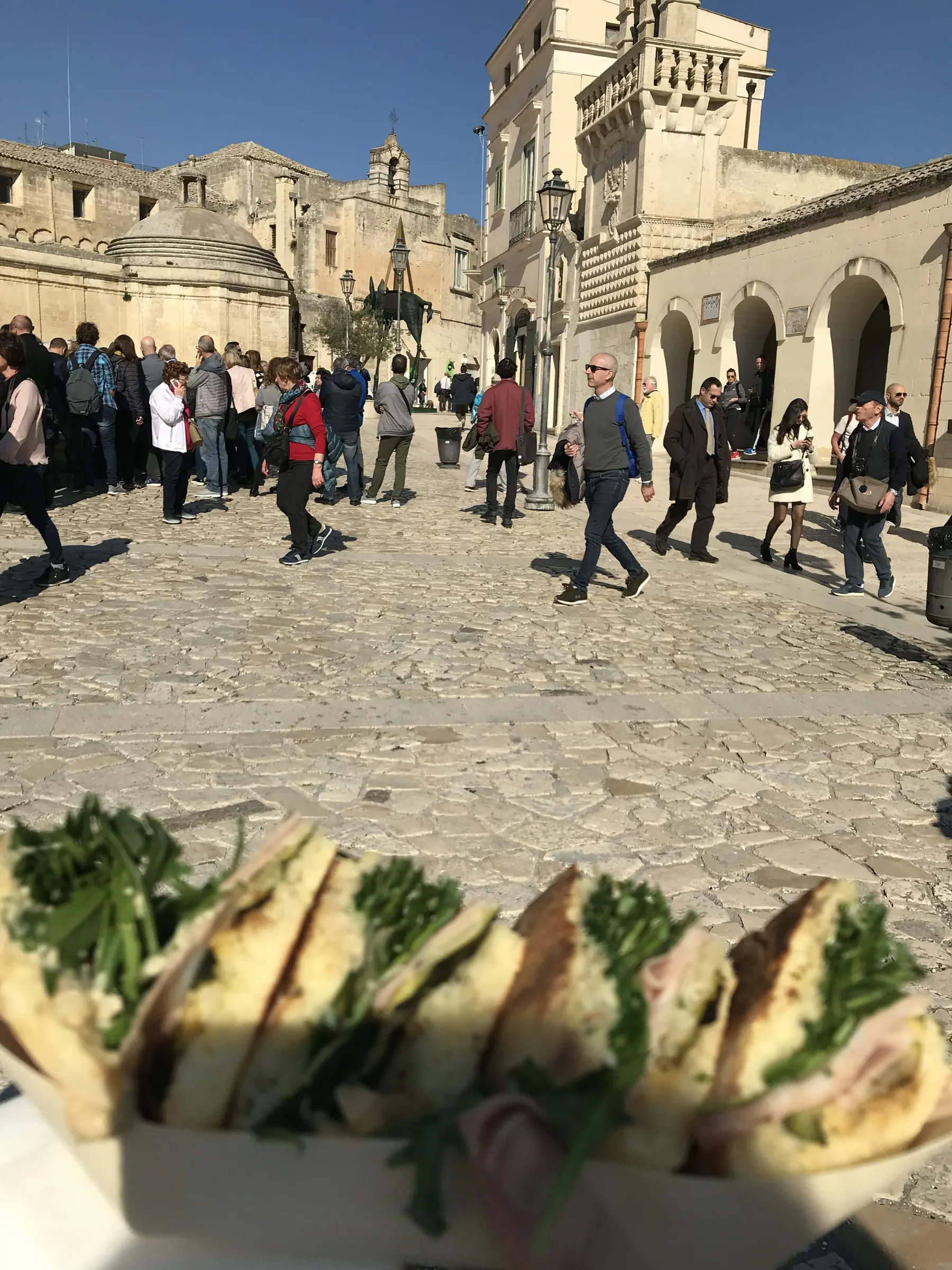
For something quick, 5 Lire does pizza by the slice.
The other thing to eat here is focaccia, and the place to get it is a panificio - a bakery. They're all over the town, and the point is that it comes out of the oven while you're standing there: fresh, hot.
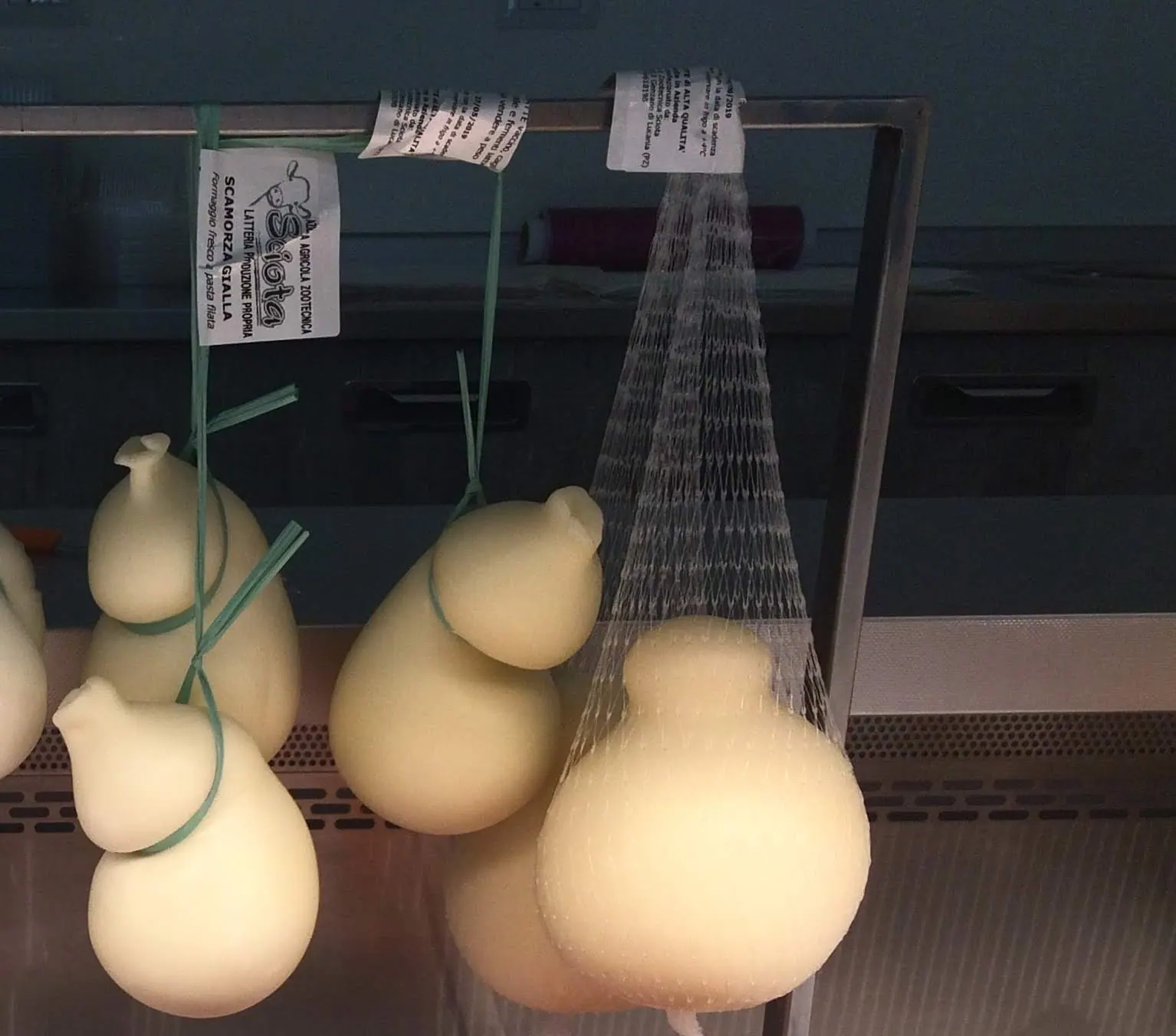
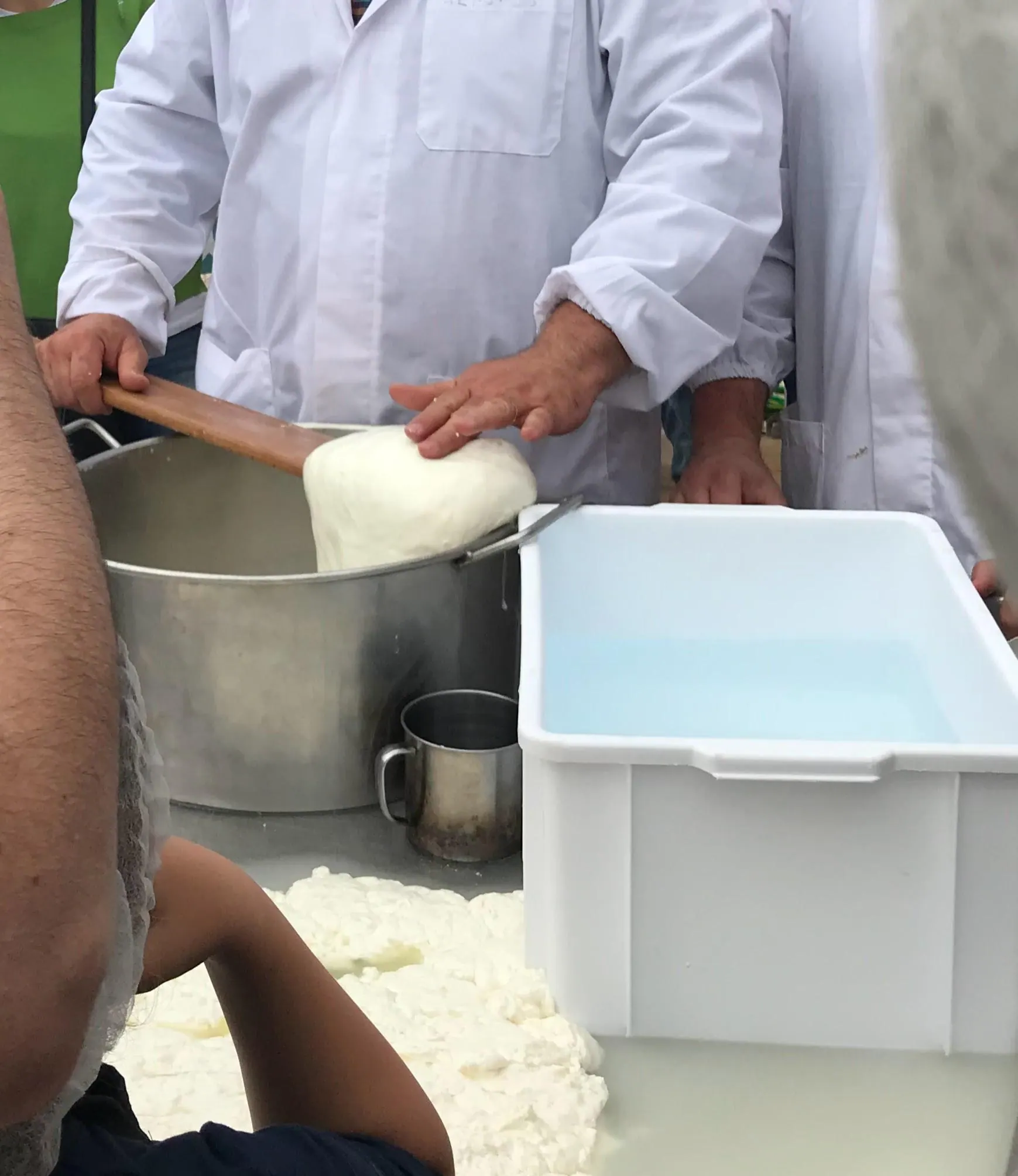
Then the cheese. Caciocavallo is the one from this region, aged and firm and worth trying wherever you see it. Scamorza is the other. I watched mozzarella being made from start to finish at one of the Capital of Culture workshops, and it's the sort of thing that changes how you eat something afterwards. And stracciatella - the real cheese, not the ice cream flavour - which is the soft, torn inside of a burrata served on its own. I ate it most mornings. I put on weight in Matera, and I don't think that was avoidable in Italy.
Where to go in the evening
In the evening, the bars are on Via Lucana and the streets around it, outside the Sassi, and there are some good ones along there. Area 8 was the one I went to most, and it's still going. In the old town there's the Monkey drink house, beside Piazza del Sedile, mostly memorable for the way the whole street outside filled up with people in the evening.
Via Ridola is the other place to be at that hour. It's lined with bars and cafés, and the evening there is a mix of sitting outside for a drink and walking the street - which in Italy is half the point of the evening.
Inside the Sassi themselves, the two streets where you'll always find somewhere open are Via Fiorentini in Barisano and Via Bruno Buozzi in Caveoso. The Sassi are now full of bars and restaurants, so finding somewhere won't be a problem. On Via Madonna delle Virtù, on the outer edge, restaurants have tables looking straight out over the gorge - the best view you'll get with a meal in front of you.
Two day itinerary
Matera can be walked in a dozen different orders, and getting lost in it is half the point. But if you want a shape to start from, this is how I'd use two days and a night.
Day one - the upper town, then down.
- Spend the morning above the ravine: Piazza Vittorio Veneto and the Palombaro Lungo underneath it,
- then Via del Corso into Via Ridola, Palazzo Lanfranchi, and up through Piazza del Sedile to the cathedral.
- Casa Noha somewhere in there, because it explains what you're about to walk into.
For lunch, keep it quick - you'll want to be walking rather than sitting. A panzerotto is the obvious answer, cheap and eaten standing up, or a panino at Tornagusto on Via Don Minzoni, just outside the Sassi.
In the afternoon go down into Sasso Barisano along Via Fiorentini - Casa Grotta C'era una volta, San Pietro Barisano, the Convent of Saint Agostino, the viewpoint in front of it - and then leave time to simply wander. Half of what's good down there isn't on anyone's list.
If there's daylight left, use it on whatever you want to go inside - a museum, an exhibition, another cave house. Check closing times before you count on any of it; most of these places shut earlier than you'd expect. Then have a proper dinner: there are plenty of good restaurants throughout both the Sassi and the upper town, so check recent reviews and choose somewhere close to where you finish the walk. On Via Madonna delle Virtù, the tables look straight over the gorge, which is the setting worth paying for.
Then go back into the Sassi once it's dark. It doesn't much matter where: cross over to Caveoso for Santa Maria de Idris lit up, go up to the square in front of the cathedral, which is beautiful at that hour, or simply wander whichever streets you end up in.
Day two - Caveoso in daylight, then the ravine.
- Start with breakfast the way people here do it, which means a pasticceria, a cappuccino or an espresso, and a filled croissant.
- Caffe Schiuma and the corner near Via Roma are about as local as it gets, and Via Lucana and the streets around it are where you'll pay ordinary prices and stand next to people on their way to work.
- Focaccia is an afternoon snack here rather than a breakfast, and Panificio Paoluccio on Via del Corso is a good place for it, on the street where the shops are.
You may have walked through Caveoso the night before; this is the morning to see it properly. Santa Maria de Idris, Santa Lucia alle Malve, the Casa Grotta di Vico Solitario just off Via Bruno Buozzi, and the climb up through Rione Malve to the edge of the drop. Walk out along Via Madonna delle Virtù with the gorge below you. There are places to eat around Piazza San Pietro Caveoso if you want lunch before crossing the ravine. Then cross to the Murgia, either on the minibus that leaves from near the central station or on foot from Porta Pistola, and give yourself time to walk around on that side rather than only standing at the viewpoint.
Whatever's left of the day, spend it on the things that actually interest you - the museums, another rock church, a cave house, or simply more of the streets. By this point you'll know which of them you want.
And with only one day, do day one and stay the night anyway. The evening is the part worth staying for.
Before you go: getting to Matera and where to stay
Getting there. Matera is tucked into an out-of-the-way corner of Italy, and reaching it isn't the simplest thing. The nearest big city is Bari, which has an international airport. From there you can take the train - note that it's a private regional line rather than the national network, which is part of why Matera stayed off the map for so long. A one-way ticket is around €6. It doesn't run on Sundays, but there are buses instead, and buses also run from both Bari city centre and the airport on other days.
When to go. I arrived in March expecting a warm Italian spring and found it quite cold, especially at night - Matera sits inland and high, and it isn't the Mediterranean coast. By summer that had reversed completely and the heat was serious. Late spring and autumn are the sensible answer.
What it costs. Basilicata is one of the more affordable parts of Italy and Matera has stayed reasonable, though it's less cheap than before 2019. A panzerotto is around €4.50 to €5, and entrance fees to the individual sites are a few euros each.
Where to stay. I can't recommend a hotel, because I lived in a flat on Via Roma rather than staying in one. But the choice of area matters more here than in most towns. Sasso Barisano is the easier of the two cave districts - more restored, most of the cave hotels, the restaurants, and reasonably direct access up to Piazza Vittorio Veneto. Sasso Caveoso is more dramatic and more ancient-feeling, but it means stairs, a great many of them. The ridge between them, up by the cathedral, was historically the noble quarter: fewer cave hotels, more conventional ones, the best views. And the upper town around Piazza Vittorio Veneto and Via Lucana is where I lived - flat, easy for taxis and parking, still a short walk from the Sassi, and considerably more practical than sleeping in a cave.
Two warnings about sleeping in the Sassi. Luggage is a real problem: uneven stone, steps everywhere, no vehicle access to most of it, so a wheeled suitcase is a bad idea. Some hotels will carry bags for you - ask before booking. And many cave rooms have no windows, which some people love and others find oppressive. Look at the photographs properly.
Is it worth the detour?
I'm not the only one who thinks so. I've sent friends there, and other people I know who were travelling in Puglia and Basilicata have told me the same thing afterwards: Matera was the unexpected highlight of the trip.
That's the thing about it. Most people come to this part of Italy for Puglia - the whitewashed towns, the coast, the trulli - and Matera is the detour. Then they get there and it turns out to be the part they remember.
But I'd add something honest, and it's the thing I think about most now.
When I arrived, Matera still felt like somewhere that hadn't quite been discovered. That has changed. Between the UNESCO listing and the Capital of Culture year, it has gone from almost unknown to one of the places people put on a list of Italy, and the effects are visible. The Sassi that were empty and raw are now lined with restaurants aimed at visitors. A town this small can absorb only so much of that.
Which raises a question I don't think has been settled: whether Matera can become famous and stay itself. The temporary citizens idea was an attempt at exactly that - an argument that visitors should belong to a place rather than consume it - and it was a better attempt than most destinations make. Whether it holds is another matter.
I lived there for six months and I still think about the smell of panzerotto, the view from the Murgia, and the stairs of the Sassi at night. No other place has replaced it. Go, and go properly - stay the night, cross the ravine, try some local food. That's the version of Matera worth having, and it's the version that does the town some good as well.
Practical questions
Is Matera worth visiting?
Yes, and it's worth going out of your way for. It's one of the oldest continuously inhabited settlements in the world, and there isn't another townscape like it in Europe. Most people who go to Puglia and add Matera as a detour end up saying it was the best part of the trip.
Can you visit Matera in a day?
Yes. The town is small and you can see the main things between morning and late afternoon. But the Sassi at night are the best thing about the place, and a day trip means missing them.
How do you get to Matera from Bari?
By train on the Ferrovie Appulo Lucane line, around €6 one way and about 90 minutes - note it's a private regional line, not the national network, and it doesn't run on Sundays. Buses run from Bari city centre and the airport, including on Sundays.
What are the Sassi?
The two districts of cave dwellings cut into the ravine below the town, lived in continuously for thousands of years. Around fifteen thousand people were still living in them in the 1950s, when the Italian government evacuated the lot. They've been UNESCO World Heritage since 1993.
Where should you stay in Matera?
Sasso Barisano is the easier of the two cave districts and has most of the cave hotels. Sasso Caveoso is more dramatic but means a lot of stairs. The upper town is flat, convenient, and still a short walk from everything.
When is the best time to visit Matera?
Spring or autumn. The town sits inland and high, so it's colder than you'd expect in early spring, and the summer heat is serious.
How long do you need in Matera?
Two days and a night is right for a first visit. A third day lets you add the Crypt of Original Sin or the towns nearby.
Read next
More posts for this trip mood
 Europe
 Kurzeme, Latvia
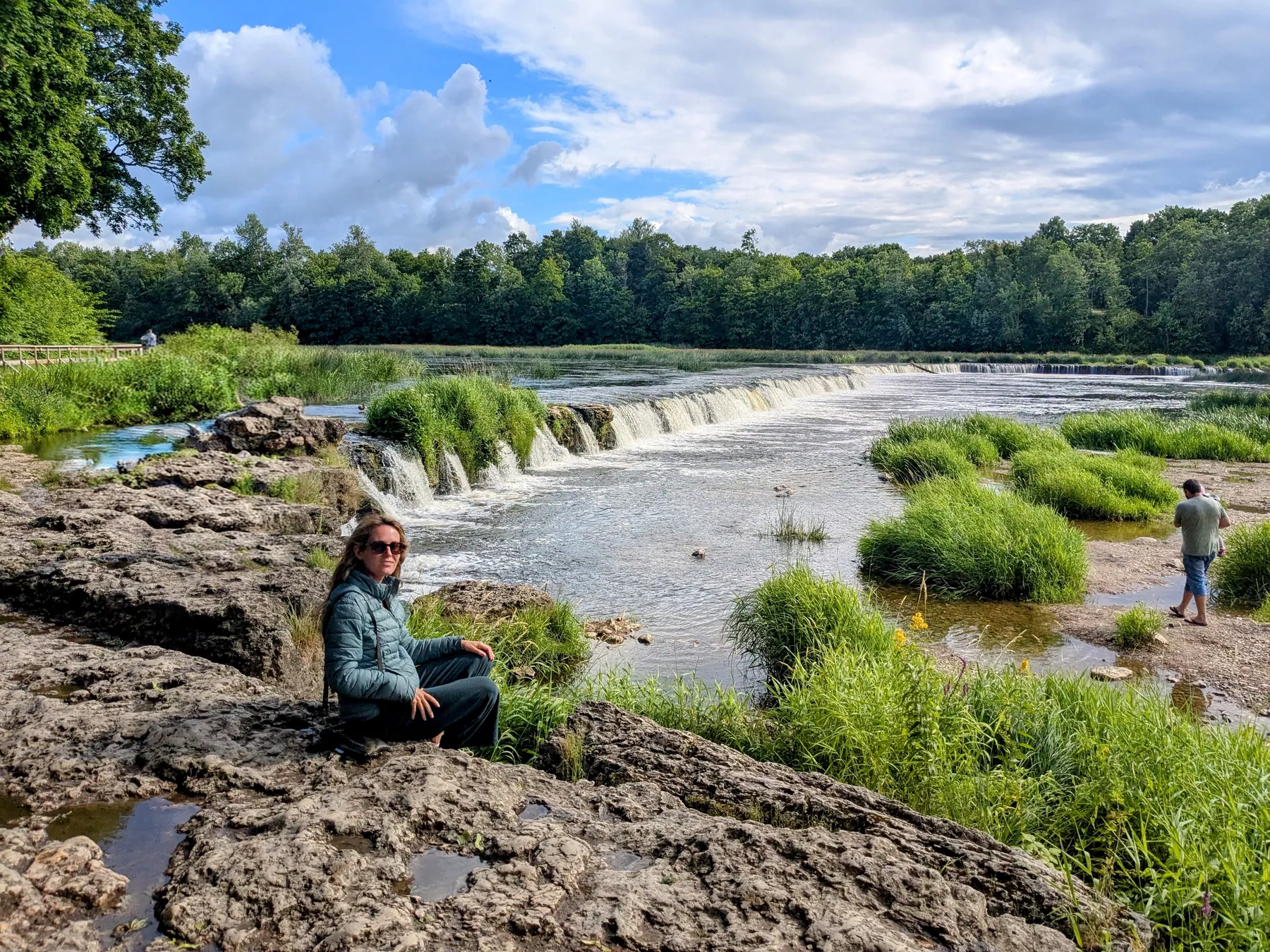
A Day in Kuldīga: Latvia's Most Charming Old Town and Europe's Widest Waterfall
A beautiful day spent between Kuldīga's old wooden streets, the Venta River and Europe's widest waterfall.
Kuldīga is a striking town, and if you happen to be in Latvia, I would say it is a must.
 Europe
 Kurzeme, Latvia
Liepāja: Blown-Up Forts, a Prison Hotel and a City Marked in Musical Notes
A Baltic city where blown-up forts, a prison hotel, music and a wide beach make for an unexpectedly versatile coastal break.
A Liepāja city guide with the Northern Forts, Karosta Prison, Art Nouveau architecture, street art, music, beaches and practical tips.
 Europe
 Aragón, Spain
Teruel: The Spanish City That Had to Prove It Exists
A guide to Teruel, Spain, with Mudéjar towers, the Escalinata del Óvalo, the Lovers of Teruel, local food, parking and practical tips.