

Monasterio de Piedra · Aragón · Spain
Monasterio de Piedra: a fairytale waterfall park to escape the summer heat
A hidden waterfall detour that feels like a small paradise in dry Aragón.
A summer visit to Monasterio de Piedra in Aragón, Spain, with waterfalls, caves, monastery history, practical tips and why it is worth the detour from Zaragoza.
Quick facts
- Best for
- Waterfalls, shaded walks, caves, monastery history and a summer escape from the heat.
- Time needed
- A bit more than two hours worked for the park walk, plus extra time if you visit the monastery properly.
- Getting there
- Best by car: about 1.5 hours from Zaragoza or roughly three hours from Valencia.
- Good to know
- Wear real shoes. The loop is easy, but there are plenty of stairs and damp paths.
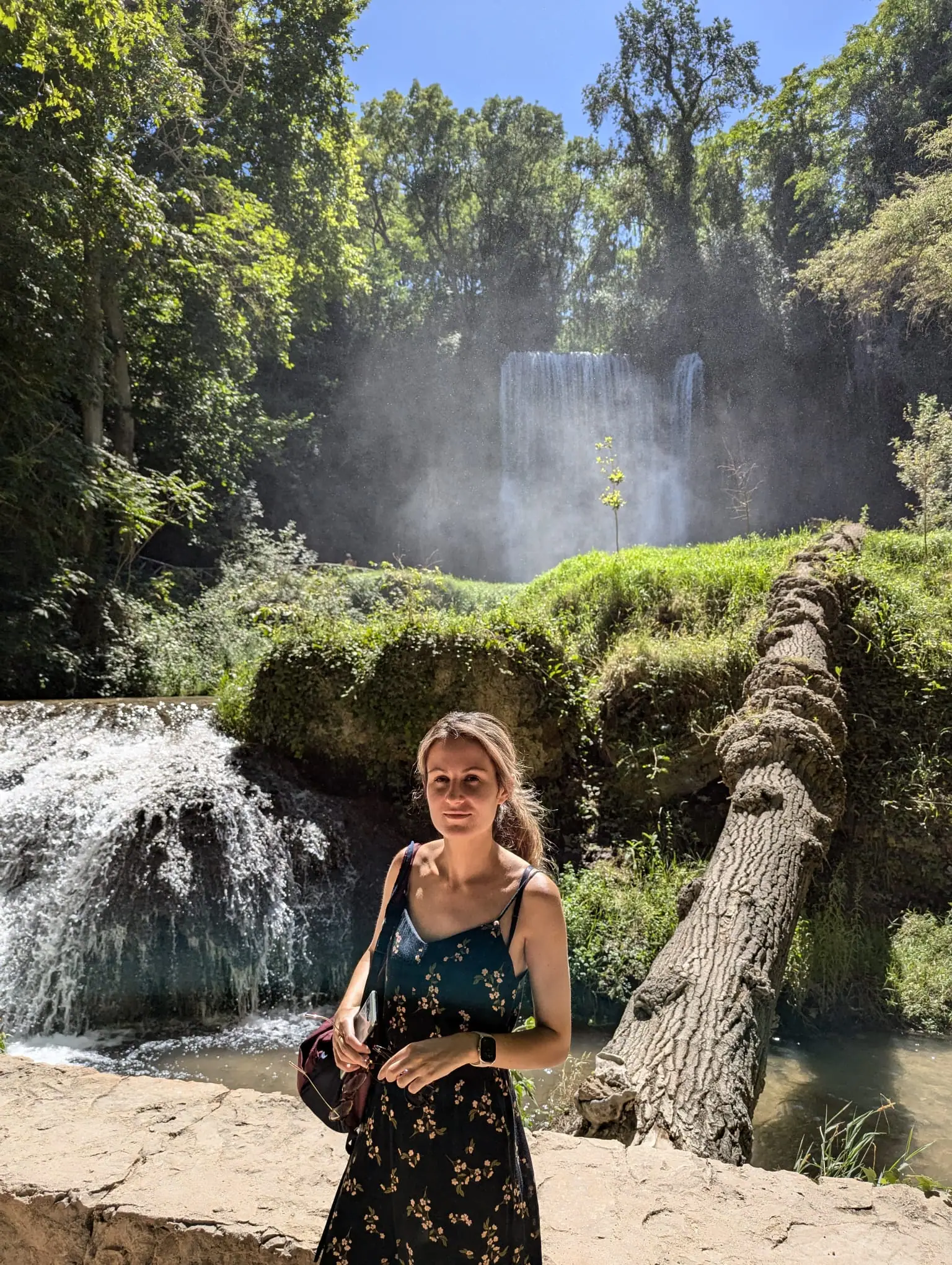
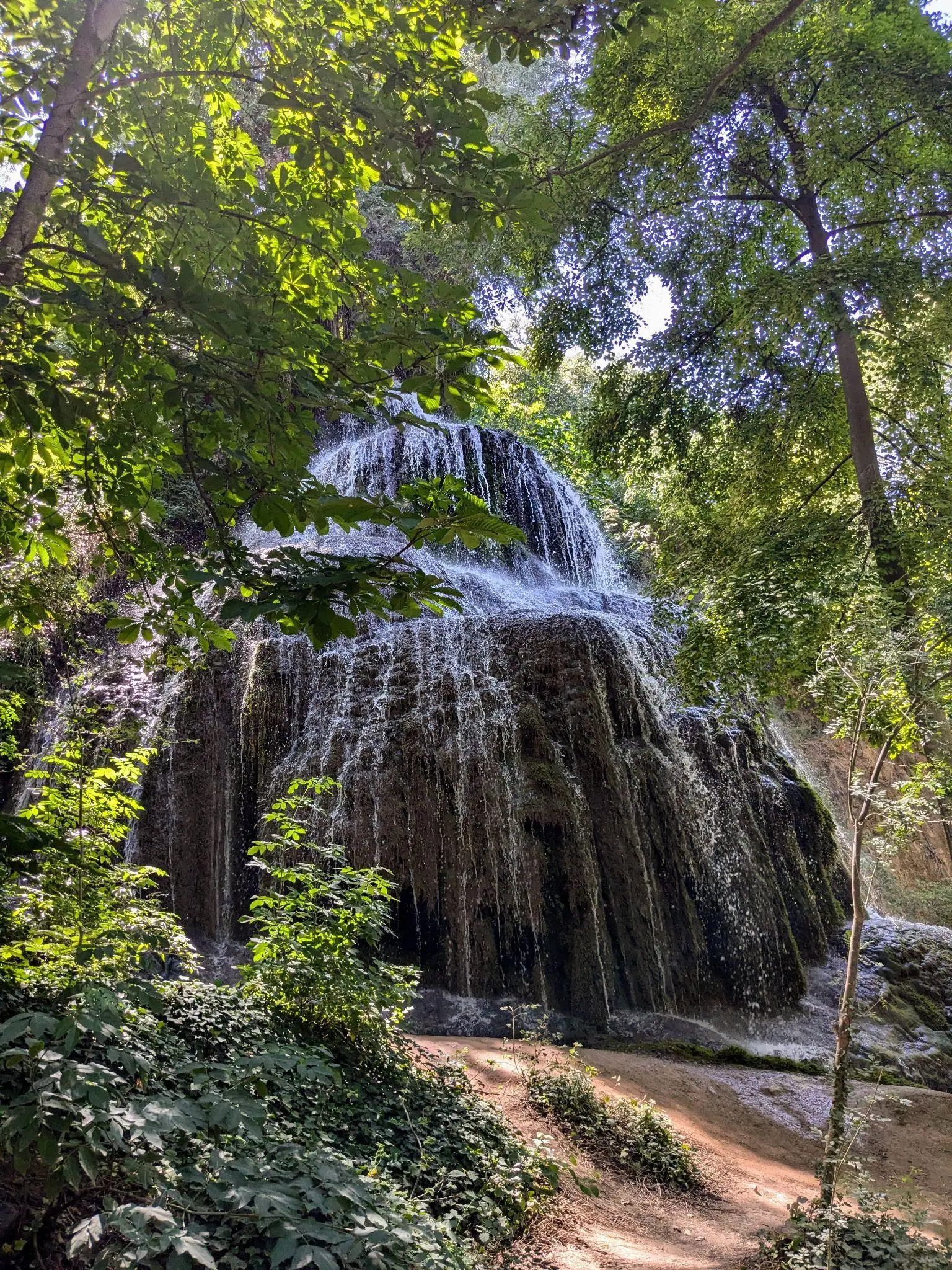
I had never heard of Monasterio de Piedra before the day we drove there, which is probably why it hit me so hard. We were on a road trip from Valencia up towards the Aragonese Pyrenees, with a stop planned at Bardenas Reales, and my boyfriend had added this place to the route. It turned out to be one of the best surprises of the whole trip.
It was late July and brutally hot - the kind of dry Aragón heat that makes you question your decisions in a car with tired air-conditioning. So walking into a cool, shady valley full of waterfalls, with spray drifting off the falls and landing on the path, was a huge relief. If you’re looking for a refreshing place to escape the heat in summer, this is one of the best I’ve found in Spain.
Before you set off
This is not the sort of place I would drive to without one last look at the official site. The park runs seasonally and special dates can affect access. When I checked on 30 August 2026, an adult ticket was €20 at the gate or €19 online. Children aged 4–11 and visitors over 65 paid €14.20 at the gate or €13.50 online, while under-fours went free. The same ticket covers the park and the Cistercian monastery that day. For the current price and any discounts, use the official ticket page.
The useful thing to know is that arriving late is not the same as arriving at closing time. The listed 2026 summer cut-off for the park was 18:45, with the park open until 21:00; from 31 August, the listed final entrance is 18:00 and closing is 20:00. The monastery’s listed visiting window was 10:00–19:30, with last entry at 19:00. I would check the official hours again on the morning you go.
I would treat it as a proper outdoor walk rather than a quick stop in sandals with a snack. There is free parking, but wet steps and slopes mean the route is not fully suitable for pushchairs or people with limited mobility. Wear shoes that stay on your feet. Dogs can join the outside walk on a lead, but need a carrier or backpack inside the monastery; food and drones are not allowed in the park. Check the official visitor rules if any of that affects your plans.
What it is, and where
Monasterio de Piedra is two things in one place: an old monastery and, wrapped around it, a natural park full of waterfalls, caves and pools. It sits near the village of Nuévalos, in the province of Zaragoza, in Aragón - inland Spain, away from the coast and away from the busy tourist trails.
That location is the whole story. It isn’t near Madrid or Barcelona, and the nearest city of any real size is Zaragoza, about an hour and a half away. From Valencia, where we started, it was roughly a three-hour drive. Being off to the side like this is probably why it has stayed relatively quiet, and honestly it’s part of why it’s still worth going. So if you happen to be in Zaragoza, keep this in mind - it makes an easy and very rewarding day trip.
How all this water ended up here
It’s worth knowing how such a green, wet place exists in the middle of otherwise dry hills, because the answer is part of what makes it special. The whole park is the slow work of a single river, the Piedra. Over thousands of years the river cut down through soft limestone, carving out the canyon, the drops and the caves. At the same time, the water - full of dissolved calcium from that same limestone - kept leaving deposits behind, slowly building up a soft, porous rock called tufa around the falls and pools.
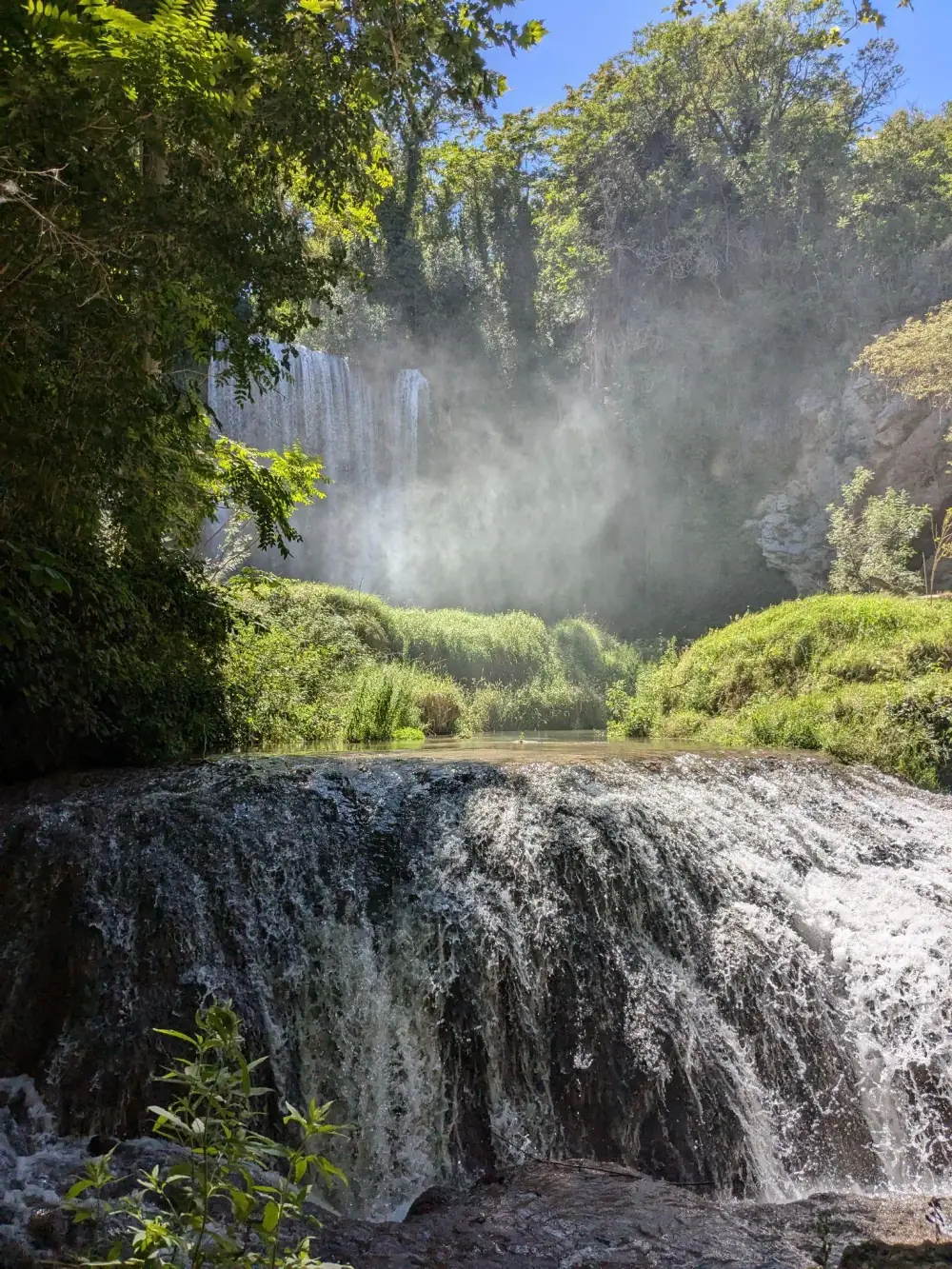
So the waterfalls here weren’t only carved out; they were also partly built up, layer by layer, by the water itself. That’s why they have those strange, rounded, almost man-made shapes, and why there are caves you can walk right into behind the water. It’s a rare green oasis in a dry corner of Aragón, and once you know how it formed, it feels even more unlikely.
Walking the park
The park is one big loop. You follow a marked path - a five-kilometre loop of footpaths, stairs and little bridges - and the signs make it almost impossible to get lost. It’s not a hard walk, but there are plenty of steps, so wear proper shoes rather than sandals.
A few names to look out for
If, like me, you prefer to know the names after you have seen the places rather than chase a checklist, save the official park map to your phone. It helps connect the early waterfalls and caves around La Trinidad and La Caprichosa with the wooded sections of Los Vadillos and Los Fresnos. Later come Cascada Iris and its cave, then the walk down to the base of Cola de Caballo. Lago del Espejo feels like a quieter final pause before the route turns back towards the exit.
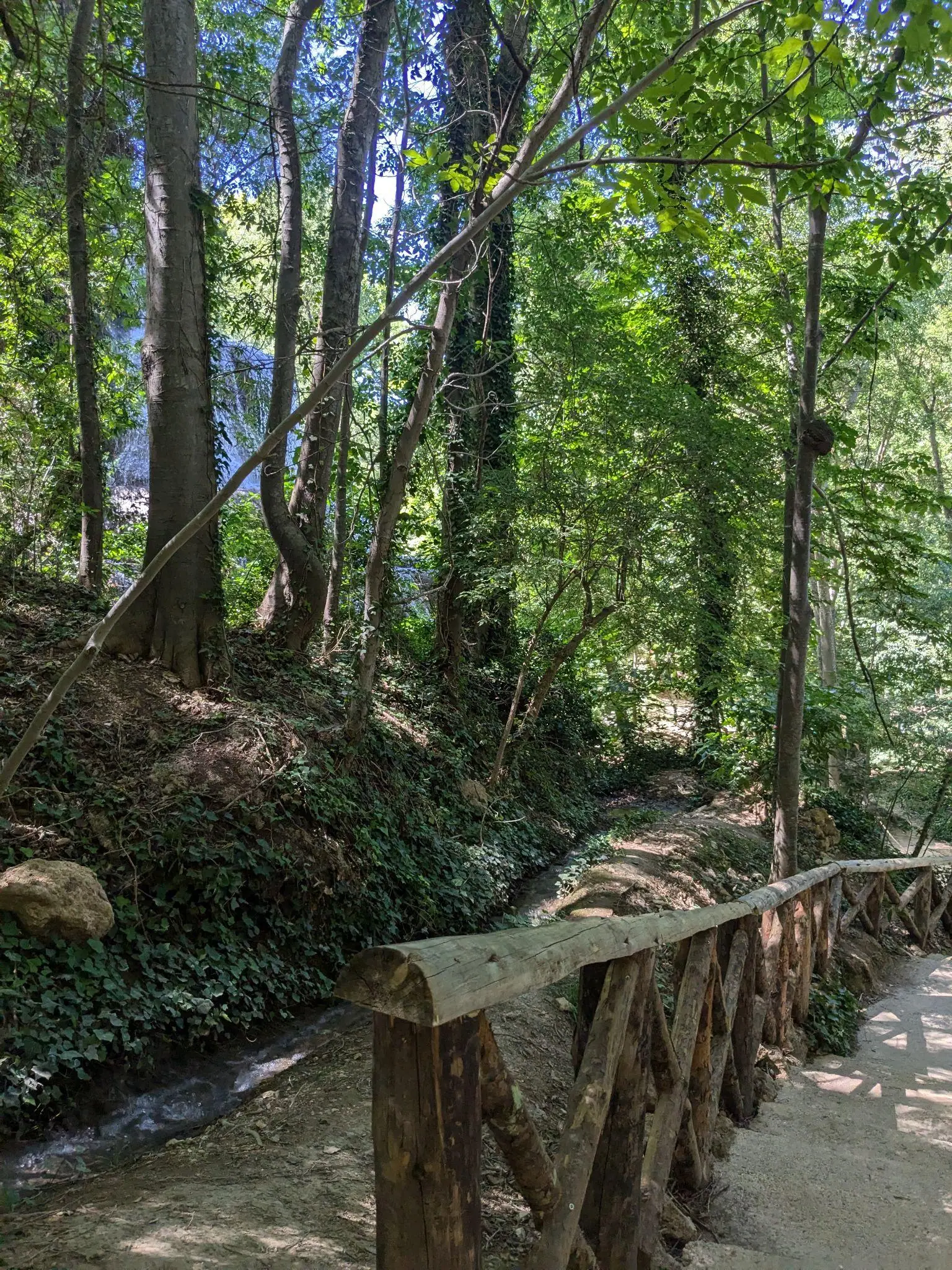
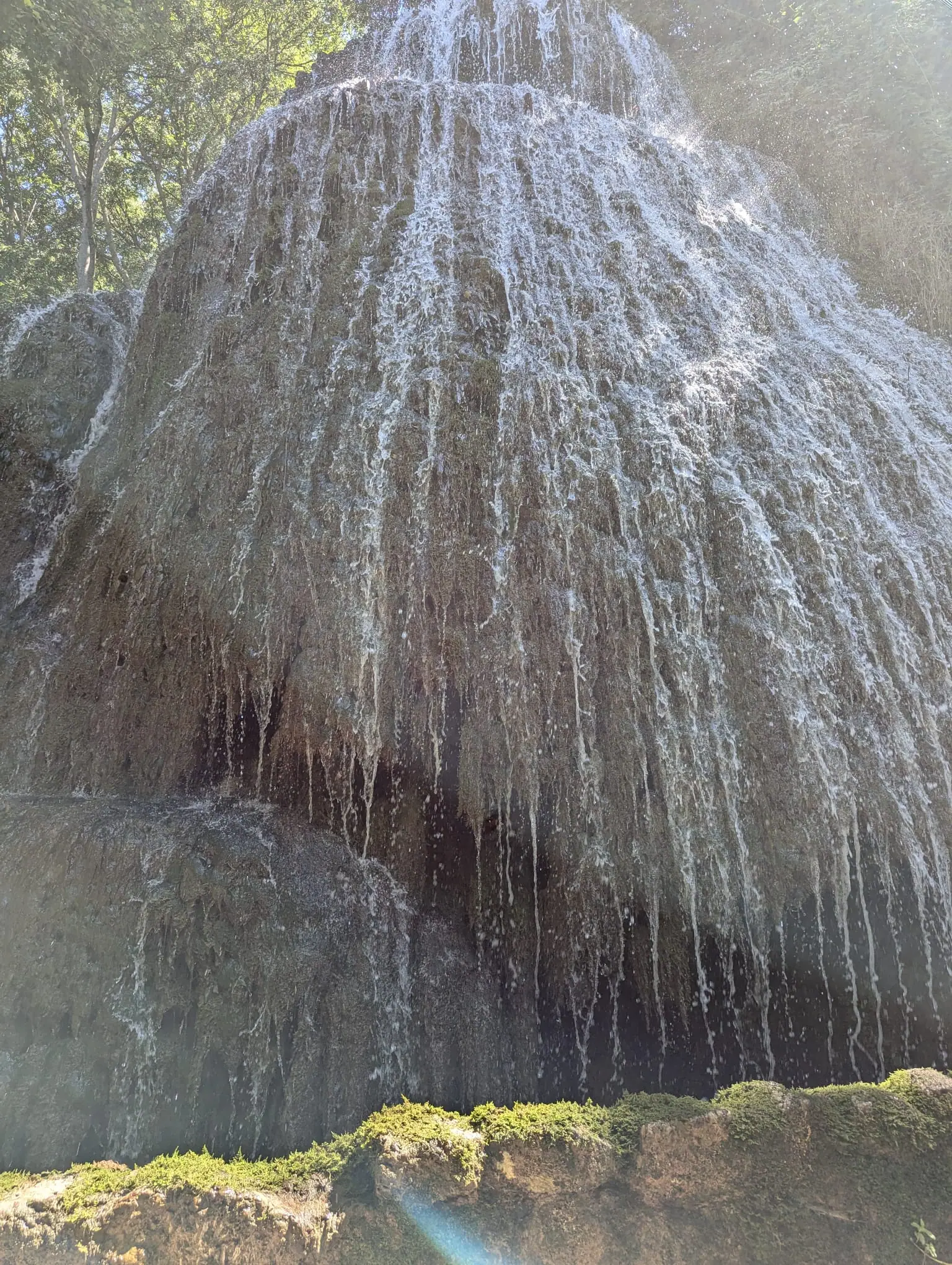
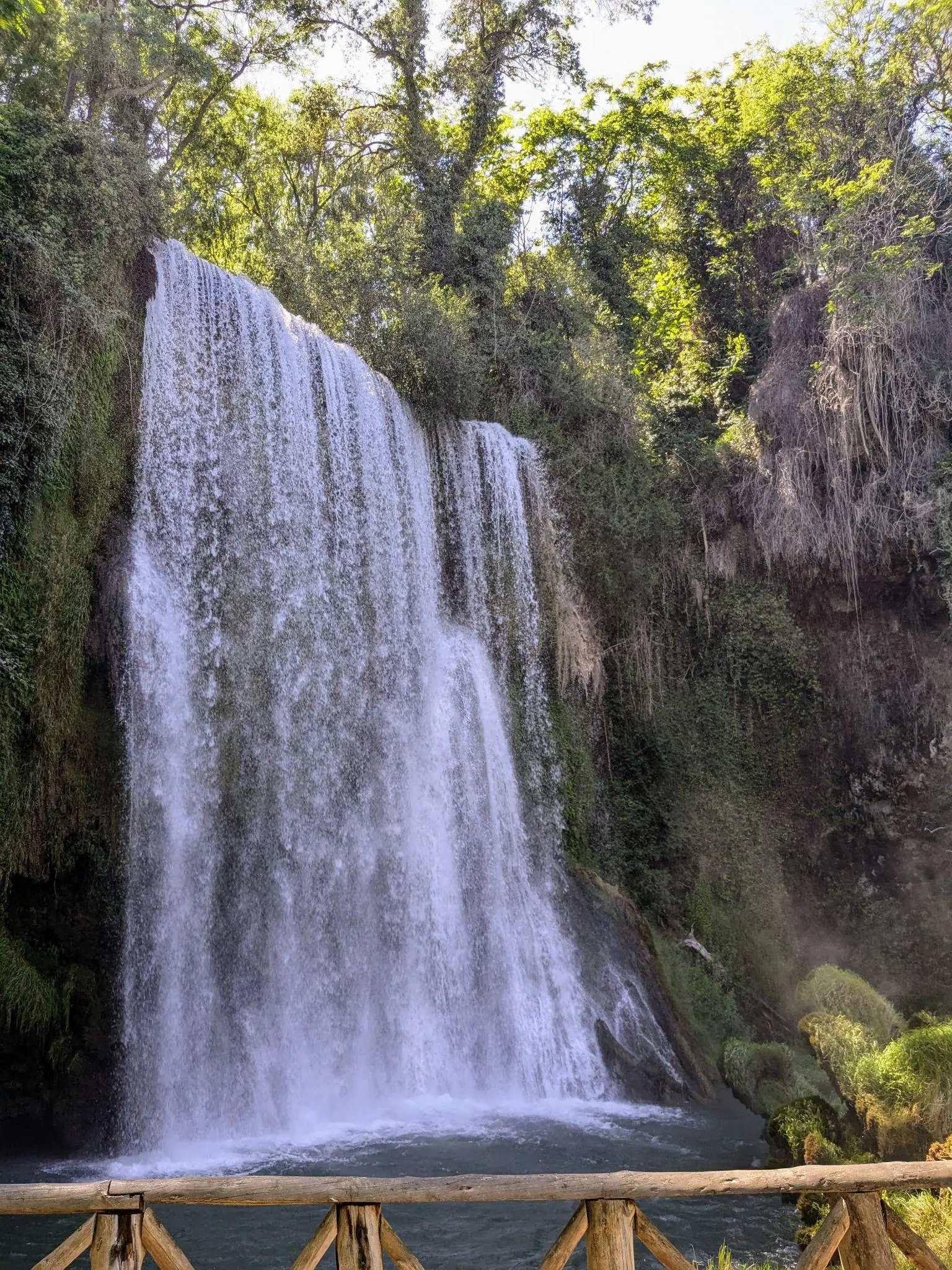
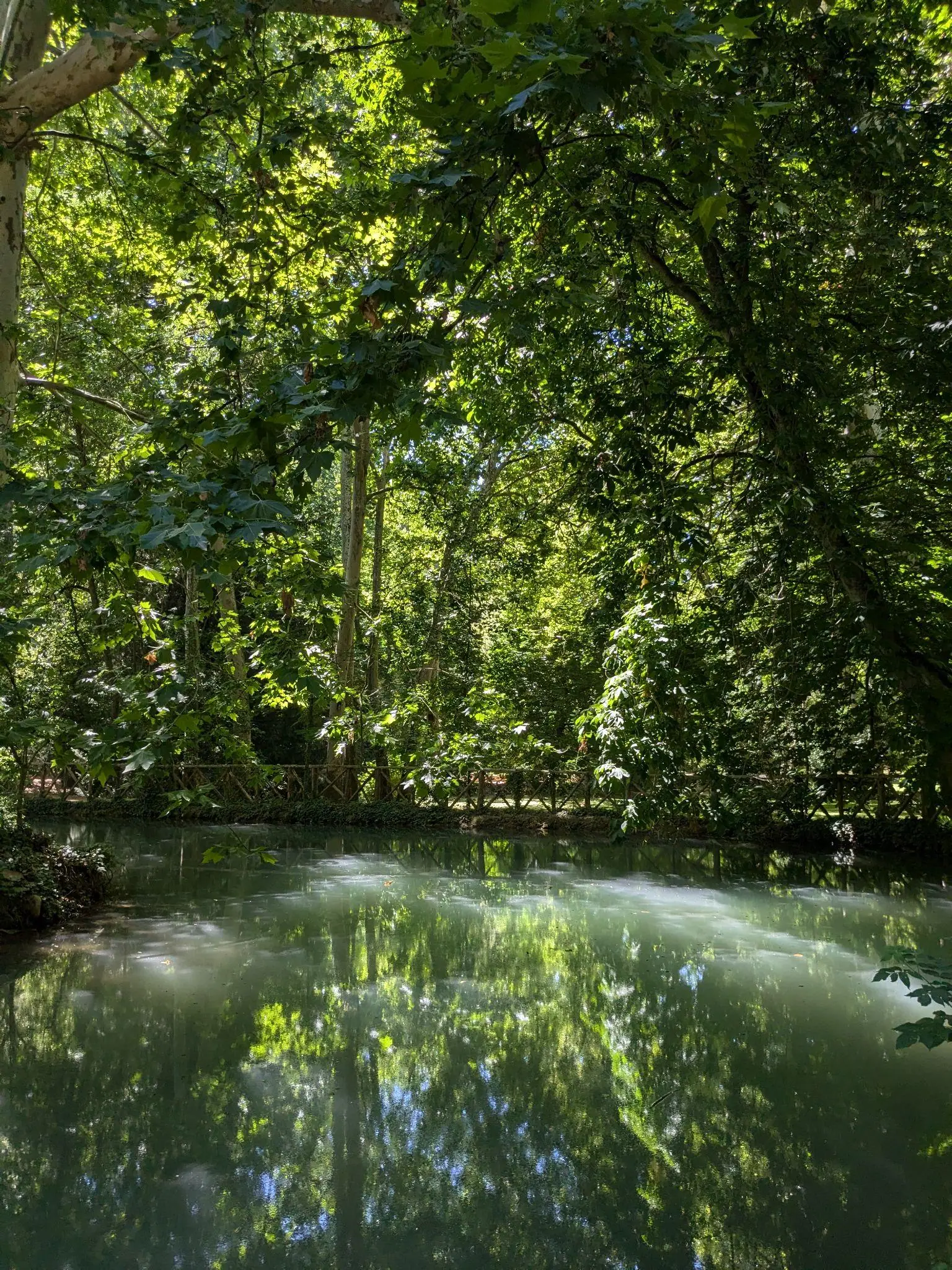
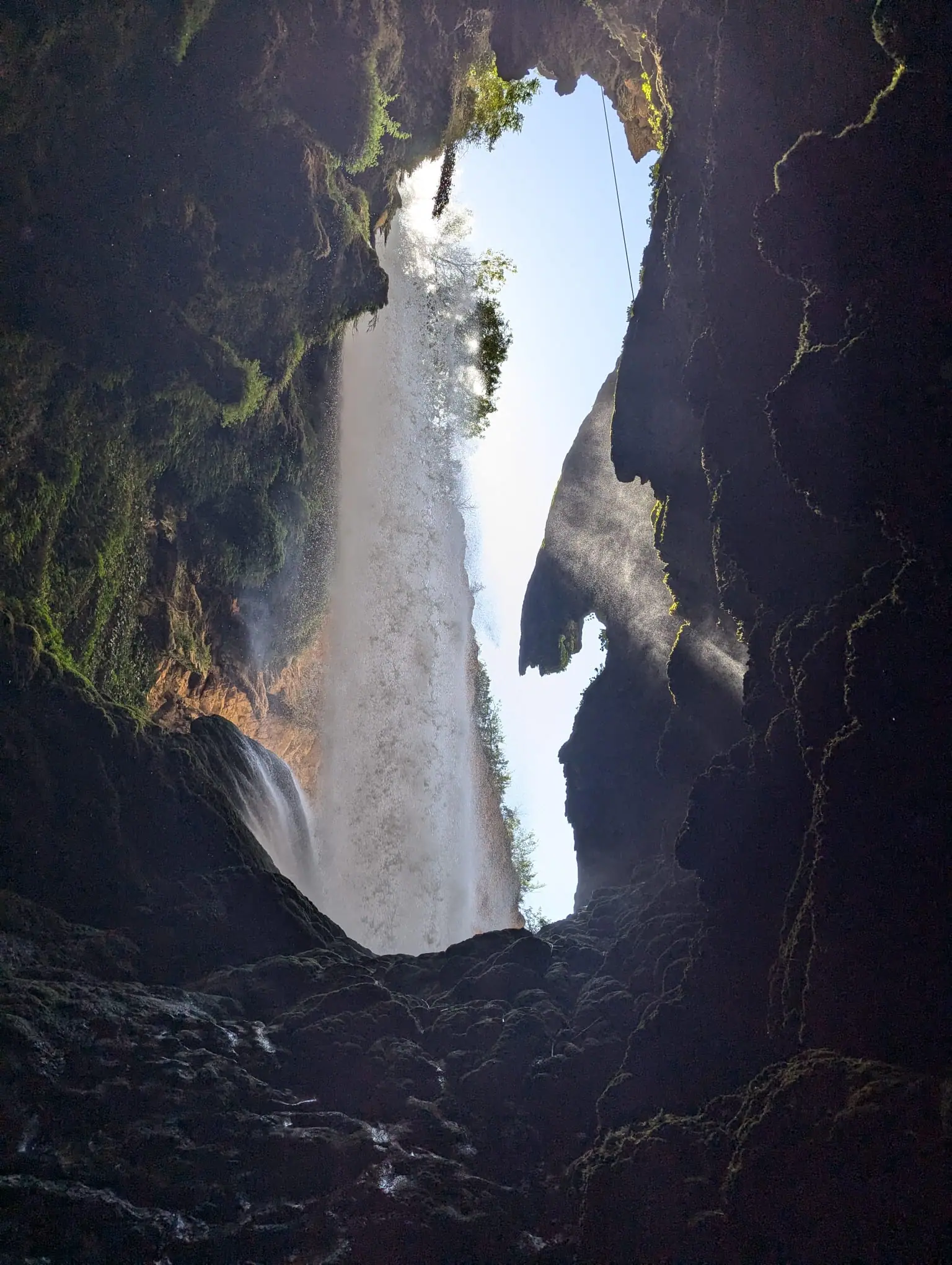
What makes it special is that the water never really stops. You’re rarely out of sight or earshot of a waterfall, and on a hot day the spray drifting across the path is the best free air-conditioning in Spain. Everything builds towards the Cola de Caballo, the “Horsetail,” a single drop of more than fifty metres. A stairway takes you down towards its base and into the Iris Grotto, a large cave set behind the falling water. I found that part especially impressive: walking inside was wonderfully refreshing after the heat outside, and the temperature contrast was striking. I also loved the rock formations in the cave and seeing the waterfall from its other side.
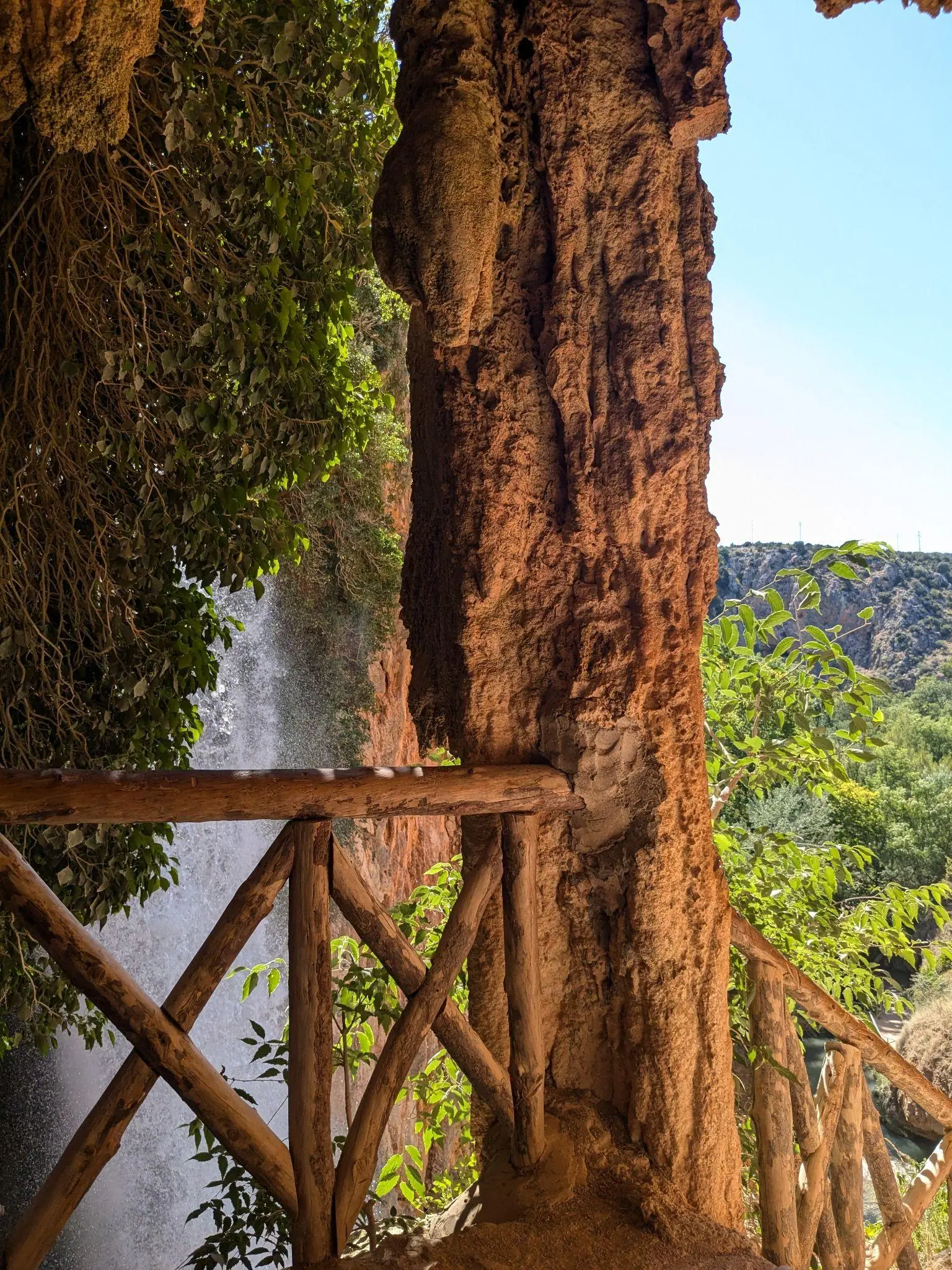
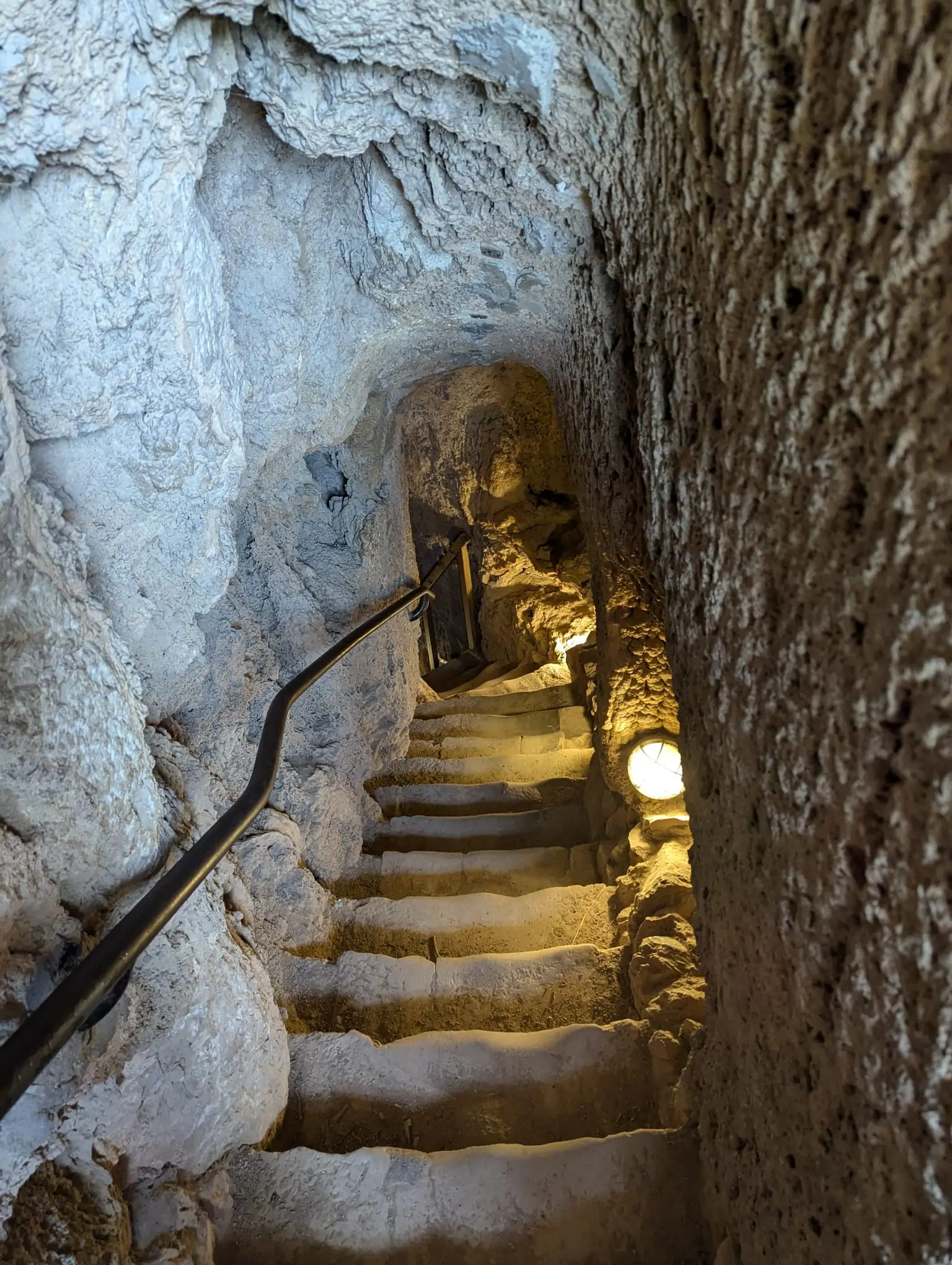
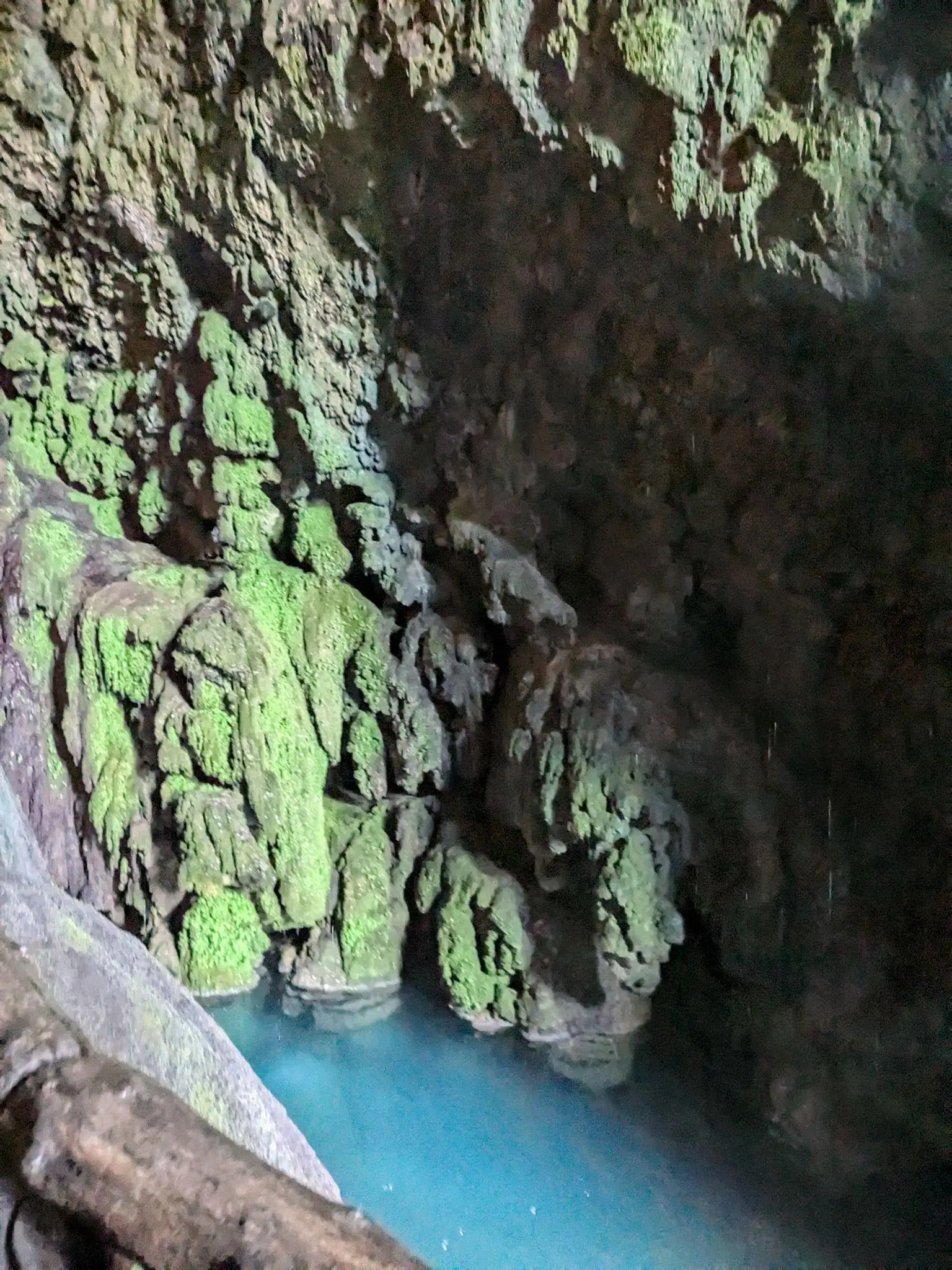
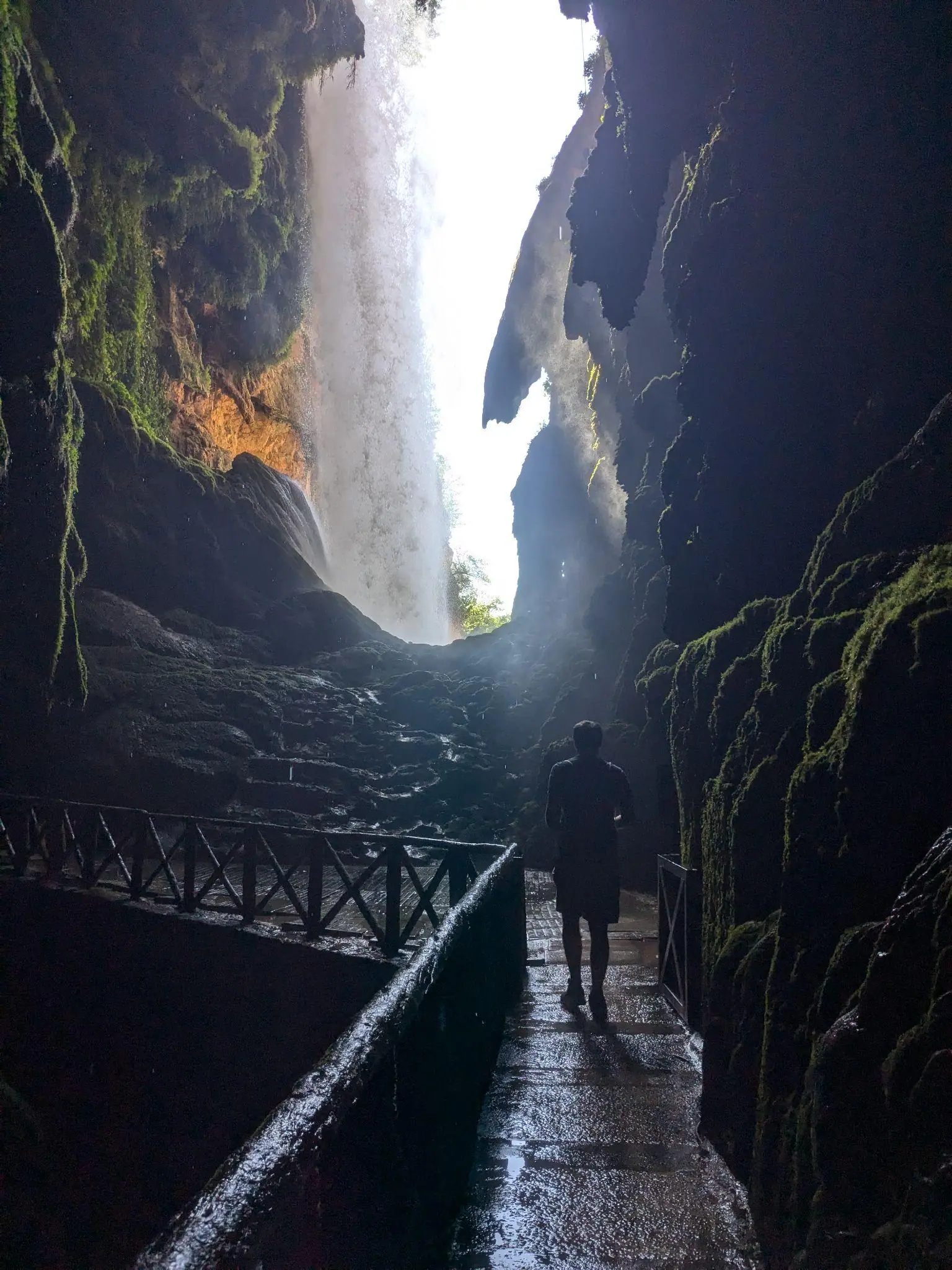
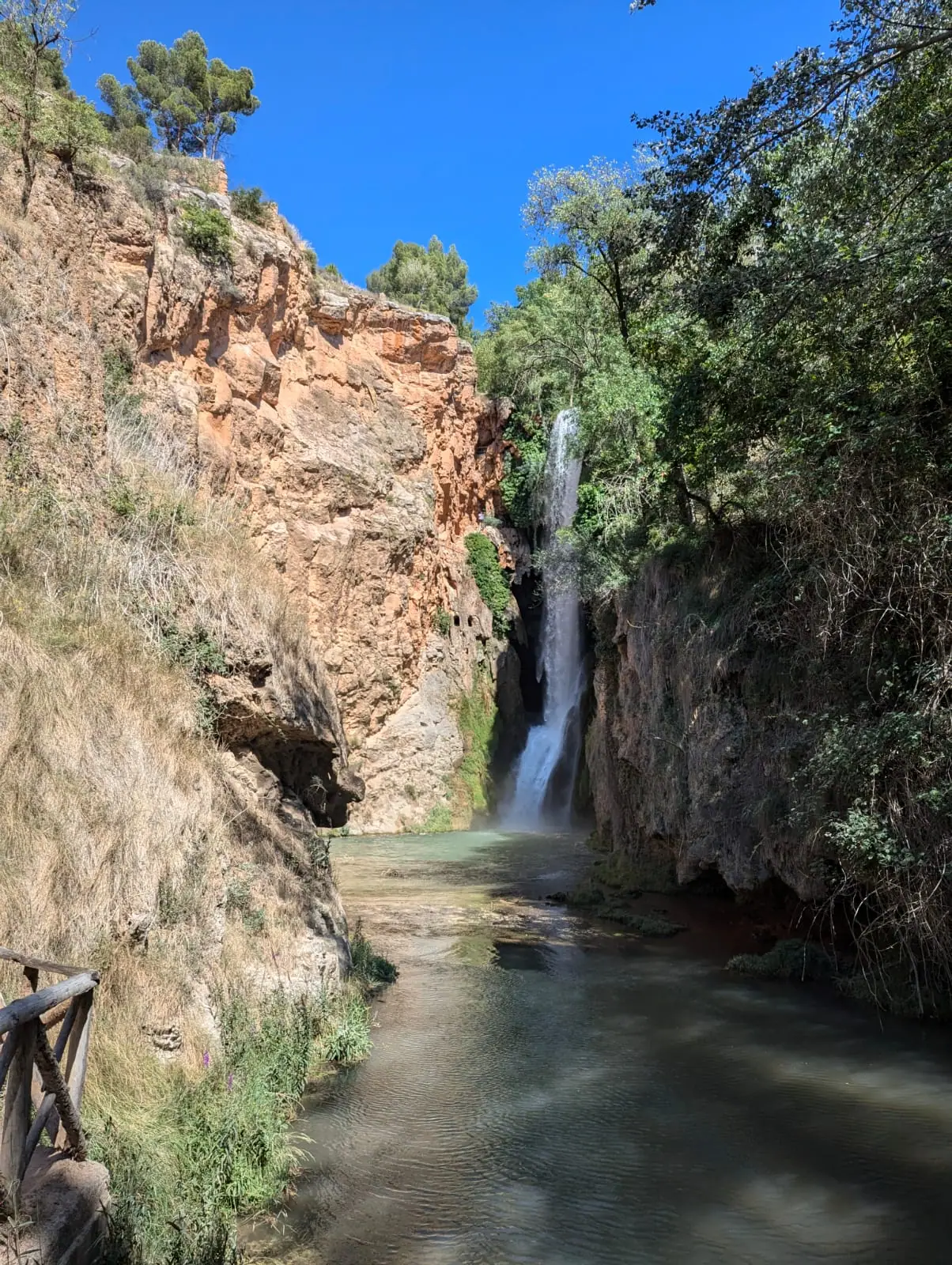
Stepping out of the July sun into the cool, damp dark of that cave, then walking through the rock towards the sound of water and coming out beside the waterfall from the inside, was the closest thing to a single standout. But honestly, the whole park worked that way for me. There wasn’t really one big moment so much as a steady feeling that we’d stumbled into a small paradise - it was about wandering, exploring, and letting one waterfall lead to the next. We took our time, and spent a bit more than two hours in the park, which felt about right. You could do it faster, but I wouldn’t rush it.
The monastery, briefly
We came for the park, and that’s where nearly all our time went, but the old monastery is included in the ticket and worth a quick look. It’s a Cistercian monastery going back more than 800 years, with a small museum inside.
Its story is worth a quick word, because it explains the whole place. It was founded in 1194, when King Alfonso II of Aragon gave an old Moorish castle by the Piedra River to a group of Cistercian monks, who built the monastery over it and moved in by 1218. Monks lived here for more than six centuries, until the government took the land in the 1830s and they finally left. The place then sat empty until a family bought it in 1840 and slowly turned the grounds into the park you walk through today - opening up the paths, planting trees, and making the Iris cave reachable for visitors. So the waterfalls you come for and the monastery that gave the place its name are really two parts of the same long story.
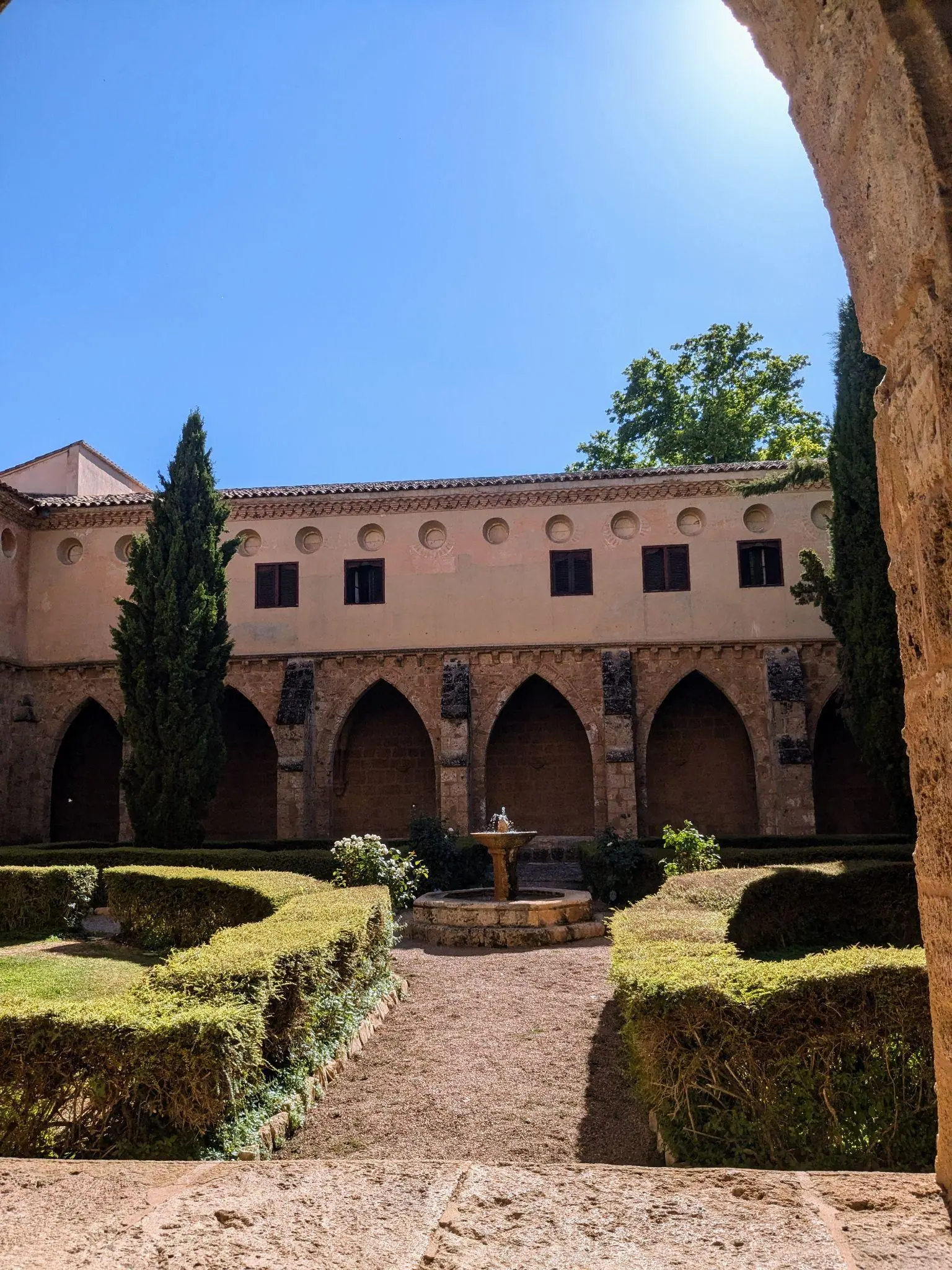
One detail I liked: by legend, this is where chocolate was first made in Europe, brought back and cooked up by one of the monastery’s own monks. Whether or not that’s strictly true, it’s a good story to have in your pocket while you’re standing in an old monastery kitchen in the middle of the Aragón countryside.
Beyond that story, the same ticket includes more than just the walk. Inside the monastery you can join a guided tour of the old rooms - the cloister, the monks’ kitchen and others - and there are small museums on the history of chocolate and on the wines of the local Calatayud region, plus a collection of old carriages. Out in the park, depending on the season, there’s also a birds of prey show, where eagles, hawks and vultures fly over the audience. We only gave the indoor part a quick look, but if you have the time, it’s all part of the same visit.
Worth the detour?
Yes - and I say that as someone who turned up with no expectations at all. Monasterio de Piedra is a real hidden gem, the sort of place that would be packed with people if it sat an hour from Barcelona instead of tucked away in rural Aragón. It deserves more attention than it gets, and yet part of me hopes it stays exactly this quiet. If your route takes you anywhere near Zaragoza, make the detour. On a hot day, you’ll be especially glad you did.
Practical questions
Is Monasterio de Piedra worth visiting?
Yes, especially on a hot day. It is a green waterfall park in a dry part of Aragón and feels like a real hidden gem.
How long do you need at Monasterio de Piedra?
The park walk took a bit more than two hours without rushing. Add more time if you want to visit the monastery, museums and birds of prey show.
Can you visit Monasterio de Piedra from Zaragoza?
Yes. It is about a 1.5-hour drive from Zaragoza, which makes it a very good day trip if you have a car.
What does a Monasterio de Piedra ticket include?
The general ticket includes the Parque Jardín Histórico and a self-guided visit to the Cistercian monastery on the day of your visit. Check the official website for current prices, opening hours and special conditions.
Is Monasterio de Piedra accessible, and can you take a dog?
The park has stairs and slopes and is not fully accessible for wheelchairs, reduced mobility or pushchairs. Dogs are allowed in the park on a lead, but they may only enter the monastery in a carrier or backpack.
Read next
More posts for this trip mood
 Europe
 Aragón, Spain
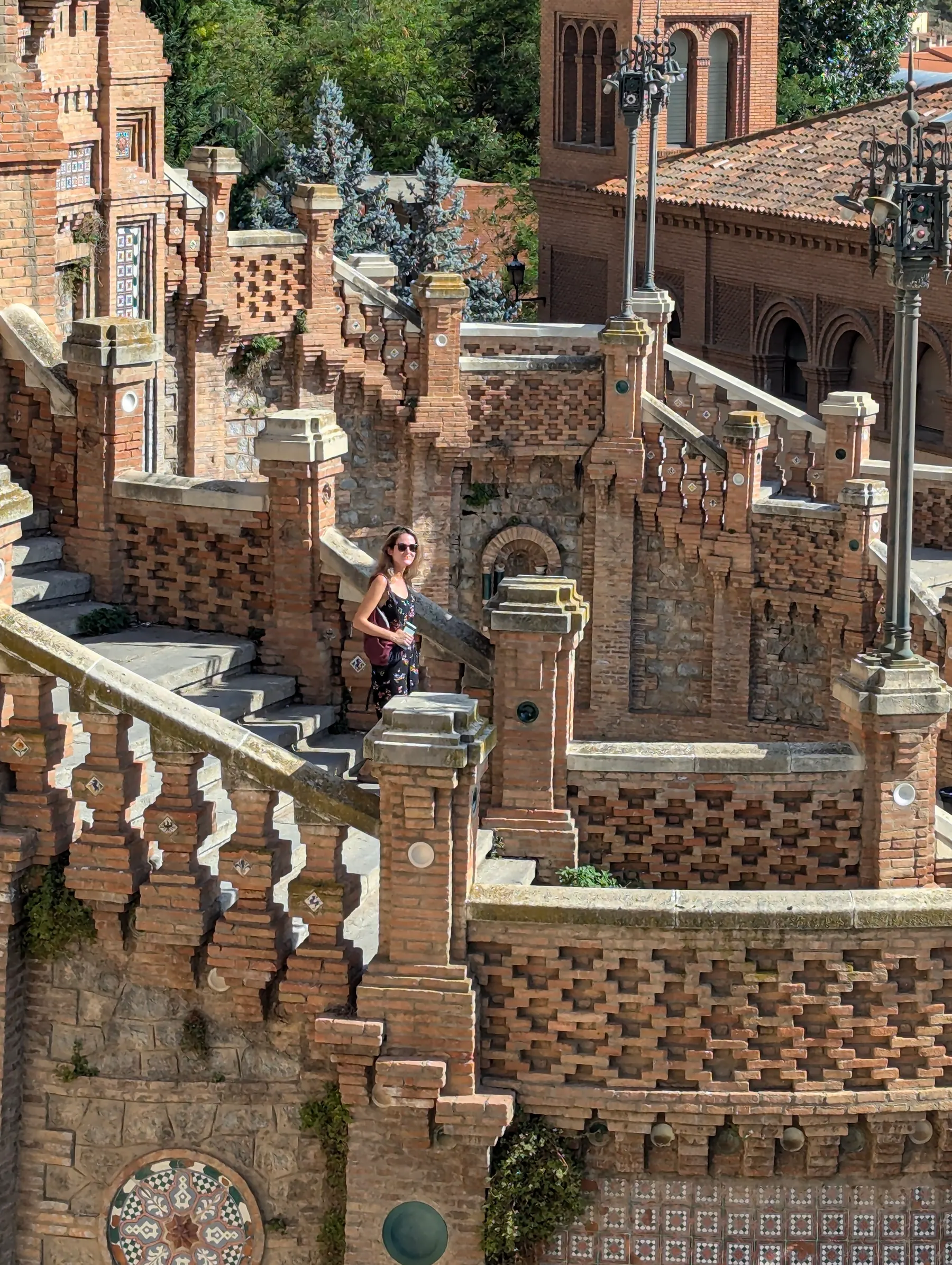
Teruel: The Spanish City That Had to Prove It Exists
A guide to Teruel, Spain, with Mudéjar towers, the Escalinata del Óvalo, the Lovers of Teruel, local food, parking and practical tips.
 Europe
 Aragón, Spain
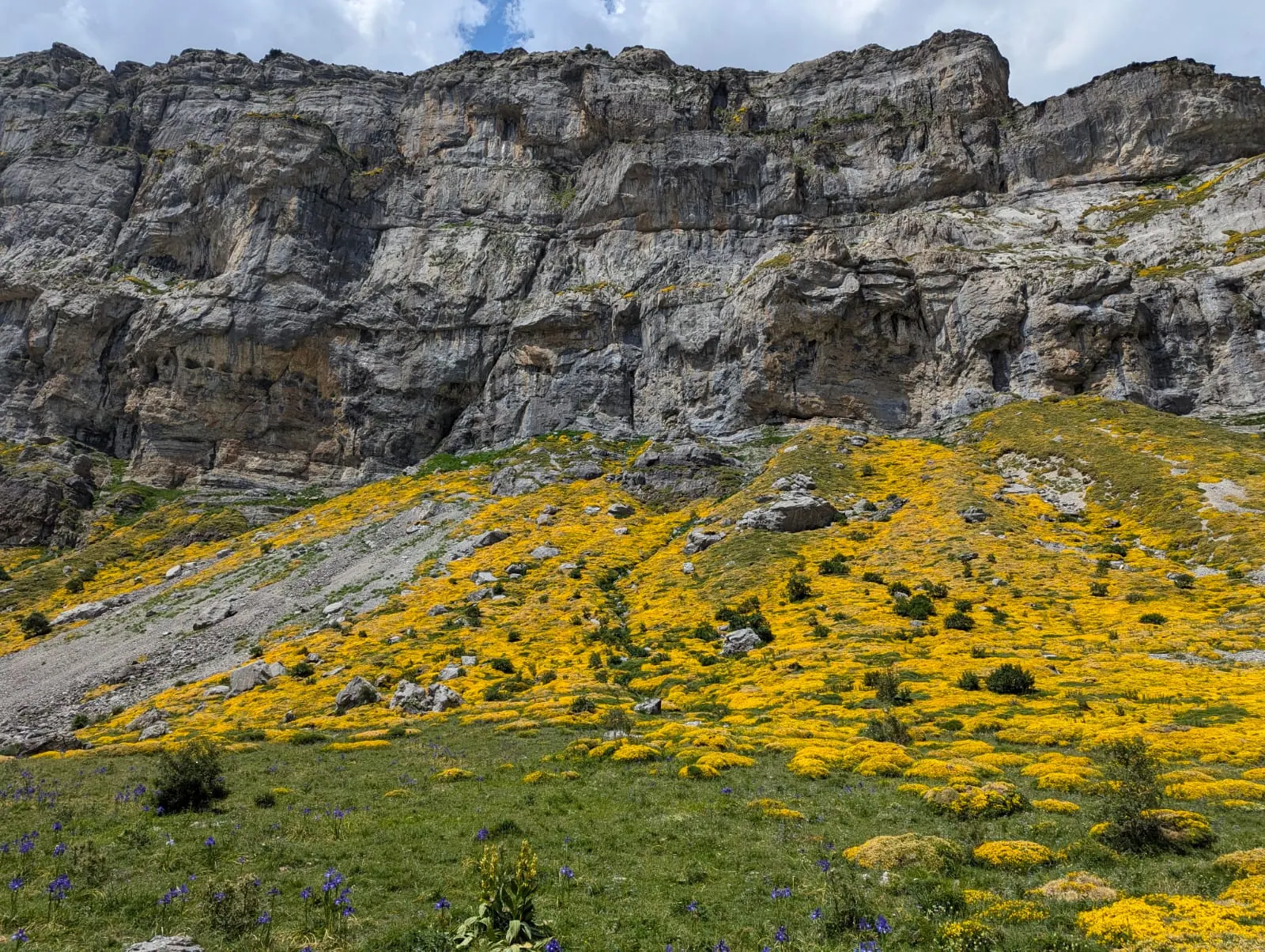
The impressive Aragonese Pyrenees in Summer: Ordesa, Valle de Otal and the Benasque Valley
Ordesa is spectacular and unmissable, but Valle de Otal is the quieter memory.
A personal three-day summer trip through the Aragonese Pyrenees, with Ordesa, Valle de Otal, the Benasque Valley and practical hiking advice.
 Europe
 Castellón, Spain
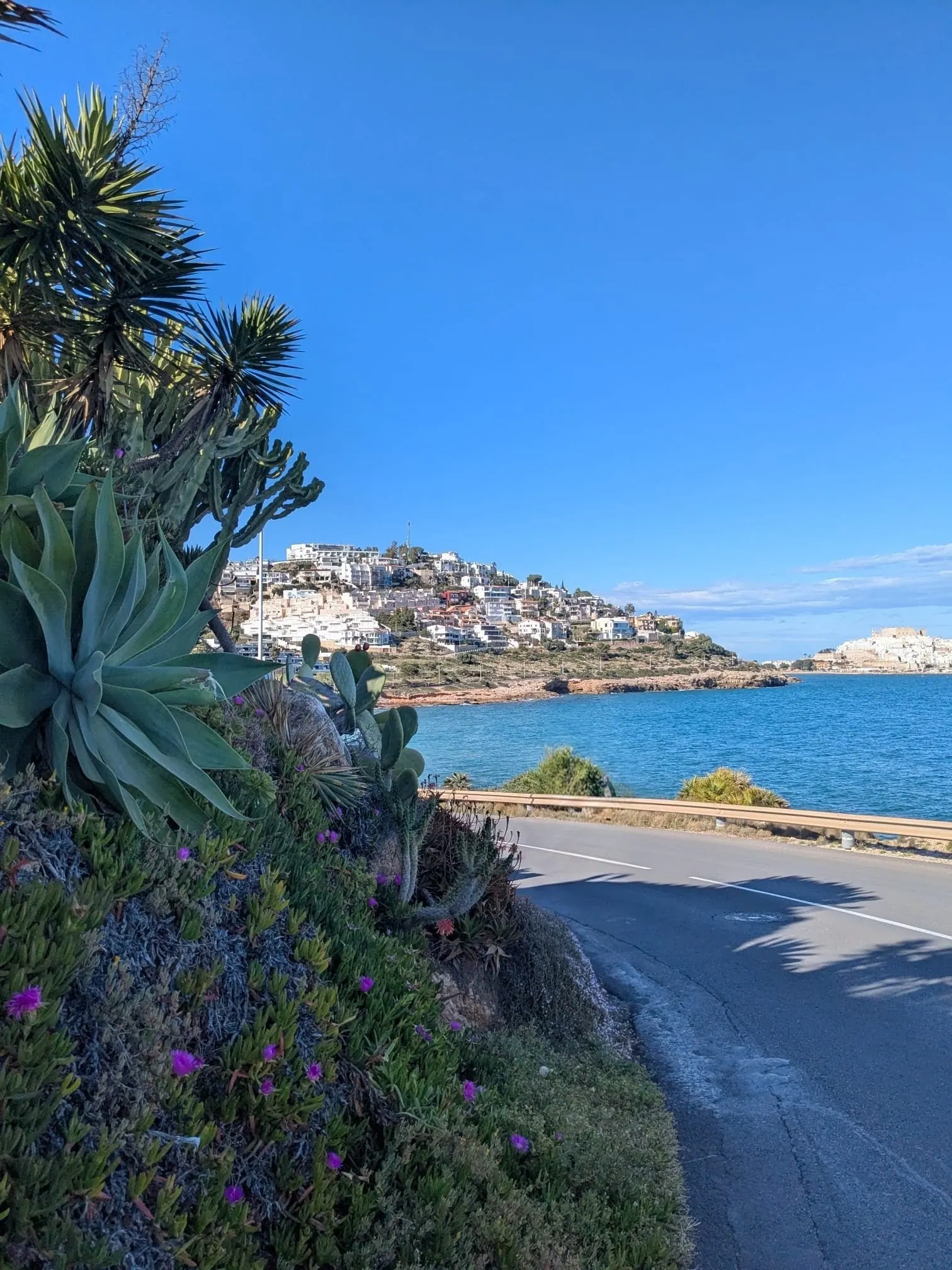
Peñíscola and Sierra de Irta: Castle Town and Coast Walk
Peñíscola's castle makes the first impression, but the wild Sierra de Irta coastline is what makes the journey memorable.
A practical guide to Peñíscola and Sierra de Irta Natural Park, with the castle, old town, beaches, coastal walking routes, Torre Badum, coves and 2026 summer parking rules.